Author: admin

  • Top Schools With Most Students Scoring 20 Points in 2025 UACE Revealed

    Top Schools With Most Students Scoring 20 Points in 2025 UACE Revealed

    Uganda National Examinations Board (UNEB) has released a list of secondary schools whose students scored the maximum 20 points in the 2025 Uganda Advanced Certificate of Education (UACE) examinations.

    The list highlights schools that produced the highest number of top-performing candidates, offering insight into institutions that continue to dominate Uganda’s A-Level academic performance.

    ADVERTISEMENT

    Leading the chart are St Andrea Kahwa’s College School in Hoima, St Mary’s College Kisubi in Wakiso, and Uganda Martyrs Secondary School Namugongo, each producing 36 students who scored 20 points, the highest possible score at A-Level.

    Several other schools across the country also registered strong performances, particularly institutions in Wakiso, Mukono, Kampala, and western Uganda, which dominate the top positions.

    Education analysts say the list reflects the continued strong performance of established traditional schools, although a number of emerging institutions also appeared among top performers.


    School District Students with 20 Points
    St Andrea Kahwa’s College, Hoima Hoima 36
    St Mary’s College Kitende Wakiso 36
    Uganda Martyrs SS Namugongo Wakiso 36
    King’s College Budo Wakiso 29
    Seeta High School Mukono Mukono 27
    Mengo SS Kampala 26
    St Mary’s College Lugazi Buikwe 25
    St Gracious SS Lira Lira 25
    Seeta High School Mukono 24
    Ntare School Mbarara 23
    Gombe SS Butambala 20
    St Mary’s College Kisubi Wakiso 20
    Mt St Mary’s College Namagunga Mukono 19
    Amus College School Bukedea 17
    BP Cypriano Kihangire SS Kampala 16
    St Mark’s College Namagoma Wakiso 16
    St Joseph’s SS Naggalama Mukono 15
    God’s Way High School Maganjo Wakiso 15
    Masaka SS Masaka 13
    Gayaza High School Wakiso 13

    Wakiso District Dominates

    The data shows that Wakiso District produced the highest number of schools with top-scoring candidates, confirming its status as a major hub for high-performing secondary schools in Uganda.

    Schools like St Mary’s College Kitende, Uganda Martyrs Namugongo, King’s College Budo, and St Mary’s College Kisubi continue to maintain strong academic reputations.

    Strong Showing From Emerging Schools

    Besides the traditional academic giants, schools such as Amus College School (Bukedea) and St Gracious Secondary School (Lira) also stood out by producing a significant number of candidates with 20 points.

    Education experts say this shows that academic excellence is increasingly spreading beyond central Uganda to other regions.

    What 20 Points Means

    In the UACE grading system, a score of 20 points is the maximum possible, meaning a candidate scored three principal A grades at A-Level.

    Such candidates usually qualify for highly competitive courses like Medicine, Engineering, Law, and Computer Science at top universities such as Makerere University and Kyambogo University.
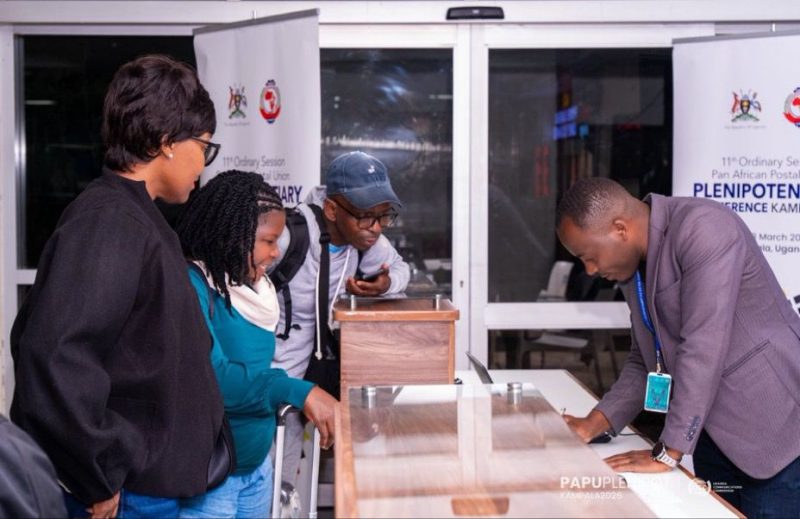
  • Delegates Arrive in Kampala for Pan-African Postal Union Conference

    Delegates Arrive in Kampala for Pan-African Postal Union Conference

    Delegates from across the continent have started arriving in Kampala ahead of the 11th Ordinary Session of the Plenipotentiary Conference of the Pan African Postal Union (PAPU), a major continental meeting expected to discuss the future of Africa’s postal and courier sector.

    The conference will take place from March 16 to 28, 2026, bringing together postal regulators, operators, policymakers, and industry experts to explore how digital technology can transform postal services across Africa.

    ADVERTISEMENT

    The event is being hosted in Uganda with support from the Uganda Communications Commission (UCC), the country’s regulator for the communications sector.

    Focus on digital transformation

    Held under the theme “Leveraging Digital Technology & Innovation to Create a Smart Postal Sector in Africa,” the conference will examine how postal systems can evolve to support e-commerce, logistics services, financial inclusion, and cross-border trade.

    According to UCC spokesperson Ibrahim Bbosa, the gathering comes at a time when postal services are undergoing rapid change due to the rise of digital technology and online commerce.

    “The country has a digital transformation roadmap for 2040 and we also have some requirements under the national government plan to drive digital inclusion in the country,” Bbosa said.

    Postal services evolving beyond letters

    Bbosa explained that postal services today go far beyond traditional letter delivery and are now heavily involved in parcel delivery and logistics systems that support modern trade.

    “Post today has ceased to be about just letter delivery. Post today is also a lot to do about parcels to facilitate trade,” he said.

    He gave examples of everyday online orders, noting that modern postal systems must ensure that items ordered online reach customers efficiently.

    “If you ordered something online — whether it is food, a book, or another item — it needs to be able to reach your address,” Bbosa added.

    Importance of tracking and digital systems

    Modern logistics systems now rely heavily on digital tracking technology, which allows customers to monitor deliveries in real time.

    “That item has to be tracked today given the current standard. I should be able to order and know it has left, whether it is midway, or whether it has already arrived,” Bbosa explained.

    He emphasized that digitization is essential for the success of the postal and courier sector, particularly as African economies increasingly rely on online commerce.

    Uganda positioning itself as a learning hub

    The conference will also serve as a platform for African countries to share experiences and best practices in postal sector regulation and innovation.

    According to Bbosa, several countries have already visited Uganda to study its progress in modernizing postal services, particularly systems that allow tracking parcels from their point of origin to delivery.

    “Many countries have been coming to Uganda to benchmark,” he said. “There are some interesting things happening, such as tracking parcels from the point of origin to the time of delivery.”

    Challenges remain

    Despite these advancements, Bbosa acknowledged that infrastructure limitations remain a challenge for many developing countries trying to modernize postal systems.

    “But amidst all these, there are usually third-world infrastructure challenges for you to be able to reach that level,” he said.

    Expected outcomes of the conference

    Organizers say the PAPU Plenipotentiary Conference is expected to produce policy decisions and strategic frameworks aimed at strengthening cooperation among African countries.

    The outcomes are expected to guide efforts to modernize postal and courier services across the continent as Africa adapts to the growing digital economy and e-commerce sector.

  • Kyambogo University 2025 Private Sponsorship Cut-Off Points

    Kyambogo University 2025 Private Sponsorship Cut-Off Points

    Kyambogo University has officially released the 2025 private sponsorship cut-off points, revealing the minimum entry scores required for admission into various undergraduate programmes.

    The cut-offs guide students applying under the private sponsorship scheme, helping them determine which programmes they qualify for based on their Uganda Advanced Certificate of Education (UACE) weighted scores.

    ADVERTISEMENT

    Like most universities in Uganda, competitive programmes such as Engineering, Architecture, and specialized Science courses recorded higher cut-off points, while some arts, education, and vocational programmes had relatively lower thresholds.

    For example, Civil and Building Engineering and Architecture remain among the most competitive courses at the university, reflecting high demand for engineering programmes.

    Below is a simplified table highlighting selected Kyambogo University private admission cut-off points for 2025.


    Programme Cut-Off Points
    B. Architecture 46.7
    B. Eng. Civil & Building Engineering (Day) 48.9
    B. Eng. Civil & Building Engineering (Evening) 46.9
    B. Eng. Mechanical & Manufacturing Engineering 44.3
    B. Eng. Automotive & Power Engineering 43.4
    B. Eng. in Telecommunications Engineering 43.5
    B. Eng. Environmental Engineering & Management 40.3
    B. Eng. Environmental Engineering & Management (Evening) 35.8
    B. Electrical Engineering (Day) 47.4
    B. Electrical Engineering (Evening) 44.7
    B. Science Land Economics 36.0
    B. Interior & Landscape Design 34.5
    B. Environmental Science & Technology 32.4
    B. Economics & Statistics 30.1
    B. Arts Education 30.8
    B. Science Accounting & Finance 29.8
    B. Information Systems 27.5
    B. Procurement & Logistics Management 25.7
    B. Banking & Microfinance 32.3
    B. Human Nutrition & Dietetics 31.3
    B. Science Building Economics 37.5
    B. Geography & Earth Observations 19.8
    B. Community Based Rehabilitation 17.8
    B. Demography & Reproductive Health 15.9
    B. Arts in Humanities 16.8
    B. Arts in Social Sciences 21.9
    B. Public Administration & Resource Governance 27.5
    B. Procurement & Logistics Management (Soroti) 11.0

    What the Cut-Off Points Mean

    The cut-off points represent the minimum scores admitted in the previous admission cycle. This means students applying in 2025 may need similar or slightly higher scores depending on competition.

    Education experts say the cut-offs help applicants strategically choose courses based on their UACE results, especially for competitive programmes.

    Kyambogo University remains one of the largest public universities in Uganda, attracting thousands of applicants every year for programmes in engineering, teacher education, sciences, arts, and vocational studies.

  • Fyno announces maiden concert plans for year-end

    Fyno announces maiden concert plans for year-end

    Singer and songwriter Fyno, born Suuna Joseph, has announced plans to hold his maiden concert toward the end of the year.

    Speaking about the development, Fyno revealed that he is currently holding meetings with his management team to determine the exact date and venue for the highly anticipated show.

    The singer also called upon his fans and well-wishers who have supported his musical journey to turn up in large numbers and make his first-ever concert a success.

    This year, we are going to hold a concert towards the end. I plead with my fans not to disappoint but to turn up in large numbers.

    The venue and the date will be confirmed soon after we reach a final decision from the meetings my team and I are currently holding.

    Fyno also spoke about his relationship with fellow musician Alien Skin, noting that the two remain on good terms despite rarely meeting face-to-face.

    According to him, Alien Skin prefers fellow artists to visit him at his residence but rarely returns the gesture.

    My relationship with Alien Skin is good, although we take long without seeing each other face-to-face. The only issue is that he often wants people to visit him at his crib, yet he doesn’t visit his peers.

    Fyno added that the day Alien Skin pays him a visit, he will invite his friends from Busoga, including Dokta Brain, so they can discuss and resolve the issues that led to the suspension of his performances in the Busoga region.

    “The day he visits me, I will invite my friends from Busoga, including Dokta Brain, so that we sort out the reasons why you halted performances in Busoga because we have been working on resolving those issues,” he added.

    @sanyukatvug

    Fyno announces plans for a concert at the end of the year. SanyukaUnCut SanyukaUpdates FfeBannoDdala

    ♬ original sound – Sanyuka TV – Sanyuka TV

    The post Fyno announces maiden concert plans for year-end appeared first on MBU.

  • Pia Pounds’ shocking Uber driving experience

    Pia Pounds’ shocking Uber driving experience

    Singer Pia Pounds, legally known as Tracy Kirabo, has opened up about her life before fame, revealing that she once worked as a Uber driver to make ends meet.

    Speaking in an interview, Pia Pounds explained that back in 2016, she took up driving for Uber, noting that although the job paid relatively well, it also came with several challenges.

    The singer recalled that during that time she used to earn between Shs50,000 and Shs70,000 a day, which helped her sustain herself as she pursued her dreams.

    However, her experience took a dramatic turn when she was unknowingly given a stolen vehicle to operate.

    According to Pia Pounds, the blue car she was using had been hired to her by someone else, but she later discovered it had been stolen.

    The situation escalated one day while she was parked in Bunga, when police officers suddenly surrounded and arrested her.

    I once worked as an Uber driver in 2016, but I was arrested after unknowingly driving a stolen car.

    Despite the scare, the singer says the job had been helping her earn a living at the time. She added that she often balanced multiple hustles, sometimes selling clothes while transporting clients.

    However, the clothing business and her driving work came to a halt after the shocking incident.

    Pia Pounds explained that she had to track down the person who had given her the car in order to clear her name and get herself out of trouble.

    The post Pia Pounds’ shocking Uber driving experience appeared first on MBU.

  • Boldness, Courage, Determination! Honoring the Leadership of Mariam Wangadya

    Boldness, Courage, Determination! Honoring the Leadership of Mariam Wangadya

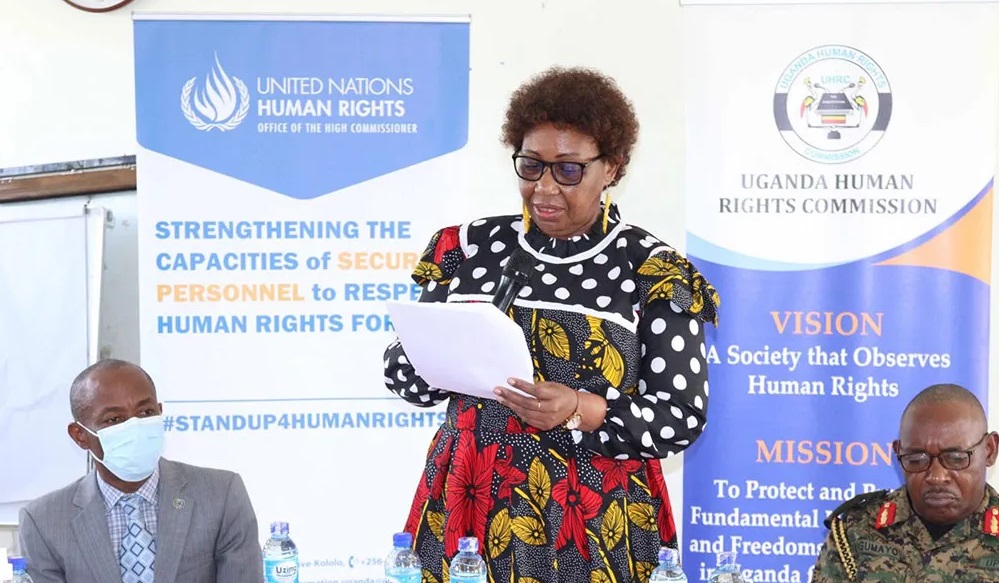
    In every era, societies are shaped by individuals who dare to stand for justice, even when the path is difficult to toe. During this Women’s Week/month, we celebrate women whose leadership strengthens institutions, uplifts communities, and protects human dignity. One such woman is Hon. Mariam Wangadya, the Chairperson of the Uganda Human Rights Commission, whose work continues to shape the human rights landscape in Uganda.

    Human rights leadership is rarely easy. It requires courage to speak for the vulnerable, resilience to withstand criticism, and determination to pursue justice even when the circumstances are complex. As Chairperson, Hon. Wangadya has stood and continues to stand at the center of this responsibility, overseeing an institution mandated by the 1995 Constitution to promote and protect the rights and freedoms of all Ugandans.

    Her work is not simply administrative. It is leadership and stewardship. It is deeply human. Every complaint registered, every investigation conducted, and every tribunal hearing held by the Commission represents a real story someone seeking fairness, dignity, and justice. Through her leadership, the Commission continues to provide a platform where citizens can seek redress and accountability for violations of their fundamental rights.

    Over the years, Hon. Wangadya has consistently used her voice to draw attention to critical human rights concerns in Uganda. From advocating for the rights and freedoms of women and girls, security person, minority groups, she has stood firm in promoting and protecting the rights of all Ugandans without discrimination. During the commemoration of the United Nations Day in Support of Victims of Torture, she spoke strongly against the persistence of torture and cruel treatment in society.

    She emphasized that acts such as severe beatings, humiliation, and exploitation undermine human dignity and must be confronted by both institutions and communities. Her message was simple but powerful: “Human rights violations are not only committed in public institutions but can also occur within homes and communities.” By raising awareness of these everyday injustices, she reminded citizens that the protection of human dignity is a collective responsibility.

    Beyond advocacy, Hon. Wangadya’s leadership has also focused on strengthening the broader culture of human rights in Uganda. She has often emphasized the importance of embedding human rights principles in schools, workplaces, and communities. According to her, respect for human rights must become part of the national identity and everyday life of citizens. This approach reflects a broader understanding of human rights—not merely as legal concepts, but as values that shape how societies treat one another.

    Her work has also been recognized internationally. In 2025, the European Union in Uganda presented her with a certificate of appreciation in recognition of her commitment to defending the rights of Ugandans and strengthening accountability within public institutions. The recognition underscored the important role she has played in advancing conversations around freedom of expression, equality, and access to justice—issues that remain central to democratic societies.

    Yet leadership in the field of human rights is rarely free from controversy or challenge. In some instances, Hon. Wangadya has faced criticism while navigating complex national conversations around security, governance, and civil liberties. Nevertheless, she has defended the Commission’s constitutional authority, even in the face of public attacks or political tension. Such moments illustrate the difficult terrain of human rights leadership: balancing legal mandates, institutional independence, and the expectations of a diverse public.

    The story of Hon. Mariam Wangadya reminds us that leadership is not defined solely by position, but by purpose. It is about the willingness to take responsibility for safeguarding the dignity of others. It is about using institutional authority to amplify the voices of those who might otherwise go unheard. For young women and girls across Uganda, her journey offers an important example: that women can lead national institutions, influence public policy, and shape the direction of justice in society.


    1. As we celebrate women this month, we honour not only the achievements of women leaders but also the values they embody resilience, integrity, and service. Hon. Mariam Wangadya’s leadership at the Uganda Human Rights Commission stands as a reminder that the struggle for human dignity requires courage, patience, and commitment. And when women step forward to lead that struggle, they inspire societies to move closer to justice, equality, and hope for all.

    Do you have a story in your community or an opinion to share with us: Email us at Submit an Article

  • NSPC Launches Mental Health Sessions for Staff, Urges Families to Rethink Youth Mental wellness 

    NSPC Launches Mental Health Sessions for Staff, Urges Families to Rethink Youth Mental wellness 

    State House’s National Secretariat for Patriotism Corps (NSPC) has launched mental health awareness lessons for its staff in a move aimed at promoting wellbeing and addressing the growing mental health challenges among the Ugandan youth.

    Speaking during the first session today, the Commissioner- NSPC, Ms. Hellen Seku urged families across Uganda to stop attributing children’s struggles to witchcraft and instead recognize mental health as a serious issue that requires proper attention and support.

    Ms. Seku noted that many young people are silently battling mental health conditions and that society must confront the problem with openness and understanding.

    “Families should stop thinking that when their children face challenges, it is because they have been bewitched. Many of our youth are affected by mental health conditions and as a nation we must address this issue seriously,” she said.

    She also commended the staff of the NSPC for participating in the awareness session, emphasizing that such engagements are important in building supportive workplaces.

    “I thank my staff for participating in this activity today. Let this be a lesson to other organizations to encourage their staff to take part in mental health lessons and discussions. It is the only way we can understand the wellbeing of those we lead and what they are going through,” Ms. Seku added.

    Mental health experts say the initiative comes at a time when mental health disorders among youth are becoming increasingly common.

    According to Ms. Florence Namyaalo, a Psychiatric Clinical and Public Health Officer with the Transcultural Psychosocial Organization Uganda, the problem is both national and global.

    Ms. Namyaalo explained that worldwide, between 15 and 20 percent of young people experience mental health challenges.

    “In Uganda, the situation is particularly worrying,” she said.

    A recent report by the Ministry of Health-Uganda, indicates that about 191,000 youth in the Buganda sub-region are living with mental health conditions, with urban areas such as Kampala recording higher cases compared to other parts of the country.

    Health professionals attribute the rise in mental health problems to several factors, including unemployment, family conflicts and relationship challenges.

    Many young people, Ms. Namyaalo noted, resort to alcohol, marijuana, cigarettes and khat in an attempt to cope with stress.

    “Everyone is at risk, and it is okay not to be okay,” she said, urging young people to seek support and avoid harmful coping mechanisms.

    Experts recommend simple steps to protect mental wellbeing, including getting adequate sleep, maintaining a balanced diet, engaging in regular exercise and seeking support from family, friends or community groups.

    Ms. Namyaalo encouraged young people experiencing distress to speak up and seek professional help when necessary, noting that early intervention can prevent more severe mental health outcomes.

    She also called on communities, institutions and organizations to play a greater role in identifying individuals who may be struggling and encouraging them to prioritize their wellbeing.

    “When the people around us are healthy and supported, we all live better lives,” she said.


    Do you have a story in your community or an opinion to share with us: Email us at Submit an Article

  • INSIDE STORY: Why Hon Mary Begumisa didn’t survive the political storm in Sembabule District

    INSIDE STORY: Why Hon Mary Begumisa didn’t survive the political storm in Sembabule District


    Sembabule is an administrative district in the Central Region of Uganda, established in 1997 through the subdivision of Masaka District.


    Overview:

    Sembabule District, curved out in 1997 from Masaka, is characterized by persistent violence, intense electoral competition and high-stakes personality politics in NRM primaries and general elections.

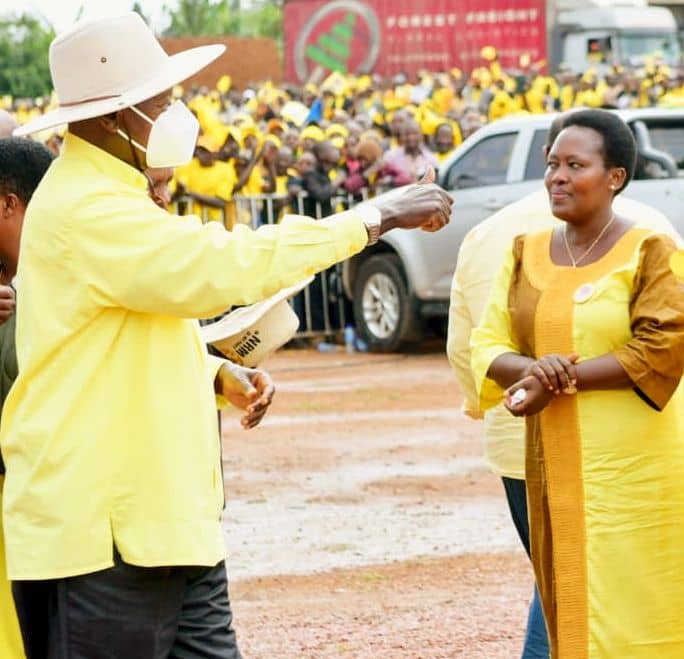
    Dominated by powerful political camps often connected to the national executive, the district is defined by intense rivalries, such as between Sam Kahamba Kutesa, Hanifah Bangirana and Theodore Ssekikubo; and has recently seen new camps springing up with the coming of the members of the first family including Hon Sodo Aine Kaguta and his siblings taking a centre stage. In Lwemiyaga county, Retired Brig. General Rwashande came with great momentum and obliterated Hon Ssekikubo Camp.

    Whereas in Mawogola County there has been some minor opposition to the ruling government due to the dissatisfaction in the populace caused by Hon Hanifah K. Bangirana.

    After realizing the political ground getting hostile to her, she lobbied for a new constituency, Mawogola West (where 2 more sub-counties: Katwe and Nakasenyi were curved out from the bigger Lwebitakuli Sub-county). She, thus, switched from the position of a woman member of parliament to a constituency position.


    In 2021 Hon Pastor Mary Begumisa was overwhelmingly supported by the people of Sembabule District as the Woman Member of Parliament.

    She came with a lot of enthusiasm for service delivery (e.g. Offering computers to many secondary schools, sponsoring needy children in schools, building houses for the underprivileged, etc) which earned her a lot of jealousy and hatred from the local and national leaders who eventually coalesced to fiercely fight her at all costs. Hon Kawooya, who already had her political rivalry with her, having contested with her for woman member of parliament position in 2001 and won an election that was marred with unprecedented vote rigging and violence.

    This time she outsourced the semi-illiterate Nambaziira Florence, whose only academic qualifications are certificates in hairdressing and facilitated her to Win Hon Mary Begumisa (the district NRM General Secretary) in both primary and national elections.


    The recent 2026 parliamentary elections had the most unprecedented history of voter stuffing, alterations of declaration of results forms and violence orchestrated by armed forces.

    “This level of impunity is beyond anyone’s imagination. This was just a semblance of an election. We are yet to see whether the courts of judicature will offer any hope to the populace, but alas hopelessness, self-resignation and despair characterize the faces of those that won and equally so the losers. To prove this, just attend any burial or wedding ceremony! Some leaders are openly ridiculed and cursed.” Hon Begumisa added during an interview with this website.


    Formation and Political Landscape

    • Establishment: Sembabule was established in 1997, carved out of Masaka District.

    • Political Nature: It is known as a high-stakes, competitive “battlefield” where elections are often chaotic, contentious, and sometimes fatal due to strong personal rivalries.

    • Key Actors: Historically prominent individuals include former foreign affairs minister Sam Kutesa, veteran Lwemiyaga County Mp Theodore Ssekikubo and Hanifah Kawooya, among others.


    Key Historical Trends

    • 2001 Elections: Marked by high competition between supporters of Sam Kutesa and others, setting a precedent for hostile electoral environments.

    • 2006 Factionalism: Political competition saw distinct camps, notably the Kutesa faction versus the SSekikubo/Kabasi faction, highlighting deeply entrenched personal rather than just ideological divides.

    • Electoral Violence: The district is notorious for election-related violence, particularly in Mawogola West, Mawogola South and Lwemiyaga Counties, involving clashes between political camps and interference from supporters, necessitating intervention from the highest levels of the NRM party.

    • 2021 Tensions: Despite being a stronghold for the National Resistance Movement (NRM), the 2021 election saw a notable decline in President Museveni’s support and the emergence of opposition candidates, with the NUP’s Goreth Namugga becoming the first opposition MP in the district.

    The “Buganda Ku Museveni “ under the leadership of Hon  Haruna Kasolo, a great ally of Hon. Kawooya who had earlier benefited from her office by being donated an ambulance for his Kyotera constituency where he was yet to stand as their MP, seized an opportunity to reward Kawooya by uprooting Hon Mary Begumisa from her political office.

    “In conclusion, unless the NRM government takes keen interest in listening to all leaders in the district, the level of apathy and disillusionment amongst the general populace will leave this part of the country psychologically and politically devastated.” She said

    Do you have a story in your community or an opinion to share with us: Email us at Submit an Article

  • Tusker Malt Live Band Nights Thrill Kampala Revelers (PHOTOS)

    Tusker Malt Live Band Nights Thrill Kampala Revelers (PHOTOS)

    Kampala nightlife was alive with music on Friday evening as Tusker Malt and The Singleton’s UBL Band Nights delivered vibrant live performances across the city.

    At Isabella in Ntinda, Abeeka Band entertained revelers with an energetic set, while D’Maestro Band thrilled fans at The Villa in Bukoto. In Nakulabye, Voltz Band kept the crowd on their feet at Supremacy with an exciting performance.

    MBU was on ground to capture the moments as music lovers enjoyed the lively atmosphere, great performances, and the unique experience of live band entertainment.

    Below are some of the moments from the night.

    The post Tusker Malt Live Band Nights Thrill Kampala Revelers (PHOTOS) appeared first on MBU.

  • Inside Bobi Wine’s Plans as He Abandons NUP for a Comfortable Life Abroad

    Inside Bobi Wine’s Plans as He Abandons NUP for a Comfortable Life Abroad

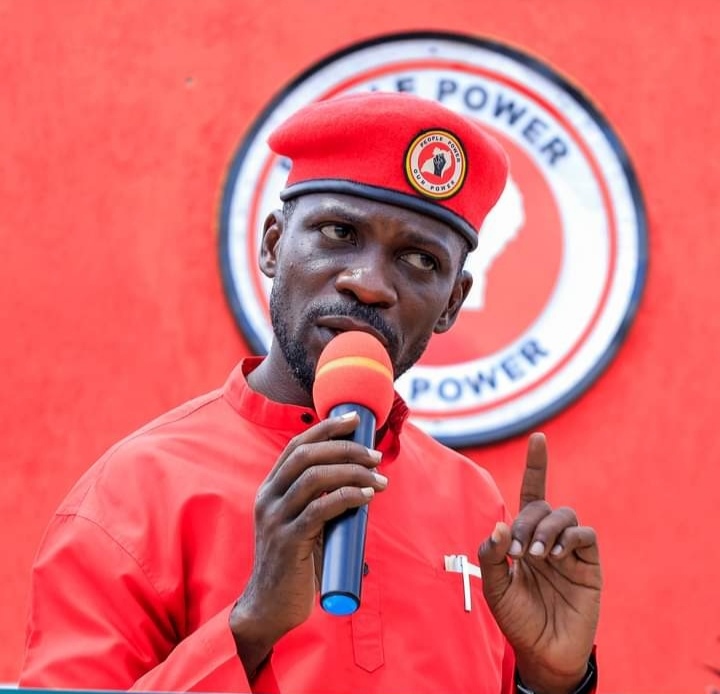
    In the quiet suburbs of an American city, far from the dust and drama of Kampala’s political streets, Robert Kyagulanyi Ssentamu—popularly known as Bobi Wine—appears to have executed what insiders describe as a carefully choreographed political retreat.

    The musician-turned-politician, once the face of youthful political defiance, quietly slipped out of the country to reunite with his family who had earlier relocated abroad amid post-election tension.

    To some observers, it is not a dramatic escape but a calculated pause.

    As Uganda settles after the January 15 presidential and parliamentary elections, Kyagulanyi’s departure increasingly looks like a strategic withdrawal—one that allows him to cool off politically while enjoying the comforts of life abroad.

    The timing raises eyebrows.

    Sources say the opposition leader is expected to reappear just weeks before the anticipated May 2026 swearing-in ceremony of Yoweri Kaguta Museveni. Political analysts say the script is predictable: a dramatic return, renewed allegations of a “stolen election,” and another attempt to capture headlines.

    Yet beneath the theatrics lies a difficult political reality.

    Kyagulanyi entered the race promising to end Museveni’s decades-long rule. His message to supporters was clear: victory was inevitable. But when the votes were counted, the results told a different story.

    Official tallies released by the Electoral Commission of Uganda gave Museveni a commanding lead, consistent with the ruling National Resistance Movement’s electoral dominance since 1986.

    Kyagulanyi’s party, the National Unity Platform, secured a notable but far from transformative number of parliamentary seats—hovering around 20 percent of contested constituencies. In several regions, the party even trailed independent candidates.

    Independent observers acknowledged improved opposition coordination compared to the 2021 elections. However, the presidential results simply did not match Kyagulanyi’s repeated claims that he had “won the election.”

    Despite these assertions, no verifiable evidence—such as polling station returns, parallel tally sheets, or sworn affidavits—has been formally presented to electoral authorities or international monitors.

    Numbers, as analysts often say, rarely bend to political narratives.

    In the weeks following the polls, Kyagulanyi claimed he was “in hiding” and urged supporters to “demand their votes.” But the response on the streets was muted. No major demonstrations erupted. Kampala remained calm. Even traditional opposition strongholds showed little appetite for confrontation.

    For many Ugandans already grappling with economic pressures and political fatigue, the call for mass action simply did not resonate.

    The silence spoke volumes.

    Meanwhile, internal tensions within the National Unity Platform appear to be deepening. Party insiders speak of growing discontent—ranging from allegations of corruption in the sale of party nomination cards to complaints about financial mismanagement and internal power struggles.

    Some disgruntled mobilisers and district coordinators who once powered the “People Power” movement now openly question the party’s internal accountability.

    Kyagulanyi’s absence from the country has only amplified the unease.

    From his new base abroad, the opposition leader continues to lobby Western governments, particularly in Washington and European capitals, portraying Museveni as a leader whose time has expired and presenting himself as the rightful winner of the election.

    But seasoned diplomats say international actors are guided by evidence and institutional processes.

    Without verifiable electoral proof, foreign governments are unlikely to challenge a sovereign electoral outcome based solely on political claims.

    Critics argue that this strategy risks reinforcing a perception that Kyagulanyi is seeking external leverage rather than building sustained domestic political momentum.

    African political history offers many examples of opposition figures who drifted into prolonged exile, slowly losing the grassroots energy that once propelled them.

    For Kyagulanyi, the risk is similar.

    The youthful movement that electrified Uganda’s political landscape in 2021—and again attempted to rally in 2026—now faces uncertainty about its future direction.

    At the heart of the matter lies a difficult contradiction.

    The politician who built his reputation on fearless defiance now finds himself far from the front lines of the political struggle he once championed.

    As Uganda prepares for another term under President Museveni, the unfolding story may ultimately be less about a stolen victory and more about the challenge of sustaining a political movement beyond moments of excitement and symbolism.

    Whether Kyagulanyi returns to confront these realities—or settles into the relative safety of diaspora politics—will determine the fate of the movement he once inspired.

    Do you have a story in your community or an opinion to share with us: Email us at Submit an Article

About UGNEWS24

UGNEWS24 is a Uganda local news service, a product of SOLAVIA GROUP LIMITED, Reg. No. 80048169153974.

Registered office

Plot 2335, Buwambo-Katadde-Najjo Road,
Nansana Municipality, Wakiso District, Uganda
P.O. Box 214231, Kampala

© 2026 SOLAVIA GROUP LIMITED. All rights reserved.