Blog

  • Selena Gomez Hits Back at Wondermind Lawsuit, Calls Allegations ‘Completely Meritless’

    Selena Gomez Hits Back at Wondermind Lawsuit, Calls Allegations ‘Completely Meritless’

    American actress and singer Selena Gomez is pushing back against a lawsuit over Wondermind, calling the allegations against her “completely meritless” and preparing to fight the case in court.

    Gomez’s attorney, Mathew Rosengart, issued the response after investors sued the mental-health startup and accused its founders of misleading them about the company’s financial position and business plans.

    Wondermind launched in 2021 with Gomez, her mother Mandy Teefey and Daniella Pierson behind the venture, which aimed to make mental-health resources more accessible.

    The investors claim they put nearly $1.2 million into the company after receiving assurances about its operations and future plans.

    They allege that several commitments failed to materialise and that they later discovered problems within the business.

    Gomez’s legal team has rejected those claims, insisting that the actress did not engage in fraud or any other wrongdoing.

    The allegations that Selena Gomez engaged in any way whatsoever in any purported ‘fraud’ or other wrongdoing are completely meritless, both factually and legally.

    Rosengart said Gomez plans to ask the court to dismiss the lawsuit.

    The case now puts fresh attention on Wondermind and Gomez’s role in the company as both sides prepare to battle over the allegations.

  • WEYONJE: KCCA Targets Waste Sorting and Illegal Dumping 

    WEYONJE: KCCA Targets Waste Sorting and Illegal Dumping 

    By Evans Najuna


    KAMPALA – The Kampala Capital City Authority (KCCA) has intensified its weekly Weyonje campaign, targeting poor waste disposal, illegal dumping and lack of garbage sorting in the city.

    On Saturday, August 15, KCCA officials spent the day in Busega Parish, Rubaga Division, cleaning several zones, including Kigwanya and Kabale, while sensitising residents on proper waste management.

    The campaign was led by KCCA Deputy Executive Director Benon Kigenyi and Director of Public Health Dr. Sarah Zalwango, who warned residents against dumping garbage in drainage channels and trenches.

    The officials cautioned that improper waste disposal could worsen flooding and increase the risk of disease outbreaks, especially during the rainy season.

    The campaign was later joined by Kampala Capital City Lord Mayor Hon. Nsubuga Barimwezo, who urged city residents to take responsibility for keeping their communities clean.

    He also said his political wing would soon push for new measures on garbage collection and illegal dumping in the city.

    KAMPALA: The Kampala Capital City Authority (KCCA) has intensified its weekly Weyonje campaign, focusing on improving waste segregation at source, curbing illegal dumping, and promoting responsible sanitation practices across the city.

    On Saturday, August 15, KCCA officials carried out a comprehensive clean-up exercise in Busega Parish, Rubaga Division, covering several areas including Kigwanya and Kabale, while simultaneously sensitising residents on proper waste management and the importance of separating biodegradable and non-biodegradable waste.

    The campaign was led by KCCA Deputy Executive Director Benon Kigenyi and Director of Public Health Dr. Sarah Zalwango, who strongly cautioned residents against dumping garbage in drainage channels, wetlands, and roadside trenches. They emphasized that such practices not only degrade the environment but also compromise the city’s drainage system.

    The officials warned that improper waste disposal significantly increases the risk of flooding and heightens the likelihood of disease outbreaks, particularly during the rainy season when blocked drainage systems exacerbate sanitation challenges.

    The campaign was later joined by Kampala Capital City Lord Mayor Hon. Nsubuga Barimwezo, who urged city residents to take greater responsibility for maintaining cleanliness in their communities, noting that sustainable urban sanitation requires active participation from all stakeholders.

    He further revealed that his political leadership would soon advocate for strengthened enforcement measures against illegal dumping, alongside improved waste collection systems to enhance efficiency across the city.

    KCCA also highlighted that the Weyonje campaign is part of a broader citywide initiative, which includes the National Cleaning Exercise held on the last Saturday of every month. The monthly exercise brings together government agencies, community leaders, and residents in a coordinated effort to promote cleanliness, environmental protection, and improved public health standards throughout Kampala.


    GOT A HOT STORY? LET US KNOW!

    Got breaking news, explosive secrets, or hard evidence?

    Email us: redpeppertips@gmail.com

    We accept tips, documents, videos, photos, and recordings—the more evidence you have, the better.

    CONFIDENTIALITY IS OUR TOP PRIORITY. SOURCES ARE ALWAYS PROTECTED!

    About Post Author

  • PS Ben Kumumanya: LC I, LC II Leaders Are the Bridge Between the Citizen and the State

    PS Ben Kumumanya: LC I, LC II Leaders Are the Bridge Between the Citizen and the State

    Inside Uganda’s grassroots government: What LC I and LC II Executive Councils must do for 45.9 million citizens

    KAMPALA, UGANDA — Congratulations, Mr. Solomon Sserwanjja, upon your election as LC I Chairperson of Bamutakudde Village.

    The voters of Bamutakudde Village saw potential in you. Beyond campaign posters, political slogans and election-day excitement, they entrusted you with something far greater than a political office: their community and their trust.

    As you take your seat as chairperson, there is something more important than the celebrations, applause and victory photographs. There is responsibility.

    Your election has placed you at one of the most important points in Uganda’s decentralised governance system — the village.

    Before you settle into that chair, it is important to understand what it represents, what your council is expected to do, what the Executive Committee is supposed to deliver and why LC I and LC II leadership matters to the ordinary Ugandan.

    The Local Council system is not simply about having a chairperson, a committee and village meetings. It is about bringing the State closer to the citizen.

    Uganda had a population of 45,905,417 people in the 2024 National Population and Housing Census, according to the Uganda Bureau of Statistics. Electoral Commission statistics for 2026 show the enormous grassroots network through which this population is governed, including 71,214 villages and 10,717 parishes.

    Behind every number is a community. Behind every community are families. And behind many of those families is a Local Council leader expected to listen, mobilise, coordinate, account and serve.

    That is why your election matters.

    THE SWINGING CHAIR IS NOT A THRONE

    Mr. Chairperson, the chair you are about to occupy is not a throne. It is a seat of public trust.

    The LC I chairperson is often one of the first elected political leaders an ordinary citizen can easily reach. That makes the office deceptively powerful.

    You are expected to know your community, understand residents’ concerns and know which Government programmes have reached the people and which have not.

    You should understand the condition of community roads, sanitation, security, public facilities and other services affecting residents.

    When citizens have a problem, you should know where to take it.

    That is decentralisation in its simplest form: Government comes closer to the people through leadership that understands the people.

    Your chair should therefore not make you distant from those who elected you. It should make you more accessible to them.

    FROM LC I TO LC II: THE GOVERNANCE LADDER

    The LC I council operates at village level, while LC II operates at parish or ward level. From there, governance connects to sub-county, town, division, municipality, city and district structures.

    The pathway is therefore:

    Citizen → LC I → LC II → Sub-county/Town/Division → Municipality/City/District

    This is more than an administrative hierarchy. It is supposed to be a communication highway between citizens and Government.

    The citizen raises a concern. The LC I captures it. The LC II helps consolidate wider parish or ward priorities. Higher local-government structures then have an opportunity to respond.

    When this system works, decentralisation becomes tangible.

    When it fails, Government may have policies, budgets and programmes, but citizens may never feel their impact.

    The failure is therefore not merely administrative. It becomes a failure of the bridge between the citizen and the State.

    WHAT LC II MEANS TO THE ORDINARY CITIZEN

    The LC II chairperson occupies an important position because the parish or ward brings together several villages.

    This allows issues affecting more than one village to be consolidated into wider community priorities.

    Think about a road affecting several villages, a health facility serving an entire parish, a school serving children from different communities, environmental degradation affecting several settlements or a security problem crossing village boundaries.

    These issues require coordination and leadership.

    That is why LC II leadership must not become another political title. It must become a platform for solving community problems.

    WHAT MUST LC I AND LC II EXECUTIVE COUNCILS DO?

    The Local Council Executive Committee is not simply a group of people sitting beside the chairperson. It is a working arm of the council, helping translate community priorities, council decisions and Government programmes into action.

    Under Uganda’s Local Governments Act, lower local-government Executive Committees have responsibilities that include implementing council decisions, initiating policies for council consideration, overseeing implementation, helping maintain law and order and security, monitoring programmes and projects, mobilising citizens and resources for community development, serving as a communication channel between Government and citizens, and monitoring Government, local-government and NGO projects in their areas.

    In simple terms, the Executive Committee must help answer four fundamental questions:

    What does the community need?

    What has the council decided?

    What is Government doing about it?

    Is the citizen actually receiving the service?

    That is the work behind the title.

    1. REPRESENTING THE PEOPLE

    The first responsibility is representation.

    The LC I Executive Committee is closest to the village population. It should understand the problems affecting residents and ensure that those concerns reach the appropriate level of government.

    At LC II level, the Executive Committee performs a wider coordinating role because the parish or ward brings together several villages.

    A problem affecting one household may remain local. A problem affecting several villages can become a parish priority.

    The Executive Committee is therefore both the voice of the community and the ear of Government.

    2. IMPLEMENTING COUNCIL DECISIONS

    A council meeting should not end when members rise from their seats. Decisions must be implemented.

    The Executive Committee has a responsibility to supervise and follow up implementation of decisions made by the council.

    Leaders must ask:

    • What was agreed?
    • Who is responsible?
    • What action has been taken?
    • What remains outstanding?
    • What support is required from a higher authority?

    Without implementation, minutes remain paper.

    With implementation, decisions become services, programmes, protection and community development.

    3. MONITORING GOVERNMENT PROGRAMMES AND PROJECTS

    The Executive Committee is also an important community monitoring mechanism.

    Government programmes may be designed at national level, funded through budgets and implemented through different institutions. But LC leaders see what happens on the ground.

    Is the project there?

    Is it serving the intended beneficiaries?

    Are the beneficiaries genuine?

    Is the work being done?

    Are public resources being used properly?

    Is the community satisfied?

    The Local Council structure can help identify gaps and communicate them to relevant authorities.

    This is particularly important for programmes such as the Parish Development Model (PDM) and Emyooga, where the ultimate test is not simply the amount of money allocated but whether the intended household or enterprise receives the benefit.

    4. MOBILISING CITIZENS FOR DEVELOPMENT

    Government cannot transform communities without community participation.

    LC I and LC II leaders therefore have an important mobilisation responsibility. They can mobilise residents to participate in Government programmes, community meetings, sanitation activities, environmental protection, self-help initiatives and other development activities.

    They can also help mobilise community resources for projects that improve local welfare.

    The message is simple:

    Development is not something done to citizens. It is something citizens must participate in.

    5. MAINTAINING PEACE, LAW AND SECURITY

    A functioning community requires peace.

    The Executive Committee has responsibilities relating to maintaining law and order and supporting security within the community.

    This does not mean replacing the police or other security agencies. Rather, LC leaders provide an important local link for identifying problems, encouraging peaceful coexistence, helping prevent conflicts and referring serious matters to the appropriate authorities.

    At village and parish level, leaders are often among the first people to hear about disputes. That gives them an important preventive role.

    6. RESOLVING AND REFERRING COMMUNITY DISPUTES

    Not every community disagreement needs to become a major conflict.

    Local Council leaders can help resolve disputes within their lawful mandate and refer matters requiring higher intervention to the appropriate authorities.

    The leader who listens early may prevent a disagreement from becoming a crisis.

    7. PROMOTING PRODUCTION AND ENVIRONMENTAL PROTECTION

    A community cannot develop while destroying the resources upon which its people depend.

    The Executive Committee therefore has responsibilities connected to production and environmental protection. This includes encouraging productive activities, supporting community development initiatives and promoting responsible use and protection of the local environment.

    For communities whose livelihoods depend on agriculture, natural resources, trade and other productive activities, this role is fundamental.

    Development must create wealth without destroying the future.

    8. INFORMATION, EDUCATION AND COMMUNICATION

    A Government programme cannot benefit citizens who do not know about it.

    The Executive Committee therefore has an important communication role.

    Residents need information about Government programmes, council decisions, community meetings, opportunities, public services and their rights and responsibilities.

    The LC leader can become the channel through which Government information reaches the household.

    But communication must work in both directions.

    Government must hear citizens too.

    The Local Council is therefore not merely a loudspeaker for Government. It is also a listening post for Government.

    9. HEALTH, CHILDREN AND COMMUNITY WELFARE

    Health is ultimately experienced at community level.

    The Executive Committee has responsibilities touching on health and children’s welfare and should help identify concerns affecting vulnerable residents and communicate them to the appropriate authorities.

    The same applies to children who may be exposed to neglect, abuse, unsafe conditions or other vulnerabilities.

    A strong LC system should know when a community problem requires intervention.

    10. WOMEN, YOUTH, PERSONS WITH DISABILITIES AND OLDER PERSONS

    A community cannot claim inclusive development if some of its people remain invisible.

    The Executive Committee should ensure that the interests of women, youth, persons with disabilities and older persons are reflected in community priorities.

    Women must have space in decision-making.

    Young people must be mobilised and supported to participate in development.

    Persons with disabilities must not be excluded from Government programmes.

    Older persons must not become forgotten members of the community.

    Representation must mean more than having names on a committee. It must mean listening and acting.

    11. SAFEGUARDING PUBLIC PROPERTY

    Public property belongs to the people.

    Schools, health facilities, roads, community structures, land and other public assets must be protected.

    Local leaders should therefore help communities safeguard public resources and report misuse, vandalism or other threats to public property.

    A chairperson who protects public property is protecting the community’s future.

    Leadership without accountability can easily become a danger to the people it was elected to serve.

    The Executive Committee has a responsibility to promote proper management and accountability in matters falling within its mandate and ensure that community development is not undermined by misuse of resources.

    Citizens have a right to ask:

    Where did the money go?

    Who benefited?

    What was delivered?

    What remains to be done?

    Good local leadership should not fear such questions. It should welcome them.

    13. IDENTIFYING VULNERABLE HOUSEHOLDS

    The grassroots leader is often closer to vulnerable households than officials sitting in distant offices.

    LC leaders can help identify families and individuals facing serious vulnerabilities and connect them to appropriate Government and community support mechanisms.

    This is one of the ways decentralisation turns a national policy into a human response.

    Behind every statistic is a person.

    And sometimes the LC leader is the person who knows that person’s story.

    THE CHAIRPERSON: LEADER, COORDINATOR AND ACCOUNTABILITY POINT

    For Mr. Solomon Sserwanjja, the election is therefore not simply an achievement to celebrate. It is a mandate to coordinate.

    The chairperson remains the political head of the council. But political leadership should not be confused with personal control.

    The chairperson presides over the Executive Committee, provides political direction, monitors the general administration of the area and, within the legal framework, oversees service delivery and implementation of Government programmes.

    The chairperson also has a responsibility to report to the council on the state of affairs in the area and uphold the Constitution, laws and council by-laws while promoting the welfare of citizens.

    That means the chairperson must coordinate rather than dominate.

    The chairperson is not the council.

    The Executive Committee is a team.

    The council is larger than its chairperson.

    And the community is larger than all of them.

    A good chairperson does not silence the council. A good chairperson makes the council work.

    LC I AND LC II: WHAT IS THE DIFFERENCE?

    The distinction is crucial.

    LC I is the first formal political governance point at village level. It is closest to the household, sees the immediate concerns of residents and provides the first channel through which community issues can enter the local-government system.

    LC II operates at parish or ward level. It brings together concerns from several villages, coordinates wider priorities and provides another link between grassroots communities and higher local-government structures.

    In simple terms:

    LC I sees the household and village.

    LC II sees the parish or ward and connects several villages.

    Neither level should work in isolation. They are parts of one decentralised governance chain.

    THE CONSTITUTION GIVES YOU A MANDATE

    Mr. Sserwanjja, your authority does not begin and end with the ballot. It sits within Uganda’s constitutional order.

    Article 59 of the 1995 Constitution provides that every citizen aged 18 years and above has the right to vote.

    Chapter Eleven provides the constitutional foundation for local government and decentralisation, while Article 176 provides for a decentralised system of local government and emphasises people’s participation and democratic control in decision-making.

    That is the constitutional heartbeat of your office.

    You were not elected merely to occupy a chair.

    You were elected to represent people.

    And representation carries responsibility.

    THE FIRST LINE OF ACCOUNTABILITY

    Uganda’s fight against corruption cannot be won from Kampala alone. It must begin where citizens see public programmes being implemented.

    It must begin where Government money becomes a road, a classroom, a health service, an agricultural programme or support to a household.

    LC leaders therefore have an important role in helping communities monitor public projects, identify irregularities, verify beneficiaries and raise concerns about abuse of public resources and poor service delivery.

    The Executive Committee’s monitoring role makes it an important community accountability mechanism.

    Citizens know what is happening.

    They know where projects are.

    They know who received what.

    They know which promises were fulfilled and which remained promises.

    Sometimes, they only need a leader willing to listen.

    PDM, EMYOOGA AND THE QUESTION OF DELIVERY

    Government has invested in programmes designed to transform households and communities, including the Parish Development Model and Emyooga.

    But the ordinary citizen does not measure Government by policy documents.

    They ask:

    Did the programme reach me?

    Did the money reach the intended beneficiary?

    Did the project deliver what it promised?

    Who do I report to when something goes wrong?

    The answer should begin at the grassroots.

    This is why LC I and LC II structures matter.

    The local leader is often among the first people capable of identifying the gap between what Government planned and what the citizen actually received.

    A programme may look successful on paper. But the real test is whether the citizen feels its impact.

    That is where decentralisation is either vindicated or defeated.

    KUMUMANYA’S BIGGER MESSAGE

    Permanent Secretary in the Ministry of Local Government Ben Kumumanya has continued to emphasise the importance of decentralisation, accountability and effective local governance as Uganda inducts its newly elected local-government leaders.

    The Ministry’s training and induction work places emphasis on strengthening local leaders’ understanding of their statutory roles, constitutional and legal mandates, community engagement, local service delivery, conflict mediation and local administrative and financial management.

    For newly elected LC I and LC II leaders, this is more than classroom knowledge. It is preparation for the daily reality of governing communities.

    Because decentralisation does not end when a policy leaves Kampala.

    It is tested when that policy reaches a village.

    A policy designed in Kampala must eventually reach a household.

    A Government programme must eventually reach a beneficiary.

    A public resource must eventually produce a public service.

    And somewhere along that journey stands a local leader.

    That leader can either strengthen the bridge between citizen and State — or become another obstacle on the road.

    YOUR VICTORY IS YESTERDAY’S STORY

    Mr. Sserwanjja, your victory is yesterday’s story.

    Your performance is tomorrow’s story.

    The people who voted for you did not simply give you a chair. They gave you their trust.

    That trust must be protected.

    You will be judged by how you treat the poor.

    By whether you listen to women, youth, persons with disabilities and older persons.

    By whether you can unite political opponents after an election.

    By whether you protect public property.

    By whether you resist corruption.

    By whether you can tell the truth when telling the truth is difficult.

    By whether you monitor Government programmes.

    By whether you follow up council decisions.

    And, ultimately, by whether an ordinary citizen can walk into your office, tell you a problem and leave knowing that someone is listening.

    That is the true meaning of the swinging chair.

    It is not a throne. It is a bridge.

    And every day you sit in it, you must decide whether that bridge will bring the citizen closer to the State — or leave the citizen standing on the other side.

    Do you have a story in your community or an opinion to share with us: Email us at Submit an Article

  • Why Cristiano Ronaldo and Georgina Rodríguez Chose a Living Room Wedding

    Why Cristiano Ronaldo and Georgina Rodríguez Chose a Living Room Wedding

    Football superstar Cristiano Ronaldo and his longtime partner, model and influencer Georgina Rodríguez, have revealed why they chose to exchange their wedding vows in the living room of their home in Cascais, Portugal, rather than have the lavish ceremony many might have expected from one of the world’s most famous couples.

    The couple married on August 11, exactly 10 years after they first met at a Gucci store in Madrid.

    Their intimate civil ceremony included their five children, making the occasion a family affair from start to finish.

    Why They Chose Their Home

    For Rodríguez, the living room carried more meaning than any grand venue could offer.

    She told Vogue that the room is where the family shares everyday moments, including meals around the same table.

    She wanted her children to grow up remembering that something beautiful happened in a place that already held so many family memories.

    Rodríguez also revealed that she once imagined a very different wedding. As a girl, she dreamed of a castle, a carriage, a long dress and a diamond crown.

    Her priorities changed with time.

    Rather than chasing a lavish celebration, she wanted something intimate with Ronaldo and their children at home.

    Ronaldo Wanted It to Feel Normal

    Ronaldo also embraced the simplicity of the occasion, describing the wedding as a special day spent in a normal way.

    The couple have not ruled out a much bigger celebration.

    They told Vogue that they plan to celebrate with family and friends in the future, but their demanding schedules made the smaller ceremony the right choice for now.

    After the civil ceremony, the newlyweds and their children travelled to the Shrine of Our Lady of Fátima, where they received a religious blessing.

    For Rodríguez, the intimate setting captured exactly what she wanted from the day: her husband, her children, their home, their faith and the love they have built together.

  • UBOS sends 125 young professionals into job market

    UBOS sends 125 young professionals into job market

    By Evans Najuna


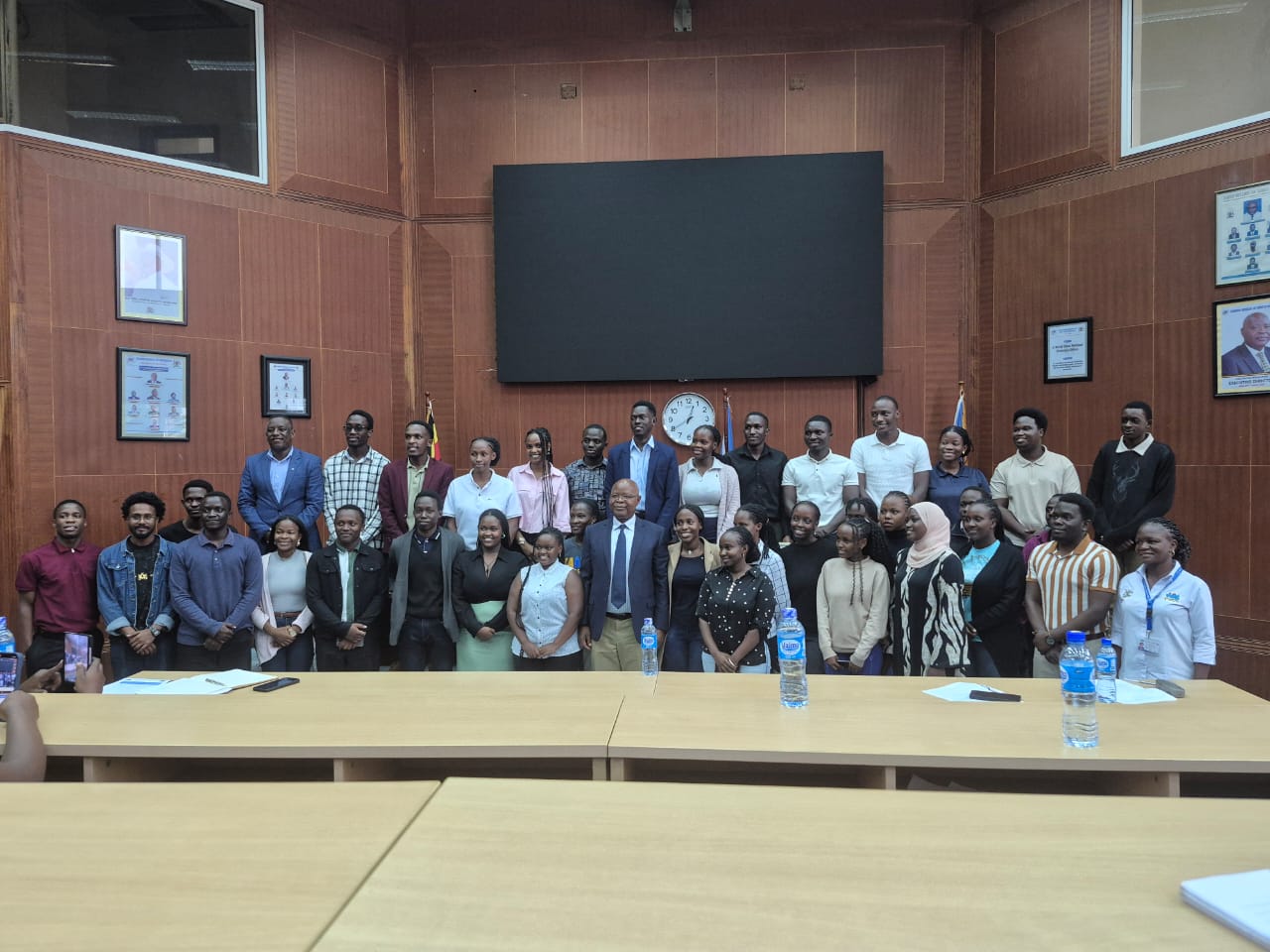
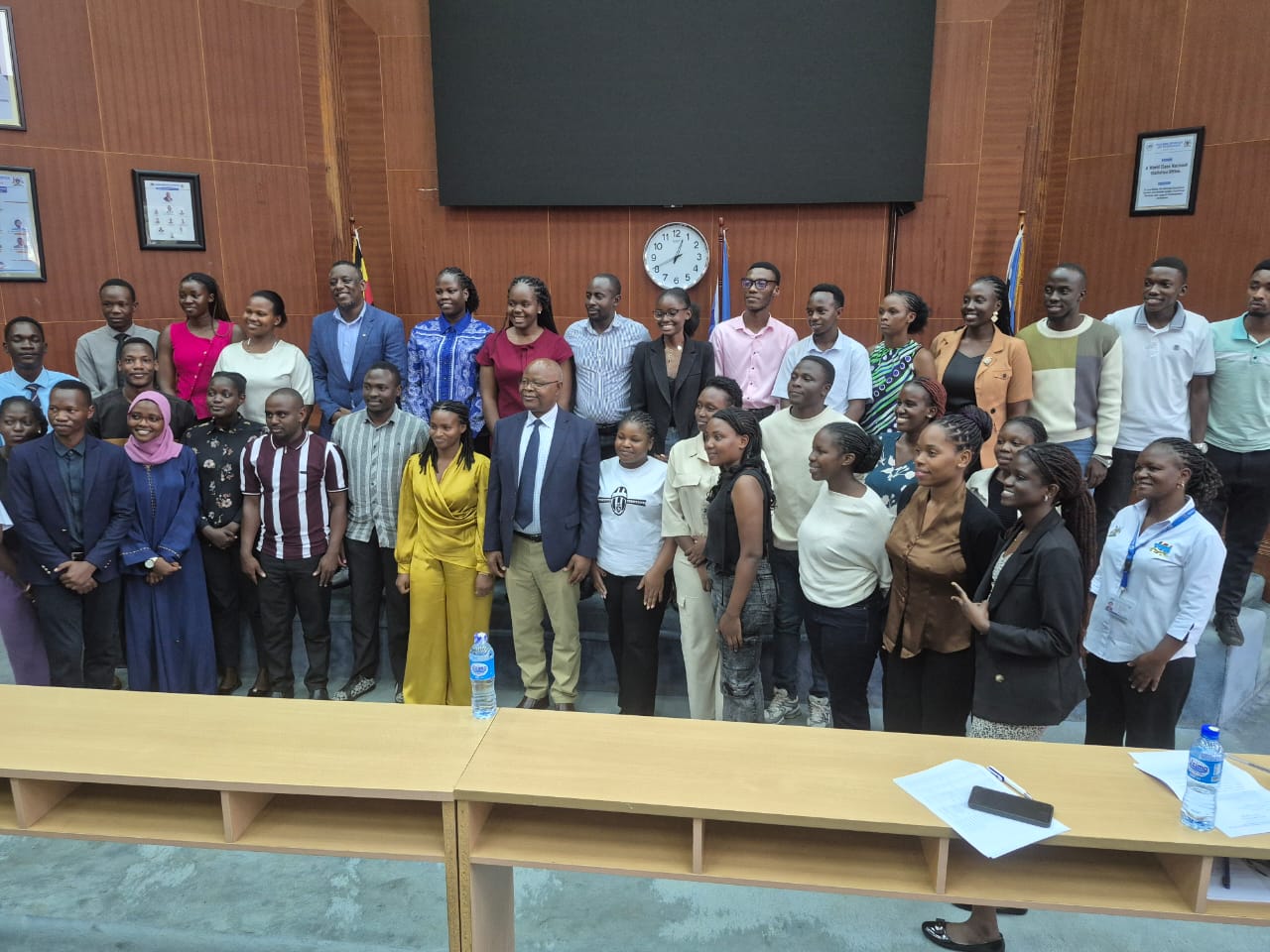
    KAMPALA – The Uganda Bureau of Statistics (UBOS) has sent 125 young professionals into the competitive job market after successfully completing a two-month internship programme designed to bridge the gap between classroom theory and practical workplace experience.

    The interns, drawn from various universities including Makerere University, Makerere University Business School, Kyambogo University, Uganda Martyrs University Nkozi, Islamic University in Uganda (IUIU), Mbarara University of Science and Technology (MUST) and Ndejje University, were bid farewell during a ceremony held last Friday.

    Addressing the young professionals, UBOS Executive Director Dr. Chris N. Mukiza challenged them to put the knowledge and skills acquired both at university and during their internship into practical use to contribute to Uganda’s development.

    Mukiza warned the graduates that academic qualifications alone are no longer enough in today’s competitive labour market, urging them to continuously upgrade their skills.

    “Learn new skills because life is very competitive,” Mukiza advised.

    He said education becomes meaningful when it is translated into practical solutions to real-life challenges, urging the interns to remain curious, adaptable and committed to lifelong learning.

    Mukiza also emphasised discipline, hard work, integrity and a positive attitude as key ingredients for professional growth and success.

    The UBOS boss commended the interns for their good conduct throughout the programme, noting that he had not received any negative reports about their behaviour.

    He further assured the young professionals that UBOS would retain their details in its database for possible future opportunities, while challenging them to become ambassadors of the Bureau in their universities, communities and future workplaces.

    Speaking on behalf of the interns, Reagan Opio thanked UBOS management and staff for giving them an opportunity to gain hands-on experience and exposure to the professional environment.

    Opio said the internship helped them bridge the gap between classroom learning and practical application while boosting their confidence, professional skills and appreciation of the role of official statistics in national development.

    The interns also applauded their supervisors and mentors for the guidance, support and knowledge shared with them throughout the two-month programme.

    The farewell ceremony marked the end of their internship journey at UBOS, but also the beginning of their entry into the world of work.

    The Bureau encouraged the young professionals to share the knowledge and experiences gained with fellow university students so that more young people can appreciate the value of practical training, professionalism and official statistics.

    UBOS continues to implement internship and graduate trainee programmes as part of its efforts to equip young professionals with the skills, knowledge and experience required to compete effectively in the labour market.


    GOT A HOT STORY? LET US KNOW!

    Got breaking news, explosive secrets, or hard evidence?

    Email us: redpeppertips@gmail.com

    We accept tips, documents, videos, photos, and recordings—the more evidence you have, the better.

    CONFIDENTIALITY IS OUR TOP PRIORITY. SOURCES ARE ALWAYS PROTECTED!

    About Post Author

  • Grace Nakimera Reveals the Dreams That Eventually Pulled Her First Marriage Apart

    Grace Nakimera Reveals the Dreams That Eventually Pulled Her First Marriage Apart

    Grace Nakimera has revealed that the glamour surrounding her life as a star was not enough to keep her first marriage together.

    The Ugandan singer opened up about the relationship on The Deep Talk, describing her former marriage as a wonderful one and revealing that the couple share a child.

    But behind the good moments, Nakimera said they struggled with something she considered crucial: having a shared vision for the future.

    She described herself as a big dreamer who likes to imagine where a relationship will be years down the road.

    I am a very big dreamer. I see myself with you, I see the future, I see 20 years, I see 30, I see grandchildren. I visualise a lot.

    Nakimera said her former husband appreciated her glamorous lifestyle and her identity as a star, but that admiration did not translate into shared plans for their future.

    I was seeing far but he was not. There was all this glam about me that he liked, me being a star, but the dreams we had to put in place did not align.

    As time went on, she found the lack of progress increasingly difficult to live with.

    When you reach a certain age with your partner and nothing is progressing, it is very draining and you lose energy.

  • MBARARA: 86 New Lc1 Bosses Warned: ‘Don’t Misuse Village Stamps’

    MBARARA: 86 New Lc1 Bosses Warned: ‘Don’t Misuse Village Stamps’

    MBARARA — Newly sworn-in LC1 chairpersons in Mbarara City have been warned against the illegal possession and misuse of official village stamps, amid concerns that some former leaders are still using duplicated stamps after losing elections.

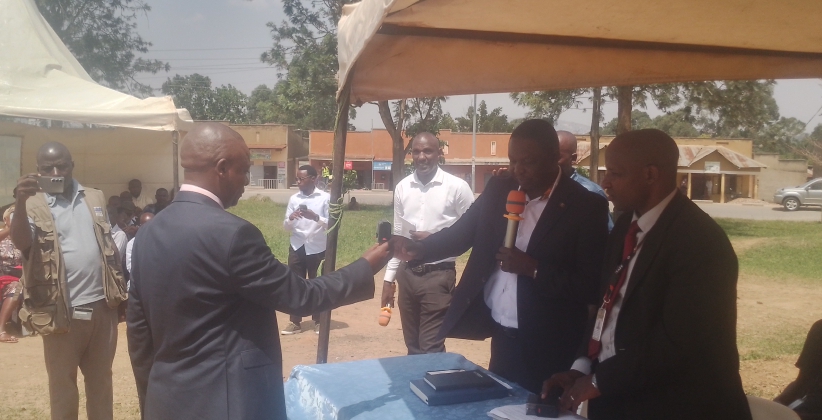
    The warning was issued as 86 newly elected LC1 chairpersons in Mbarara City North Division were sworn into office at the Division headquarters.

    Officials revealed that several cases involving the misuse of LC1 stamps have already been reported to police.

    According to authorities, some former LC1 chairpersons who lost the recent elections have allegedly retained duplicate stamps and continued using them illegally, particularly on land agreements.

    Police in Mbarara City North have reportedly received about eight cases linked to the alleged illegal use of LC1 stamps by former chairpersons.

    Gumisiriza Kyabwisho, the Mbarara City Division Mayor, directed the Officer in Charge of the station and the Division Police Commander to arrest anyone found holding two stamps in a village.

    He said the directive applies to former chairpersons who lost the elections as well as those who were re-elected.

    Kyabwisho said the Division leadership has also opened a general inquiry file to investigate the matter.

    “There are some former LC1 chairpersons who remained with the stamps which are illegal and they are using them. I have already instructed my OC station here and the DPC. Whoever has two stamps in his cell is at risk. Any time we shall arrest you,” Kyabwisho warned.

    He told the newly sworn-in chairpersons that nobody should retain or use an LC1 stamp without having been sworn into office.

    Chairman Africa receiving the stamp after swearing-in

    He further urged the leaders to follow official guidelines when carrying out their duties to avoid legal problems.

    The stamp controversy comes at a time when LC1 chairpersons are expected to play a key role in handling local administrative matters, including witnessing and authenticating community documents.

    Meanwhile, Mbarara City Mayor Robert Mugabe Kakyebezi urged the newly elected chairpersons to reconcile with residents who did not support them during the elections.

    Kakyebezi said the leaders must serve all residents equally, regardless of their political differences or voting preferences.

    He warned the new leaders against using their offices to settle political scores or discriminate against residents.

    “Use the stamps for all people without discrimination of who supported you or not. Don’t create or fuel confusion and conflicts in the village. The stamp is for all people,” Kakyebezi said.

    Some of the LC Chairpersons swear-in

    He also cautioned the chairpersons against selectively stamping documents for particular individuals or groups.

    The leaders were reminded that an LC1 office belongs to the entire community and not to the individuals who occupy it.

    The Division leadership said it would continue monitoring the use of official stamps and take action against anyone found possessing or using an unauthorised stamp.

    The crackdown is intended to prevent fraudulent documentation and protect residents from possible disputes arising from the illegal use of LC1 stamps.


    GOT A HOT STORY? LET US KNOW!

    Got breaking news, explosive secrets, or hard evidence?

    Email us: redpeppertips@gmail.com

    We accept tips, documents, videos, photos, and recordings—the more evidence you have, the better.

    CONFIDENTIALITY IS OUR TOP PRIORITY. SOURCES ARE ALWAYS PROTECTED!

    About Post Author

  • Vinka explains why her maiden concert took longer than expected – Sqoop

    Vinka explains why her maiden concert took longer than expected – Sqoop

    Why Vinka was in no rush to hold a concert

    For years, Ugandan music fans had one question for Vinka: When are you finally going to have your own concert?

    Despite being one of Swangz Avenue’s longest-serving artistes and building a catalogue of popular songs, the singer kept her maiden solo show out of reach while some of her labelmates took their turns on the big stage.

    Now, as she prepares for her first ever solo concert, Vinka Live & Loud, scheduled for Friday at Lugogo Cricket Oval, the singer has explained why she chose to wait.

    According to Vinka, she simply did not believe she was ready.

    “The brand Vinka was not ready, but as of now, it’s grown. The voice is grown, the songs are in plenty, it’s a big body of work and I have understood this work more,” she said.

    Her decision meant resisting the pressure that often comes with having a hit song or enjoying a surge in popularity.

    While many artistes use a successful run to quickly announce a concert, Vinka wanted to first build enough music and a strong enough identity to sustain an entire show.

    That patience also meant watching some of her Swangz Avenue colleagues get their moment before her.

    Azawi, who joined Swangz years after Vinka’s journey with the label had begun, held her maiden Azawi African Music Concert at Lugogo Cricket Oval in July 2022 before following it with another show at Kampala Serena Hotel in October 2023.

    Winnie Nwagi, another of the label’s established artistes, also held her concert at Lugogo Cricket Oval in September 2022.

    Vinka, meanwhile, continued building her catalogue and fan base without a headline concert of her own.

    Her relationship with Swangz Avenue also goes deeper than her career as a recording artiste. She spent years within the label’s ecosystem, initially working as an artiste manager before eventually becoming one of its performing artistes.

    That makes the arrival of Vinka Live & Loud significant not only because it is her first concert, but because it marks a moment she believes she has worked towards patiently.

    Over the years, she has built a recognisable identity through songs such as Love Panic, Chips Na Ketchup, All Over You and Lalala, establishing herself as one of Uganda’s notable pop and dance music artistes.

    For Vinka, therefore, the concert is not about catching up with colleagues who got there before her.

    It is about finally reaching a point where she believes the artiste, the music and the brand are ready for the demands of a solo show.

    “I did not want to rush it,” is essentially the message behind her explanation.

    And after years of fans asking when she would finally headline her own concert, Vinka now has an answer, August 21.

    This time, she believes the wait has been worth it.

    Don’t want to miss out on any story? For updates on all Sqoop stories, follow this link on Telegram: https://t.me/Sqoop

  • EXECUTIVE WATCH! Housing Finance Bank Gets New Operations Boss as Bank Pushes Digital Growth

    EXECUTIVE WATCH! Housing Finance Bank Gets New Operations Boss as Bank Pushes Digital Growth

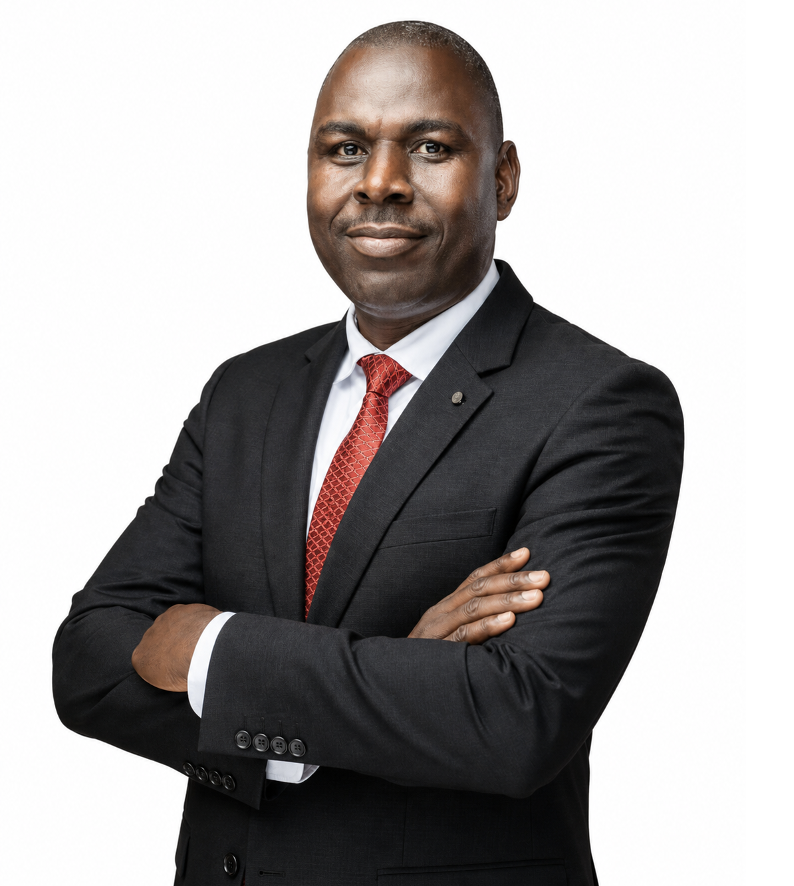
    Housing Finance Bank has announced the appointment of Robert M. Kusiima Mugabe as its new Chief Operations Officer (COO), marking a significant milestone in the Bank’s continued journey towards operational excellence, innovation, digital transformation, and customer-centred growth.

    Robert brings more than 18 years of extensive banking experience spanning operations, treasury, balance sheet management, enterprise growth, digital transformation, risk governance, and institutional performance. Throughout his career, he has built a strong reputation for driving efficiency, strengthening governance frameworks, and leading high-impact transformation initiatives that deliver sustainable business value.

    A respected member of Housing Finance Bank’s Executive Team, Robert previously served as Head of Operations and, until recently, Acting Head of Treasury. In these roles, he provided strategic leadership across critical operational and treasury functions that have been instrumental in advancing the Bank’s performance, resilience, and transformation agenda.

    Before joining Housing Finance Bank, Robert held several senior leadership positions within the banking industry, where he contributed significantly to operational excellence, enterprise growth, governance, and strategic transformation initiatives that enhanced institutional performance and customer experience.

    Robert holds a Master of Business Administration (MBA) from the University of Nicosia and a Bachelor of Development Studies from Gulu University. He is also professionally certified in Scrum, Six Sigma, Agile Project Management, DevOps, and Credit Management, reflecting his strong commitment to continuous improvement, innovation, and operational excellence.

    Robert M. Kusiima Mugabe new Chief Operations Officer (COO) at Housing Finance Bank

    Speaking about his appointment, Robert said:

    “Sustainable growth is built on strong systems, disciplined execution, and a shared commitment to serving customers better every day. Housing Finance Bank has built a strong foundation, and together, we will continue driving operational excellence, innovation, and efficiency to deliver greater value to our customers, partners, and stakeholders.”

    His appointment reflects Housing Finance Bank’s continued commitment to strengthening institutional resilience, advancing digital enablement, improving operational efficiency, and delivering consistently exceptional customer experiences through innovation and automation.

    As the Bank continues to evolve in a dynamic financial services landscape, Robert’s leadership, expertise, and vision will play a pivotal role in accelerating Housing Finance Bank’s transformation agenda and reinforcing its position as Uganda’s leading provider of housing finance and inclusive banking solutions.


    GOT A HOT STORY? LET US KNOW!

    Got breaking news, explosive secrets, or hard evidence?

    Email us: redpeppertips@gmail.com

    We accept tips, documents, videos, photos, and recordings—the more evidence you have, the better.

    CONFIDENTIALITY IS OUR TOP PRIORITY. SOURCES ARE ALWAYS PROTECTED!

    About Post Author

  • Equity Bank, Modern Group Team Up for Industrial Growth

    Equity Bank, Modern Group Team Up for Industrial Growth

    As Uganda’s industrial sector continues to expand, access to responsive and flexible financial solutions is becoming increasingly important for businesses seeking to scale operations and compete across the region.

    For Modern Group of Companies, one of Uganda’s diversified business conglomerates, finding the right financial partner is therefore not simply about access to credit. It is about working with a bank that understands the pace of business, responds quickly to emerging needs and has the capacity to support growth over the long term.

    This is at the heart of the emerging partnership between Equity Bank Uganda and Modern Group of Companies.

    For Modern Group, one of the factors that influenced the decision to work with Equity Bank Uganda was the timely responsiveness by its team, particularly in areas where the company has business interests.

    The importance of this local presence is particularly significant for a business operating across multiple sectors and markets, where financial decisions often require timely engagement and practical solutions.

    “What stands out most is the responsiveness of Equity’s ground team. They are proactive, approachable and quick to address matters as they arise,” said Jagdish Srivastava, the Chief Executive Officer of Modern Group.

    Jagdish Srivastava, CEO of Modern Group, leading Gift Shoko, Managing Director of Equity Bank Uganda, on a strategic tour of the group’s manufacturing plant in Jinja.

    Mr Srivastava said the experience reinforced the importance of having a banking partner that combines the strength and resources of a major financial institution with an understanding of the realities facing businesses on the ground.

    For a diversified group such as Modern Group, this combination is critical as it seeks to strengthen its operations and position itself for further growth in Uganda and the wider East African market.

    “As a former international banker myself, I understand the distinct strategic advantages of working with one of the country’s leading financial institutions,” he said. Adding, “Partnering with a major bank like Equity provides the scale, stability and institutional support needed to unlock long-term business growth.”

    “Equity Bank’s team approaches business with a highly positive, solution-oriented mindset, and as our internal authorization processes are finalized, we look forward to deepening this partnership across multiple financing areas,” he said.

    The relationship between the two institutions therefore represents more than the financing facility currently in place. It points to the potential of a broader partnership in which financial solutions are aligned with Modern Group’s evolving business requirements.

    “Modern Group represents a cornerstone relationship for our bank,” said Ronald Nakhasanga, the Regional Manager for the Eastern Region from Equity Bank. Given their expansive footprint across diverse sectors from manufacturing and building materials to agro-processing, the potential for shared growth is immense. Our commitment goes beyond traditional corporate banking; we are strategically positioned to support their full ecosystem, driving value across their entire operational footprint.”

    For businesses operating in Uganda’s increasingly competitive industrial environment, the ability to access capital is important, but so too is the quality of the relationship with the financial institution providing it.


    GOT A HOT STORY? LET US KNOW!

    Got breaking news, explosive secrets, or hard evidence?

    Email us: redpeppertips@gmail.com

    We accept tips, documents, videos, photos, and recordings—the more evidence you have, the better.

    CONFIDENTIALITY IS OUR TOP PRIORITY. SOURCES ARE ALWAYS PROTECTED!

    About Post Author

About UGNEWS24

UGNEWS24 is a Uganda local news service, a product of SOLAVIA GROUP LIMITED, Reg. No. 80048169153974.

Registered office

Plot 2335, Buwambo-Katadde-Najjo Road,
Nansana Municipality, Wakiso District, Uganda
P.O. Box 214231, Kampala

© 2026 SOLAVIA GROUP LIMITED. All rights reserved.