Bugolobi Market has won the 2022 Sevo Cup in a heated match against Owino. This is the Team’s maiden win.
It should be remembered that Team Chairman MK Project led by Michael Nuwagira Toyota and Executive Director KCCA, Dorothy Kisaka launched the SEVO Cup at St Balikuddembe Market months back. 18 markets in Kampala have been battling for a bus in the men’s soccer tournament while the women a minibus after a netball tournament.
The tournament aimed at promoting talents, unity, sports development, and entertainment.
“Team Chairman under the General Muhoozi Kainerugaba (MK) brand is committed to supporting the youth develop their talents and grow their business opportunities for a better future,” Toyota said during the handover of prizes at Philip Omondi.
“We thank the chairperson of this market, Suzan Kushaba for the initiative to mobilize the youth and bring them together. The winner of this tournament for men will win a bus and the women will win a minibxus,” said Toyota who was accompanied by other leaders.
Two teams from the Kampala Public Markets won each a bus at the climax of the SEVO Cup on Friday at Philip Omondi.
In netball, Owino Market team sent supporters into celebrations after beating Bugolobi Market in a game played at Philip Omondi.
In games, football and netball, players exhibited great skills and determination, clearly showing that there is a lot of talent in the city markets.
Team chairman MK project, a famous outfit led by Micheal Nuwagira alias Toyota, which promotes the achievements and programs of Gen Muhoozi Kainerugaba, Uganda’s first son and former commander of the country’s land forces, sponsored the tournament.
According to Micheal Nuwagira alias Toyota, the aim of the tournament is to promote talents, unity, sports development and entertainment.
According to Toyota, Sevo Cup was sponsored by Team Chairman MK on behalf of the former Commander Land Forces, Gen Muhoozi Kaineruga to promote talent, sports and entertainment.
“We want to uplift the lives of the youth. Even those who have not gone to school but have talent we are ready to support them. Currently, artists like musicians earn a lot of money and so are the footballers,” Toyota said.
He urged the youth to join the Team Chairman for development programs before donating Shs 2M to market Musicians.
Kampala Capital City Authority (KCCA) Executive Director Dorothy Kisaka commended President Museveni for the peace and strategic leadership and the vision of returning markets to the public.
Sevo Cup was launched this year with over 20 market teams under Kampala Capital City Authority (KCCA) taking part. Owino Market Chairperson Suzan Kushaba, who is a key member of the organizing team for the tournament that is named after NRM Chairman and Uganda’s President Gen Yoweri Museveni, noted that the tournament has gone on very well. With the group stages and quarter finals successfully done, the semi-finals and the finals were successfully played.
Ugandan songstress Lydia Jazmine has once again dismissed relationship rumors, saying she is content being single and will only date when it truly feels worth it.
Sharing her thoughts on Instagram over the weekend, the Masuuka hitmaker told fans she is not rushing into love and prefers to wait until she is completely sure about a relationship.
I am single and its staying like that until I am absolutely sure I meet someone worth the try.
Her message quickly gained attention online, with many praising her for standing firm against public pressure.
Known for keeping her love life private, Jazmine has faced years of speculation and labels from critics.
She previously hinted at a quiet relationship but warned about media sabotage, suggesting that chapter may be behind her.
For now, the singer says her focus is on music, personal growth, and enjoying life, not following society’s timelines around relationships.
Starting a business in Uganda does not always require millions of shillings. With less than Shs1 million, discipline, and a good understanding of your market, you can launch an enterprise capable of generating consistent income and eventually expanding into a thriving business.
Here are five business ideas that offer strong potential for aspiring entrepreneurs.
1. Fresh Fruits and Vegetables Business
Ugandans consume fresh produce every day, making this one of the most reliable businesses. You can buy fruits and vegetables directly from farmers or wholesale markets such as Nakasero, Kalerwe, or Owino and resell them in busy trading centres, markets, offices, or residential areas.
Estimated startup capital: Shs300,000–Shs800,000
Why it works:
– Daily demand throughout the year. – Fast cash turnover. – Easy to expand into wholesale supply.
2. Liquid Soap and Detergent Production
The demand for cleaning products continues to grow in homes, schools, restaurants, hotels, and offices. With basic training and affordable raw materials, you can produce liquid soap, dishwashing liquid, and disinfectants from home.
Estimated startup capital: Shs400,000–Shs900,000
Why it works:
– High profit margins. – Repeat customers. – Opportunity to build your own brand.
3. Poultry Farming (Broilers or Layers)
Small-scale poultry farming remains one of Uganda’s most profitable agribusinesses. With less than Shs1 million, you can purchase chicks, feed, vaccines, and simple housing to begin.
Estimated startup capital: Shs700,000–Shs1 million
Why it works:
– Strong demand for eggs and chicken meat. – Can be expanded gradually. – Suitable for both rural and urban areas.
4. Mobile Money and Airtime Business
Mobile money has become an essential service across Uganda. Operating a mobile money and airtime kiosk in a busy location can generate daily commissions and attract regular customers.
Estimated startup capital: Shs800,000–Shs1 million
Why it works:
– Daily cash flow. – Low operating costs. – Opportunity to add services such as bill payments, SIM card registration, and phone accessories.
5. Chapati and Snacks Business
Selling chapati, rolex, samosas, mandazi, and other snacks is one of the easiest businesses to start. Choosing a strategic location near schools, offices, taxi parks, or trading centres can result in strong daily sales.
Estimated startup capital: Shs500,000–Shs900,000
Why it works:
– Affordable products with high demand. – Daily cash income. – Easy to scale into a restaurant or takeaway business.
Keys to Success:
No matter which business you choose, success depends on more than the amount of capital you invest. Successful entrepreneurs:
– Keep proper financial records. – Reinvest profits instead of spending them. – Deliver excellent customer service. – Maintain consistent product quality. – Use social media to market their products and services.
Final Thought:
Capital is important, but it is not the biggest determinant of business success. Many of Uganda’s successful entrepreneurs started with modest savings and grew steadily through hard work, innovation, and financial discipline. If you have less than Shs1 million, focus on solving a real problem in your community, manage your finances wisely, and reinvest your profits. Small beginnings can lead to big businesses.
Do you have a story in your community or an opinion to share with us: Email us at Submit an Article
KAMPALA, Uganda — Ugandan journalist, community leader, and public servant Mike Ssegawa has authored a practical handbook to equip Local Council One (LC1) chairpersons with the knowledge and skills needed to effectively lead their communities.
Titled The LC1 Chairman’s Handbook: How to Transform Your Village into an Engine of Peace, Justice, and Development, the publication serves as a simplified field guide for grassroots leaders. Drawing on his experience in community leadership and public service, Ssegawa says the handbook addresses the everyday challenges and opportunities faced by LC1 chairpersons. He has pledged to distribute it free of charge to LC1 leaders across the country.
The handbook comprises 12 chapters covering the core responsibilities of village leaders. Topics include leadership and ethics, the legal limits of the LC1 court, village security, grassroots justice, local economic development, public health, emergency response, meeting management, and the revival of bulungi bwansi (community voluntary work). It also provides practical tools such as official registers, forms, templates, a 12-month village transformation calendar, and simplified guides to the Succession Act and the Marriage Act.
In the opening chapter, The Mind of a Transforming Leader, Ssegawa urges LC1 chairpersons to embrace servant leadership rather than viewing the office as a symbol of power.
He cautions that leaders who expect unquestioned authority and distance themselves from residents undermine the purpose of grassroots governance. Instead, he argues, effective leadership is built on empathy, accessibility, integrity, and sound judgment.
“You are not a king; you are a caretaker,” Ssegawa writes, emphasizing that genuine authority is earned through service rather than intimidation.
The handbook also explains the constitutional and legal foundation of the LC1 office, describing it as the first point of contact between citizens and government under Uganda’s Constitution and the Local Government Act.
Ssegawa says the publication is intended to serve as a practical reference for both newly elected and serving LC1 chairpersons, helping them strengthen governance, promote peaceful dispute resolution, and accelerate community development at the village level.
Do you have a story in your community or an opinion to share with us: Email us at Submit an Article
Kampala, Uganda – In an era defined by rapid technological advancements and an increasingly interconnected global marketplace, the retail sector worldwide is undergoing a profound digital transformation. Uganda, with its burgeoning youth population and growing internet penetration, is no exception.
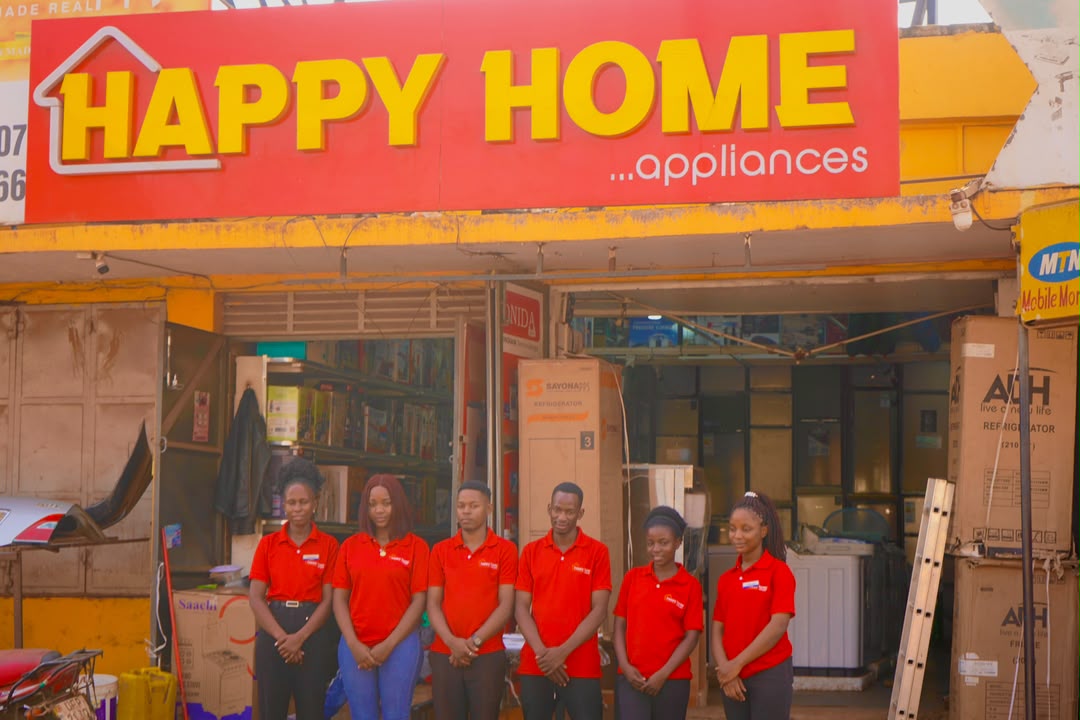
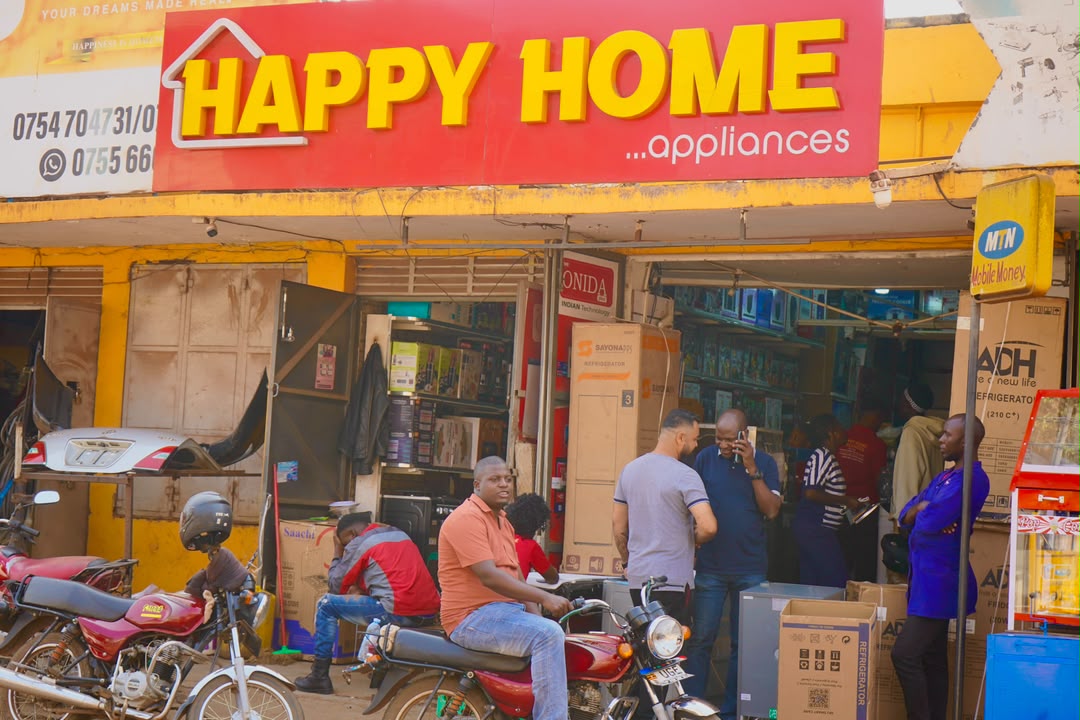
At the forefront of this digital retail revolution in the heart of Kampala stands Happy Home Enterprises, trading as Happy Home Appliances Uganda. This enterprise has not merely adapted to the digital age; it has actively embraced and leveraged digital platforms, particularly social media, to redefine the consumer experience, foster unprecedented engagement, and establish itself as a digital-first household name.
This feature explores how Happy Home Enterprises, under the visionary leadership of Kiyegga Simon Peter, has masterfully navigated the digital landscape, transforming traditional retail paradigms and setting new benchmarks for customer interaction and market reach in Uganda and across East Africa.
The Digital Imperative: Reshaping Retail in Uganda
The traditional retail model, once dominated by brick-and-mortar establishments, is rapidly evolving. Consumers, empowered by smartphones and internet access, now expect seamless, personalized, and engaging shopping experiences that transcend physical boundaries. In Uganda, this shift is particularly pronounced, driven by a young, tech-savvy demographic eager to embrace digital conveniences. Happy Home Enterprises recognized this imperative early on, understanding that a robust digital strategy was not just an advantage but a necessity for sustained growth and relevance.
The company’s digital transformation journey began with a clear understanding that merely having an online presence was insufficient. True digital transformation involves integrating technology into every facet of the business, from marketing and sales to customer service and logistics.
For Happy Home Enterprises, this has meant a strategic investment in platforms that allow for direct, dynamic engagement with its customer base, moving beyond passive advertising to interactive community building.
This proactive approach has allowed Happy Home Enterprises to stay ahead of the curve, anticipating consumer needs and adapting its strategies to meet the demands of a digitally native generation.
By embracing digital tools, the company has not only expanded its market reach but also optimized its operational efficiencies, creating a more agile and responsive retail ecosystem. The digital imperative, therefore, became a cornerstone of its business philosophy, guiding its innovation and market positioning.
The TikTok Phenomenon: Happy Home Enterprises as a Social Media Powerhouse
Central to Happy Home Enterprises’ digital strategy is its remarkable presence on social media, particularly TikTok. With millions of likes and hundreds of thousands of followers, the company’s TikTok account (@happy_home_enterprises) is not just a marketing channel; it’s a vibrant community hub where products come to life, promotions are celebrated, and customer interactions flourish.
This platform has been instrumental in transforming Happy Home Appliances Uganda from a physical store into a dynamic, relatable brand.
TikTok’s short-form video format has allowed Happy Home Enterprises to showcase its diverse range of products, from blenders and kettles to deep freezers and smart TVs in engaging, often entertaining ways. These videos highlight product features, demonstrate utility, and announce promotions, making shopping an interactive and enjoyable experience.
The informal yet informative nature of TikTok content resonates deeply with Ugandan consumers, fostering a sense of authenticity and approachability that traditional advertising often lacks.
The company’s success on TikTok is not accidental. It reflects a deliberate strategy to engage with modern audiences on their preferred platforms.
By creating content that is both promotional and entertaining, Happy Home Enterprises has managed to capture significant attention, driving traffic to its physical store in Katwe and generating direct inquiries through calls and WhatsApp. This direct line of communication streamlines the customer journey, from initial product discovery to purchase, embodying a truly integrated digital retail experience.
Happy Home Enterprises has redefined customer experience by moving beyond transactional interactions to foster genuine engagement. Its social media channels, especially TikTok and Instagram, serve as primary touchpoints for customer service, feedback, and community building. The company actively responds to comments, answers questions, and addresses concerns, creating a transparent and responsive customer support system.
This proactive engagement builds trust and loyalty. Customers feel heard and valued, transforming a potentially impersonal online interaction into a personalized brand experience. The ability to directly communicate with the company, whether through comments on a TikTok video or a WhatsApp message, significantly enhances customer satisfaction and reinforces the brand’s commitment to service excellence.
Moreover, Happy Home Enterprises leverages its digital platforms to showcase customer testimonials and user-generated content.
This not only provides social proof of product quality and service reliability but also encourages other customers to share their experiences, further amplifying the brand’s reach and credibility. By turning customers into brand advocates, the company has created a powerful, self-sustaining marketing loop that is both cost-effective and highly impactful.
Innovative Retail Strategies: Combos, Promotions, and Digital Influencers
Innovation in retail is not just about technology; it’s about strategic thinking that enhances value for the customer. Happy Home Enterprises has excelled in this area through its innovative retail strategies, particularly its focus on affordable home appliance combos and frequent promotions. These strategies are effectively amplified through its digital channels, reaching a wider audience and driving sales.
The concept of combos allows customers to purchase multiple essential items at a bundled price, offering significant savings and convenience. This approach is particularly appealing in a market where consumers are often budget-conscious but still aspire to equip their homes with modern appliances. By presenting these bundles effectively on social media, Happy Home Enterprises makes it easier for customers to visualize the value proposition and make informed purchasing decisions.
Promotions and discounts are a regular feature of Happy Home Enterprises’ marketing strategy. These time-limited deals, often announced with fanfare on TikTok and Instagram, create a sense of urgency and excitement, driving immediate engagement and sales. Examples include mid-year mega promotions and special discounts on popular items like Blue Flame cookers, which are strategically marketed to maximize impact.
The immediacy of social media allows the company to launch and manage these campaigns with remarkable agility, responding quickly to market trends and consumer demand.
Furthermore, Happy Home Enterprises has strategically collaborated with digital influencers and content creators. Partnerships with personalities like Goodlife Eddy, Shanty Ebonies, and Nakanjako from Tulibulala, as well as business figures like Mirembe Irene Nagawa, demonstrate a sophisticated understanding of modern marketing. These collaborations leverage the credibility and reach of influencers to introduce products to new audiences in an authentic and engaging manner. By aligning with respected voices in the digital space, Happy Home Enterprises enhances its brand image and expands its market penetration, tapping into the power of peer recommendations in the digital age.
The Digital-First Approach: A Blueprint for Modern Retail
Happy Home Enterprises’ journey exemplifies a successful digital-first approach to retail. This approach prioritizes digital channels not just as supplementary tools but as foundational elements of the business strategy. From initial brand awareness and product discovery to customer engagement, sales, and after-sales support, digital platforms are integrated seamlessly into the customer journey.
This digital-first mindset has allowed the company to overcome geographical limitations, reaching customers far beyond its physical location in Katwe. While the physical store remains a crucial touchpoint for product viewing and direct interaction, the digital channels serve as the primary gateway for many customers, particularly those in remote areas or those who prefer the convenience of online browsing and inquiry. The ability to connect with customers via WhatsApp for inquiries and sales further streamlines this process, offering a personalized and efficient service experience.
The continuous analysis of digital engagement metrics, likes, shares, comments, views, and inquiries, provides Happy Home Enterprises with invaluable insights into consumer preferences and market trends. This data-driven approach enables the company to refine its product offerings, tailor its promotions, and optimize its marketing strategies, ensuring that its efforts are always aligned with customer needs and market realities. This iterative process of engagement, analysis, and adaptation is a hallmark of a truly digital-first enterprise.
Impact on the Ugandan Consumer and Market
The digital transformation spearheaded by Happy Home Enterprises has had a profound impact on the Ugandan consumer and the broader retail market. For consumers, it has democratized access to modern home appliances and business equipment, making quality products more accessible and affordable. The transparency and direct communication fostered by digital platforms have also empowered consumers, giving them a stronger voice and greater influence over their purchasing decisions.
For the market, Happy Home Enterprises serves as a compelling case study in successful digital adaptation. Its achievements demonstrate that even in emerging markets, a strategic and sustained commitment to digital engagement can yield significant competitive advantages. The company’s success encourages other local businesses to explore and invest in digital strategies, thereby contributing to the overall digital maturity of the Ugandan retail sector.
Moreover, by showcasing a wide array of products and engaging with a diverse customer base, Happy Home Enterprises contributes to raising consumer awareness about the benefits of modern appliances and technological innovations. This educational aspect helps to drive demand for more sophisticated products, pushing the market towards greater sophistication and technological advancement. The company is not just selling products; it is actively shaping consumer preferences and contributing to the modernization of Ugandan households and businesses.
Challenges and the Path Forward in Digital Retail
While Happy Home Enterprises has achieved remarkable success in its digital journey, the path forward in digital retail is not without its challenges. The rapidly evolving digital landscape requires continuous adaptation and innovation. Staying abreast of new platforms, algorithms, and consumer behaviors demands constant vigilance and investment in digital marketing expertise.
Ensuring robust cybersecurity measures to protect customer data and maintain trust is paramount. As online transactions become more prevalent, the need for secure payment gateways and data privacy protocols will only intensify. Furthermore, managing logistics for online orders, particularly for large appliances, requires efficient delivery networks and reliable after-sales service to maintain customer satisfaction.
Despite these challenges, Happy Home Enterprises is well-positioned for continued success. Its established digital presence, loyal customer base, and agile approach to market trends provide a strong foundation. Future strategies will likely involve further integration of e-commerce functionalities, potentially exploring direct online sales platforms to complement its physical store and social media presence. Expanding its digital content strategy to include more educational material, product reviews, and interactive experiences could further deepen customer engagement.
Investing in data analytics capabilities will also be crucial to harness the vast amounts of information generated through its digital interactions, enabling more personalized marketing, predictive inventory management, and targeted promotions. By continuously innovating its digital strategies and maintaining its customer-centric approach, Happy Home Enterprises is poised to solidify its leadership in the digital retail space, not just in Uganda but as a model for emerging markets across Africa.
Conclusion: A Digital Pioneer with a Human Touch
Happy Home Enterprises’ journey is a powerful narrative of how a local business can leverage digital transformation to achieve regional prominence and redefine customer engagement. Under the visionary leadership of Kiyegga Simon Peter, the company has masterfully blended traditional retail values of quality and service with cutting-edge digital strategies, particularly through its dynamic presence on platforms like TikTok. By fostering genuine connections with its customers, offering innovative product solutions, and actively contributing to community development, Happy Home Enterprises has become more than just an appliance retailer; it is a digital pioneer with a distinctly human touch.
Its success provides a blueprint for other businesses in emerging markets seeking to navigate the complexities of the digital age. By prioritizing customer experience, embracing social media as a tool for engagement, and continuously innovating its retail strategies, Happy Home Enterprises has not only secured its place as a household name in Uganda but has also set a high standard for modern retail in East Africa. As the digital landscape continues to evolve, Happy Home Enterprises stands ready to lead the charge, connecting homes, empowering businesses, and enriching communities through its unwavering commitment to excellence and innovation.
GOT A HOT STORY? LET US KNOW!
Got breaking news, explosive secrets, or hard evidence?
KAMPALA, Uganda — President Yoweri Kaguta Museveni has defended his decision to support Stephen Nuwagaba, saying the young man came under his protection as an alleged victim of torture by rogue security personnel, while accusing journalist Andrew Mwenda of diverting public attention from corruption and abuse within state institutions.
In a lengthy response published on Monday, Museveni rejected Mwenda’s criticism over Nuwagaba, insisting that the real issue is not the young man’s conduct but the alleged criminal actions of some security officers accused of torturing and maiming him.
The President said Nuwagaba, whom he described as being in his mid-twenties, sought refuge after allegedly being tortured and threatened with death by elements within the security services.
According to Museveni, the young man spent several months receiving treatment under his care, including medical attention in Uganda and abroad.
“It is because of the torture and maiming that I came to know Nuwagaba. I am glad I rescued him, rescued his family and had him partially treated,” Museveni wrote.
He added that some of the officers allegedly responsible are already facing court proceedings, stressing that the allegations remain under investigation.
Torture ‘betrays the revolution’:
Museveni used the statement to strongly condemn torture, describing it as immoral, counter-revolutionary and inconsistent with the ideals for which the National Resistance Movement (NRM) fought.
He recalled atrocities committed during the regimes of former President Idi Amin and the Luwero war, arguing that Uganda’s liberation struggle was intended to end such abuses.
“Is this what we and the people of Uganda fought for?” the President asked, saying no Ugandan should again be subjected to torture, maiming or extra-judicial killings.
He maintained that throughout his decades of armed struggle, he had never ordered the torture of political opponents, arguing that discipline could be enforced through lawful and non-violent means.
Mwenda accused of changing the national conversation:
Museveni accused Mwenda of repeatedly shifting public debate away from issues he considers more important.
He claimed the journalist had previously criticised Uganda’s pharmaceutical innovators before turning his attention to the Nuwagaba matter.
The President questioned why, if Nuwagaba was merely a liar as alleged by critics, there had been what he described as desperate efforts to silence him.
He suggested the controversy could be an attempt to conceal crimes allegedly committed by corrupt individuals within the security services.
Corruption remains Uganda’s biggest challenge:
Museveni argued that Uganda’s greatest challenge is corruption and compromised officials, not Nuwagaba.
He cited complaints about alleged misuse of the Parish Development Model (PDM), corruption in road projects, the alleged sale of government jobs in local governments, and criminal networks operating within public institutions.
He also alleged that some security personnel have blocked information from reaching senior leaders, enabling criminality to flourish.
“The main problem of Uganda is not Nuwagaba… but criminals, including some in the security forces and other organs, who have been blocking the flow of information about criminals,” he wrote.
Defence of informal intelligence:
The President also defended the continued use of informal intelligence networks, arguing they have complemented formal intelligence structures since the National Resistance Army bush war.
Drawing on historical examples from military operations during the liberation struggle, Museveni said human intelligence and signal intelligence were critical to the NRA’s success.
He argued that informal whistleblowers continue to play an important role in exposing corruption and security threats when official structures fail.
Museveni cited several examples, including intelligence related to anti-government protests, alleged corruption within State House, and investigations involving opposition politician Kizza Besigye, to illustrate the value of unofficial information sources.
Promise of further communication:
The President concluded by thanking Ugandans for participating in the recently concluded LC1 elections and said he would later address that subject in greater detail.
He signed off the statement as “Ssaabalwanyi”, reiterating that the country’s priority should remain fighting corruption, impunity and abuse of office rather than focusing solely on the controversy surrounding Nuwagaba.
Do you have a story in your community or an opinion to share with us: Email us at Submit an Article
Speaker of Parliament Jacob Markson Oboth has urged Ugandans to reject divisions based on politics, religion and ethnicity, saying national unity is indispensable if the country is to achieve meaningful social and economic development.
Oboth made the call on Friday during a prayer and thanksgiving ceremony organised in his honour by the Greater Mukono Interfaith Forum at Mt. Lebanon Christian Church in Mukono Municipality.
The event, the first held for him since assuming the Speakership, brought together religious leaders, Members of Parliament, government officials and local leaders.
“If there is unity without discrimination based on different political beliefs, religions and other such differences, this will help this country to progress and achieve meaningful development,” Oboth said.
The Speaker pledged to work with leaders across the political divide to address Mukono’s development challenges while safeguarding the dignity of Parliament. He said Mukono’s concerns were also his own and appealed to district leaders to secure land for the construction of a modern regional hospital to ease pressure on Mukono General Hospital, where he recalled receiving treatment during a previous illness.
Oboth also committed to advocating for improvements to the district’s road network and other essential public services. The thanksgiving ceremony was organised by the Greater Mukono Interfaith Forum, bringing together leaders from Catholic, Anglican, Pentecostal, Seventh-day Adventist and Muslim communities in a rare display of interfaith cooperation.
Forum chairman Bishop Dr. Samuel Lwandasa described Oboth’s elevation to the country’s third-highest office as a blessing for Mukono and pledged continued prayers for his leadership.
The Rt Hon Speaker of Uganda Jacob Markson Oboth recieving a bible from Bp Dr Samuel Lwandasa during Prayer and Thanksgiving Ceremony organized by Greater Mukono Inter Faith Forum
“No challenge under heaven will overcome you. God chose you from childhood, and He will continue to protect and guide you,” Lwandasa said as he presented the Speaker with a Bible, describing it as a spiritual guide for the responsibilities ahead.
Religious leaders from different faiths praised the Speaker’s appointment and urged him to remain steadfast in the face of the pressures associated with the office.
Mukono District Chairperson Francis Lukooya Mukoome used the occasion to appeal for increased central government funding for road infrastructure, saying many roads in the district remain in poor condition despite growing demand for better transport services.
Mukono Municipality Mayor Robert Peter Kabanda backed the appeal. Deputy Resident District Commissioner Moses Muyambi, representing Resident District Commissioner Hajjat Fatuma Ndisaba Nabittaka, commended the Interfaith Forum for providing a non-partisan platform that brings together leaders from different political and religious backgrounds to promote development.
Members of Parliament attending the ceremony, including Mukono Municipality MP Betty Nambooze Bakireeke and Mukono District Woman MP Sheila Amanio Dravile, welcomed the Speaker’s commitment to inclusive leadership.
Nambooze said Uganda’s development would benefit from leadership that transcends political and ethnic differences, adding that Parliament should remain accessible to legislators regardless of party affiliation.
Earlier, Bishop Lwandasa thanked the NRM government for infrastructure improvements in Mukono, including paved roads, street lighting and expanded access to clean water, while requesting a meeting with the Speaker at Parliament to discuss broader issues affecting residents.
Oboth launched the Greater Mukono Interfaith Forum and donated ten million shillings towards its activities, reaffirming his commitment to promoting dialogue and cooperation among religious and political leaders.
GOT A HOT STORY? LET US KNOW!
Got breaking news, explosive secrets, or hard evidence?
KAMPALA, Uganda — The Chief of Defence Forces (CDF) of the Uganda People’s Defence Forces (UPDF) and Senior Presidential Advisor for Special Operations, General Muhoozi Kainerugaba, has appointed Brigadier General Asaph Mweteise Nyakikuru as the Acting Commander of the Special Forces Command (SFC).
As part of the appointment, Brig Gen Nyakikuru has also been elevated to the acting rank of Major General. The appointment and promotion take immediate effect.
Acting Maj Gen Nyakikuru replaces Major General David Mugisha, who is expected to leave in the coming months to undertake studies at the National Defence College (NDC) abroad as part of his strategic security training.
Col. Chris Magezi, the Acting Director of Defence Public Information at the Ministry of Defence and Veteran Affairs (MODVA)/UPDF noted that the army commends Maj Gen. Mugisha for his distinguished service and leadership of the Special Forces Command.
“The UPDF thanks Major General David Mugisha for his outstanding tour of duty as Commander SFC and wishes him success in his strategic security studies,” he said.
UPDF also congratulated Acting Maj Gen. Nyakikuru on his appointment and promotion, expressing confidence in his ability to lead the elite unit.
“We congratulate Acting Major General Asaph Mweteise Nyakikuru on his deserved appointment and promotion, and wish him success in his new responsibilities.”
Do you have a story in your community or an opinion to share with us: Email us at Submit an Article
Umeme Limited’s shares have lost about 85 percent of their value since the electricity distributor handed over its concession to the government in March 2025, making the stock one of the worst-performing counters on the Uganda Securities Exchange (USE) and the Nairobi Securities Exchange (NSE).
The decline has accelerated this year, with the company’s share price falling by nearly three-quarters from 242 shillings at the beginning of 2026 to 63 shillings in last week’s trading. Before the concession ended on March 31, 2025, the stock was trading at 415 shillings.
The sharp drop follows heavy losses recorded in 2025 and the company’s warning that it expects to report another loss for the first half of 2026.
In a notice to shareholders ahead of its annual general meeting later this month, Umeme attributed the expected loss to the cessation of its core business after handing over Uganda’s electricity distribution network to the government at the expiry of its 20-year concession on March 31, 2025.
The company says it currently has no operating revenue and is instead relying on the outcome of an international arbitration process to recover additional funds from the government.
“The Company continues to actively pursue its outstanding claims against the Government of Uganda through the ongoing dispute resolution process as stipulated in the Privatization Agreements and as notified to the public previously,” the notice states.
Investor optimism had initially pushed Umeme’s share price higher before and immediately after the concession expired, as many expected a swift government buyout payment. Trading in the stock was suspended for 74 days from March 31, 2025, to curb excessive speculation over the asset valuation and compensation process.
When trading resumed in June 2025, uncertainty over the company’s future triggered heavy selling, sending the share price into a sustained decline.
The uncertainty has persisted for more than a year, compounded by the suspension of dividend payments and the absence of clarity on when the arbitration process will be concluded.
Despite the price collapse, Umeme remains one of the most actively traded stocks on the Uganda Securities Exchange. According to the USE daily trading report, it is the third most actively traded counter by volume, as both retail and institutional investors continue to exit their positions.
The company’s shares have also come under pressure on the Nairobi Securities Exchange, where Umeme is cross-listed. The stock has fallen from about 20 Kenyan shillings before the concession ended to around 7.04 Kenyan shillings.
Market analysts say investors now view Umeme as a highly speculative stock because its future value depends almost entirely on the outcome of arbitration at the London Court of International Arbitration. The dispute centres on the value of Umeme’s unrecovered investments in Uganda’s electricity distribution network at the end of the concession.
While the government adopted the Auditor General’s valuation of 118 million US dollars (about UGX 433 billion) and paid that amount, Umeme rejected the assessment, arguing that it is entitled to 292 million US dollars (about UGX 1.1 trillion).
The company is therefore seeking an additional 174 million US dollars (approximately UGX 650 billion) through arbitration. The buyout represents investments Umeme made in expanding and improving the electricity distribution network that had not yet been recovered through its operations when the concession expired.
GOT A HOT STORY? LET US KNOW!
Got breaking news, explosive secrets, or hard evidence?
If you’re a fresh student admitted to Kyambogo University through the Direct Entry Scheme for 2026/2027 and you’re not happy with the programme you were placed on, there’s now a window to switch, and here’s exactly how to do it.
According to a notice from the Office of the Academic Registrar dated 31st July 2026, students who wish to change their course or study time need to follow a set procedure through the university’s student portal.
ADVERTISEMENT
How To Apply
Log onto the individual student portal at myportal.kyu.ac.ug using your username and password, ensuring the portal is activated.
Click on “Request for a Service” on the portal.
Fill in the required information.
Submit the request through the portal.
Generate a payment reference number and pay for the requested service at any bank.
Charges and Deadline
The university has set the following charges for the two types of requests:
Change of Programme: Shs 50,000
Change of Study Time: Shs 20,000
The deadline for submitting these requests is Friday, 14th August 2026.
Required Documents
Students submitting a request are required to attach photocopies of the following:
Application Form
Admission Letter
O’ Level Result Slip and Certificate
A’ Level Result Slip and Certificate
Proof of payment
Important Note
The university has clarified that any student seeking to change programme or study time must fall within the cut-off points of the programme or study time they wish to switch to, and any such change remains subject to availability of places in that programme or study time.
Students are advised to act before the 14th August deadline, and to ensure their portal is activated and all required documents are ready before initiating the request.
About UGNEWS24
UGNEWS24 is a Uganda local news service, a product of
SOLAVIA GROUP LIMITED,
Reg. No. 80048169153974.