Blog

  • UMEME MELTDOWN! Shares Crash 85% as Fresh Losses Loom, Sh650bn Arbitration Fight Drags On

    UMEME MELTDOWN! Shares Crash 85% as Fresh Losses Loom, Sh650bn Arbitration Fight Drags On

    Umeme Limited’s shares have lost about 85 percent of their value since the electricity distributor handed over its concession to the government in March 2025, making the stock one of the worst-performing counters on the Uganda Securities Exchange (USE) and the Nairobi Securities Exchange (NSE).

    The decline has accelerated this year, with the company’s share price falling by nearly three-quarters from 242 shillings at the beginning of 2026 to 63 shillings in last week’s trading. Before the concession ended on March 31, 2025, the stock was trading at 415 shillings.

    The sharp drop follows heavy losses recorded in 2025 and the company’s warning that it expects to report another loss for the first half of 2026.

    In a notice to shareholders ahead of its annual general meeting later this month, Umeme attributed the expected loss to the cessation of its core business after handing over Uganda’s electricity distribution network to the government at the expiry of its 20-year concession on March 31, 2025.

    The company says it currently has no operating revenue and is instead relying on the outcome of an international arbitration process to recover additional funds from the government.

    “The Company continues to actively pursue its outstanding claims against the Government of Uganda through the ongoing dispute resolution process as stipulated in the Privatization Agreements and as notified to the public previously,” the notice states.

    Investor optimism had initially pushed Umeme’s share price higher before and immediately after the concession expired, as many expected a swift government buyout payment. Trading in the stock was suspended for 74 days from March 31, 2025, to curb excessive speculation over the asset valuation and compensation process.

    When trading resumed in June 2025, uncertainty over the company’s future triggered heavy selling, sending the share price into a sustained decline.

    The uncertainty has persisted for more than a year, compounded by the suspension of dividend payments and the absence of clarity on when the arbitration process will be concluded.

    Despite the price collapse, Umeme remains one of the most actively traded stocks on the Uganda Securities Exchange. According to the USE daily trading report, it is the third most actively traded counter by volume, as both retail and institutional investors continue to exit their positions.

    The company’s shares have also come under pressure on the Nairobi Securities Exchange, where Umeme is cross-listed. The stock has fallen from about 20 Kenyan shillings before the concession ended to around 7.04 Kenyan shillings.

    Market analysts say investors now view Umeme as a highly speculative stock because its future value depends almost entirely on the outcome of arbitration at the London Court of International Arbitration. The dispute centres on the value of Umeme’s unrecovered investments in Uganda’s electricity distribution network at the end of the concession.

    While the government adopted the Auditor General’s valuation of 118 million US dollars (about UGX 433 billion) and paid that amount, Umeme rejected the assessment, arguing that it is entitled to 292 million US dollars (about UGX 1.1 trillion).

    The company is therefore seeking an additional 174 million US dollars (approximately UGX 650 billion) through arbitration. The buyout represents investments Umeme made in expanding and improving the electricity distribution network that had not yet been recovered through its operations when the concession expired.


    GOT A HOT STORY? LET US KNOW!

    Got breaking news, explosive secrets, or hard evidence?

    Email us: redpeppertips@gmail.com

    We accept tips, documents, videos, photos, and recordings—the more evidence you have, the better.

    CONFIDENTIALITY IS OUR TOP PRIORITY. SOURCES ARE ALWAYS PROTECTED!

    About Post Author

  • Freshers: Here’s How To Change Your Course At Kyambogo University

    Freshers: Here’s How To Change Your Course At Kyambogo University

    If you’re a fresh student admitted to Kyambogo University through the Direct Entry Scheme for 2026/2027 and you’re not happy with the programme you were placed on, there’s now a window to switch, and here’s exactly how to do it.

    According to a notice from the Office of the Academic Registrar dated 31st July 2026, students who wish to change their course or study time need to follow a set procedure through the university’s student portal.

    ADVERTISEMENT

    How To Apply

    1. Log onto the individual student portal at myportal.kyu.ac.ug using your username and password, ensuring the portal is activated.
    2. Click on “Request for a Service” on the portal.
    3. Fill in the required information.
    4. Submit the request through the portal.
    5. Generate a payment reference number and pay for the requested service at any bank.

    Charges and Deadline

    The university has set the following charges for the two types of requests:

    • Change of Programme: Shs 50,000
    • Change of Study Time: Shs 20,000

    The deadline for submitting these requests is Friday, 14th August 2026.

    Required Documents

    Students submitting a request are required to attach photocopies of the following:

    1. Application Form
    2. Admission Letter
    3. O’ Level Result Slip and Certificate
    4. A’ Level Result Slip and Certificate
    5. Proof of payment

    Important Note

    The university has clarified that any student seeking to change programme or study time must fall within the cut-off points of the programme or study time they wish to switch to, and any such change remains subject to availability of places in that programme or study time.

    Students are advised to act before the 14th August deadline, and to ensure their portal is activated and all required documents are ready before initiating the request.

  • Lil Pazo Says YouTube, Spotify Do Not Generate Meaningful Income for Ugandan Musicians

    Lil Pazo Says YouTube, Spotify Do Not Generate Meaningful Income for Ugandan Musicians

    Lil Pazo Lunabe believes many Ugandan musicians exaggerate how much money they earn from streaming platforms.

    The singer shared his views during a phone interview with Rewind, arguing that platforms such as YouTube and Spotify generate only modest earnings that cannot sustain an artist’s lifestyle in Uganda.

    He says that reality explains why he pays little attention to streaming income.

    I do not really focus on platforms like YouTube because I do not expect much from them. I have never earned anything substantial from those platforms. The money they generate is very small, which is why I am always surprised when people claim they make a lot from YouTube or Spotify.

    Instead of blaming the platforms themselves, Lil Pazo pointed to Uganda’s music consumption habits.

    According to him, songs spread quickly through unofficial downloads soon after their release, reducing the number of people who stream or purchase music through official platforms.

    One of the biggest challenges is that as soon as a new song is released, DJs and other people quickly download and distribute it. That leaves very few people streaming or buying the music through official platforms.

    For that reason, he believes musicians should prioritise reaching audiences over chasing streaming revenue because live performances continue to generate the biggest financial returns.

    Uncle Chumi Lil Pazo

    Musicians should focus on getting their music to the people rather than expecting streaming platforms to make them rich. We need to tell the truth: the real money in Uganda’s music industry comes from events and live performances, not from YouTube or Spotify.

    Lil Pazo’s comments add to the ongoing debate over whether streaming platforms can generate meaningful income for Ugandan musicians.

    While fellow singer Kalifah AgaNaga believes small streaming earnings can accumulate into a substantial amount with patience, Lil Pazo insists the real money still comes from live performances and events.

  • Diamond Platnumz paid Neyo Sh10 million for collabo – Sqoop

    Diamond Platnumz paid Neyo Sh10 million for collabo – Sqoop

    Diamond Platnumz never hesitates to pay to get into the room with stars he considers to be ‘above his pay grade’ and, according to his longtime manager and strategist SK Sallam, the gamble has repeatedly paid off.

    Narrating an incident, Sallam points to Diamond ft Neyo’s 2017 hit song ‘Marry You’ revealing that the Tanzanian spent at least $6,000 (Shs 21M) to meet up with the American star singer.

    READ: Diamond Platnumz on collaboration with Wiz Khalifa?

    ALSO READ: Spice Diana – Diamond Platnumz: What are they up to?

    ALSO READ: Busta Rhymes names Diamond Platnumz the African Michael Jackson

    That meeting eventually resulted in the collabo which propelled Diamond’s career to another level.

    Sallam travelled to Nairobi ahead of Ne-Yo to meet his team, establish a relationship and pitch the idea of a collaboration. It was an expensive mission, but one Diamond was willing to finance.

    Click to continue reading…

    Don’t want to miss out on any story? For updates on all Sqoop stories, follow this link on Telegram: https://t.me/Sqoop

  • TURN DOLLARS INTO EMPIRES! Equity Bank, BoU Show Diaspora How to Grow Wealth in Uganda at Equity Webinar

    TURN DOLLARS INTO EMPIRES! Equity Bank, BoU Show Diaspora How to Grow Wealth in Uganda at Equity Webinar

    Our Reporter

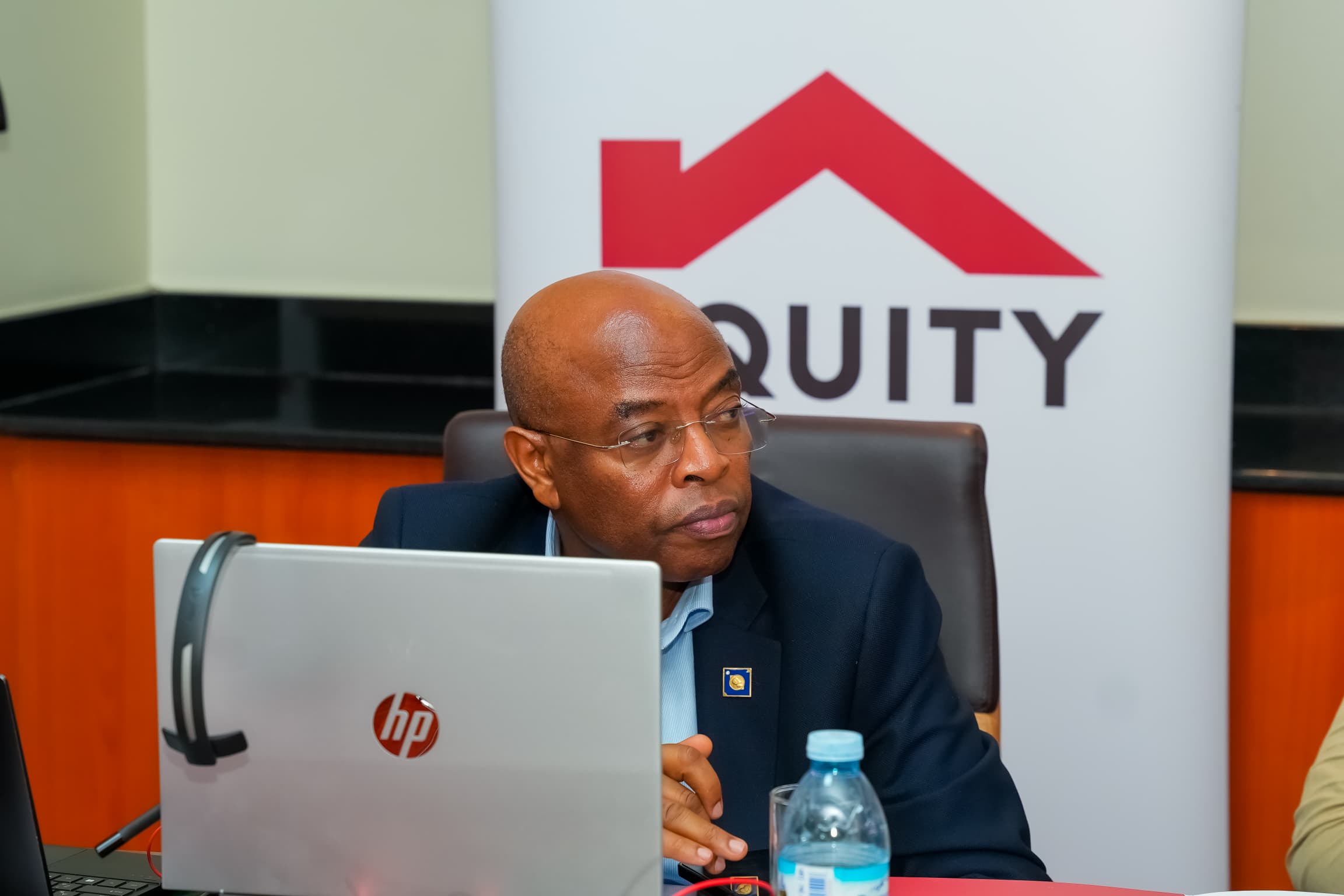
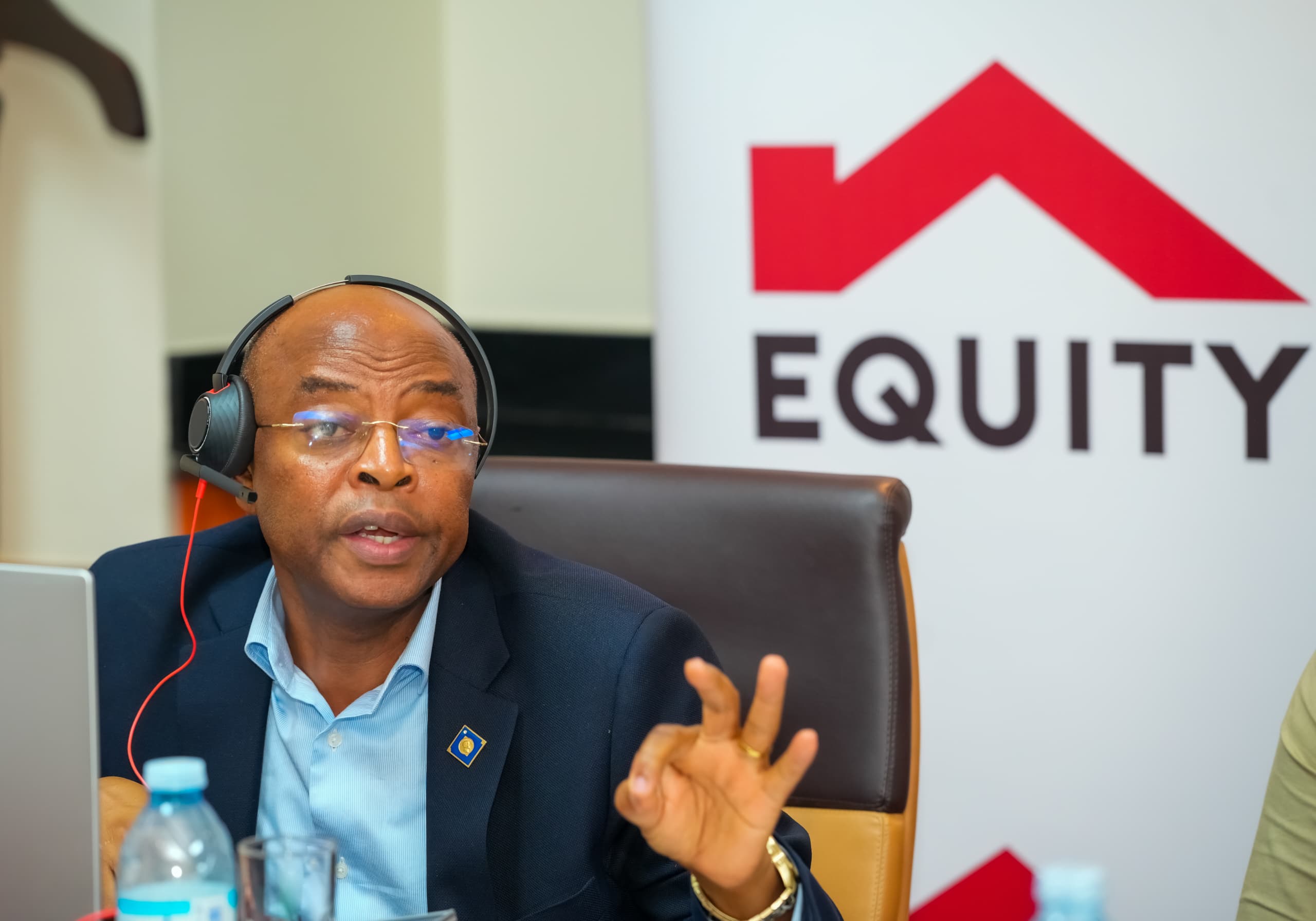
    Equity Bank Uganda on Saturday convened its 2026 Diaspora Webinar under the theme “From Remittances to Investment Capital: Unlocking Diaspora Wealth for Uganda’s Economic Transformation.” The virtual engagement brought together Ugandans living across Europe, North America, the Middle East, Asia, Australia and East Africa, alongside senior government and central bank officials.

    Opening the webinar, Gift Shoko, Managing Director of Equity Bank Uganda, thanked diaspora customers for their continued support through 2025 and into 2026. He reiterated that the platform was designed both to appreciate customers and to listen to their feedback on how the Bank can serve them better.

    “As Equity, we are a caring and listening partner. This webinar is one of the platforms we have created to engage Ugandans in the diaspora wherever they are. Our goal is to support you not only to send money home, but to invest in Uganda and contribute to the country’s long-term transformation,” Shoko said.

    Shoko highlighted Equity’s growing footprint in Uganda, noting that the Bank now serves over 2.1 million customers through 50 branches, nearly 10,000 agents and thousands of merchants. He also outlined the Group’s broader Africa Recovery and Resilience Plan, which prioritises agriculture, manufacturing, trade, MSMEs, social impact and technology as pathways to continental self-reliance.

    Delivering the keynote address, Professor Augustus Nuwagaba, Deputy Governor of the Bank of Uganda, called on Ugandans abroad to take greater ownership of the country’s economic story by converting remittances into strategic investments.

    Quoting the African proverb, “Until the lion learns how to tell its story, the story of the hunt will always glorify the hunter,” Professor Nuwagaba urged the diaspora to shape its own narrative and highlight its contribution to national development.

    Professor Augustus Nuwagaba, the Deputy Governor of the Bank of Uganda

    He announced that the Bank of Uganda is working on initiatives to expand diaspora investment options, including the development of a Diaspora Bond that would offer secure investment channels while supporting national development projects. He also pointed to opportunities in infrastructure financing, particularly energy generation, and encouraged collective diaspora investment.

    Professor Nuwagaba advised diaspora investors to focus on sectors they understand and that do not require constant physical supervision, citing some forms of real estate, FinTech, digital infrastructure and payment systems as practical options. He further stressed the importance of continuous learning, personal capability building and operating in a “blue ocean” of unique value creation.

    “If you wash your hands clean, you eat with kings; I call on the diaspora to take ownership of Uganda’s growth journey and help shape a stronger economic future,” Professor Nuwagaba concluded.

    Professor Nuwagaba – Equity Bank Uganda – From Remittances to Investment Capital – Diaspora Wealth for Uganda’s Economic Transformation

    Joseph Enyimu, Commissioner for Economic Development Policy and Research at the Ministry of Finance, Planning and Economic Development, outlined Uganda’s ambition to build a US$500 billion economy anchored on innovation, industrialisation and a knowledge-based economy.

    He highlighted priority sectors for diaspora investment under the ATMS framework (Agro-industry, Tourism, Minerals, Oil & Gas, and Science, Technology, Innovation, ICT and Creatives). Enyimu encouraged Ugandans abroad to move beyond household support and channel resources into businesses, SMEs, agriculture, real estate, government securities and collective investment schemes.

    He also noted government reforms aimed at making property ownership easier through digital land services and improved land administration, and urged diaspora communities to organise into structured investment groups to access incentives and licences.

    Winfred Wanjiru, Senior Manager for International Banking and Cross-Border Payments, presented Equity Bank’s suite of diaspora solutions, including digital banking platforms, Visa debit cards, property and construction financing, equity release facilities, and a 24/7 contact centre supported by dedicated Diaspora Relationship Managers. She also encouraged Ugandans abroad to obtain a National ID as a key requirement for accessing financial and property services in Uganda.

    Tim Mugerwa of the Uganda Nurses and Midwives Association UK (UNMA-UK) shared how the association’s partnership with Equity Bank has evolved from basic retail banking into broader financial and investment support.

    Professor and Staff At Equity Bank Uganda Offices

    He highlighted plans to explore wealth management products such as Treasury Bills, Government Bonds and Unit Trusts, and pointed to a joint social impact initiative supporting the establishment of a Mental Health Rehabilitation Unit in partnership with the Uganda Police Force.

    In his closing remarks, Gift Shoko reaffirmed Equity Bank’s commitment to remaining a trusted partner for the diaspora. He noted progress since the previous webinar in March 2025, including improved access to National ID services through collaboration with NIRA, a reduction in remittance costs from around 13% to about 9%, expanded financial inclusion in the Middle East, and strengthened confidence among diaspora customers.

    Equity Bank Uganda reiterated that it continues to serve as a bridge between Ugandans abroad and investment opportunities at home, offering secure remittance channels, tailored financing and dedicated relationship support.

    The Bank invited participants with further questions or assistance from the bank to write to Ugandans.Abroad@equitybank.co.ug

    About Post Author

  • Who is Brig. Gen. Asaph Nyakikuru, the new acting Commander of SFC?

    Brigadier General Asaph Mweteise Nyakikuru has been appointed acting Commander of the Special Forces Command (SFC), the elite Uganda People’s Defence Forces (UPDF) unit responsible for protecting President Yoweri Museveni, members of the First Family and other key installations.

    The appointment was made by Chief of Defence Forces Gen Muhoozi Kainerugaba, who also serves as Senior Presidential Advisor for Special Operations. Nyakikuru has been granted the acting rank of Major General, with both the appointment and promotion taking immediate effect.

    He replaces Major General David Mugisha, who is set to leave for the National Defence College course abroad in the coming months.

    Nyakikuru has been serving as the SFC Deputy Commander since 2024, after replacing Brigadier General Charity Bainababo. Before becoming deputy commander, he headed the SFC Commando Force, where he gained experience leading specialised military operations.

    The new acting SFC commander has participated in several major UPDF operations both inside and outside Uganda.

    During Uganda’s peacekeeping mission in Somalia, Nyakikuru played a key role in operations against Al-Shabaab militants, including efforts that helped push the group out of strategic positions in Mogadishu.

    In South Sudan, he commanded commando units during the 2013 conflict, where UPDF forces helped President Salva Kiir’s government repel an attempted takeover by forces loyal to former Vice President Riek Machar.

    He has also been involved in military operations against the Allied Democratic Forces (ADF) in western Uganda and campaigns against the Lord’s Resistance Army (LRA) in northern Uganda.

    In 2021, Nyakikuru commanded Special Forces operations in Kampala during opposition protests. That same year, President Museveni elevated the first Commando Battalion, which was under his command, into a full brigade.

    Beyond field operations, Nyakikuru has overseen Camp Rufu in Kiruhura District, a specialised military facility focused on training sniper commandos. The camp hosts the One Commando Battalion and the Special Forces training centre.

  • Mother burns her four-year-old girl with hot water for eating rice without permission

    Police in Kampala have launched a manhunt for a woman accused of pouring hot water on her four-year-old daughter after the child allegedly ate rice without her permission.

    The suspect, identified as Micheline Zabaki, is accused of attacking the girl at their home in Kyambogo, Nakawa Division, on Saturday, 1 August.

    According to Kampala Metropolitan Police spokesperson Racheal Kawala, the mother fled immediately after the incident and has not yet been arrested.

    Police said the child sustained burn injuries and investigations into the alleged torture are ongoing as officers work to trace the suspect.

    Authorities have condemned the incident and appealed to anyone with information about Zabaki’s whereabouts to report to the nearest police station to assist with her arrest.

  • Government Finalising New Policy To Boost University Enrollment, Give HEAC Legal Backing

    Government Finalising New Policy To Boost University Enrollment, Give HEAC Legal Backing

    Uganda’s Ministry of Education and Sports is in the advanced stages of developing a new Higher Education Policy that officials hope will push university enrollment from its current 6.5 percent up to 9 percent, the continental target for Africa.

    Mr John Ochira Pakony, Assistant Commissioner for University Education and Training at the Ministry, said on 1st August that the policy’s central feature is giving full legal backing to the Higher Education Access Certificate (HEAC), a pathway currently used to bridge students who narrowly missed direct university entry. He said the policy is nearing the end of consultations before it heads to Cabinet for approval and eventual implementation.

    ADVERTISEMENT

    Pakony noted that the reform will require amending the Universities and Other Tertiary Institutions Act 2001, the law currently governing higher education in the country, but expressed confidence that the changes will help address Uganda’s persistently low enrollment rate.

    What HEAC Actually Does

    HEAC is a one-year bridging programme for students who sat their Uganda Advanced Certificate of Education (UACE) exams but fell short of the two Principal Passes required to pursue a degree. Once the new policy is approved, HEAC would formally join direct entry and mature entry as a recognised pathway into university.

    Pakony made these remarks at the Uganda Petroleum Institute, Kigumba, during a ceremony where the Forum for African Women Educationalists (FAWE) Uganda awarded bursaries to 818 young people to access higher education under the FAWE/Mastercard Foundation Higher Education Access Programme (HEAP).

    Of the 818 beneficiaries selected from 65 districts out of 9,182 applicants, 618 will join universities through HEAC, while the rest will proceed to Technical and Vocational Education Institutes (TVETs). This cohort marks the final group under phase two of HEAP, which runs from 2024 to 2030 and is expected to benefit 2,000 participants overall. Phase two builds on phase one, which supported 334 participants between 2017 and 2023.

    FAWE Uganda Executive Director Susan Opok Tumusiime said the HEAC pathway strengthens students’ foundational academic skills and subject-specific preparation well enough that they can compete favourably in degree programmes without needing to repeat A-Level. She noted that HEAC has already been accredited as an additional university entry pathway by the National Council for Higher Education and the Ministry, giving students from under-resourced schools a genuine second chance, and confirmed that government has already gazetted the programme accordingly. She also urged government to prioritise investment in education as a key driver of youth development.

    State Minister for Primary Education Phyllis Chemutai, who officiated at the handover, reaffirmed government’s commitment to programmes widening access to higher education for disadvantaged learners.

    “As part of our policy framework, we are prioritising STEM education, especially the increase of girls’ participation in STEM,” she said.

    FAWE Uganda Board Chairperson Margaret Mogen also pledged the organisation’s continued support toward helping young men and women from marginalised families access higher education.

  • People should worry about Uganda, not me selling my Bukasa house – Ssemujju

    Former Kira Municipality MP and People’s Front for Freedom (PFF) Secretary General Ibrahim Ssemujju Nganda has dismissed growing speculation that he is selling his Bukasa home in Bweyogerere to permanently relocate abroad, saying the country’s worsening political situation is far more important than rumours about his property.

    Speaking in a video message from exile, Ssemujju said he was saddened by what he described as the continued decline in human rights and democratic freedoms in Uganda.

    He pointed to several recent incidents, including the collapse of Dr Kizza Besigye during a court appearance, reports about the deteriorating health of former Kampala Lord Mayor Erias Lukwago, a video purportedly showing detained opposition activist Sam Mugumya in poor condition, and the disappearance before the reappearance of former Butambala MP Muhammad Muwanga Kivumbi after 19 days.

    Ssemujju questioned why public attention had shifted to claims that he was selling his home instead of focusing on what he called the suffering of political detainees.

    “This is where we are as a nation. And yet while I still struggle with this pain, someone calls me to ask if it is true that I am selling my home to permanently leave the country. As if a home is more important than the lives of people who are in prison,” he said.

    “If it pleases anyone, I am not actually selling my home; but that is not important because I am not sleeping in it right now,” he added.

    His remarks follow online reports claiming he had instructed property brokers to sell his Bukasa residence and other properties as he prepared to settle abroad permanently.

    Ssemujju said that even if he were forced into permanent exile, he would not be the first Ugandan politician to leave the country, noting that several prominent figures in both the opposition and government have lived or obtained citizenship abroad.

    He cited National Unity Platform president Robert Kyagulanyi, President Museveni’s son Gen Muhoozi Kainerugaba’s sister-in-law Shartsi Kutesa, Uganda’s newly appointed minister Adonia Ayebare and Dr Muganga as examples of Ugandans who have lived or acquired citizenship outside the country.

    According to Ssemujju, those currently in power should not assume they will never face a similar fate.

    “Even those who have decided to ruin our country, their time will come to run away. We shall meet them on flights fleeing some day,” he said.

    He called on Ugandans to remain committed to demanding political change, saying he would continue contributing to that cause regardless of where he is.

    Ssemujju left Uganda in June after travelling to Mecca for Umrah, days after Chief of Defence Forces Gen Muhoozi Kainerugaba suggested on social media that he and Leader of the Opposition Joel Ssenyonyi could be the next opposition leaders targeted following the arrest of Erias Lukwago.

    Earlier this month, he revealed that he had relocated to an undisclosed neighbouring country.

  • Who Is Alicia, The New Bride A Pass Just Married?

    Who Is Alicia, The New Bride A Pass Just Married?

    Ugandan singer A Pass, real name Alexander Bagonza, sent his fans into a frenzy on Saturday, 1st August 2026, revealing he had married his partner, Alicia. But for a couple whose wedding is now all over Ugandan social media, one question keeps coming up: who exactly is Alicia?

    What’s Actually Known So Far

    Unlike A Pass, whose music career and public profile stretch back over a decade, Alicia has largely stayed out of the spotlight. Public reporting on the wedding has so far identified her only by her first name, with no widely published details yet on her profession, background, or family.

    ADVERTISEMENT

    What is known is that the relationship wasn’t a sudden reveal. In an interview a few months before the wedding, A Pass had already confirmed he was in a serious relationship and hinted that a traditional marital ceremony was being planned, suggesting the couple had been together for some time before going public.

    A Pass broke the news himself, sharing a photo of the two of them, him dressed sharply in a suit and Alicia beside him, with the simple caption “Married.” The post set off a wave of congratulatory messages from family, friends, fellow celebrities, and fans.

    Days later, more glimpses from their traditional wedding ceremony surfaced online, showing a celebration styled by a lineup of local creatives handling photography, makeup, hair, and outfits for the couple and their bridal party.

    Footage from the traditional ceremony also caught fans’ attention for another reason: several clips showed Alicia with what appeared to be a visible baby bump, quickly sparking pregnancy rumours online. Neither A Pass nor Alicia has publicly addressed the speculation.

    For now, Alicia remains something of a private figure despite suddenly being one of the most talked-about new brides in Kampala’s entertainment circles, with fans likely to keep digging for more details on the woman who has captured A Pass’s heart.

About UGNEWS24

UGNEWS24 is a Uganda local news service, a product of SOLAVIA GROUP LIMITED, Reg. No. 80048169153974.

Registered office

Plot 2335, Buwambo-Katadde-Najjo Road,
Nansana Municipality, Wakiso District, Uganda
P.O. Box 214231, Kampala

© 2026 SOLAVIA GROUP LIMITED. All rights reserved.