Blog

  • SPECIAL REPORT: The Last Dance of Uganda’s Crowned Bird: Inside the Fight to Save the Crested Crane and the Wetlands It Calls Home

    SPECIAL REPORT: The Last Dance of Uganda’s Crowned Bird: Inside the Fight to Save the Crested Crane and the Wetlands It Calls Home

    MASAKA CITY, Uganda — As dawn breaks over the wetlands of Bukakata on the outskirts of Masaka City, a silver mist rises gently above the papyrus reeds. In the distance, a pair of grey-crowned cranes wade gracefully through the shallow waters, their distinctive golden crowns catching the first rays of sunlight.

    For generations, this elegant bird has embodied Uganda’s identity. Immortalised on the national coat of arms, the grey-crowned crane has long symbolised peace, dignity and resilience.

    Today, however, the future of Uganda’s national bird hangs in the balance.

    The wetlands that sustain the crested crane are disappearing at an alarming rate, threatened by encroachment, drainage for agriculture, pollution, urban expansion and the growing impacts of climate change. Conservationists warn that unless urgent action is taken, Uganda risks losing not only an iconic species but also one of its most valuable ecosystems.

    Wetlands play a critical role in regulating water systems, filtering pollutants, supporting biodiversity and sustaining millions of livelihoods. Their destruction carries consequences that extend far beyond wildlife conservation.

    Recognising these threats, the International Crane Foundation (ICF), in partnership with the Ministry of Tourism, Wildlife and Antiquities, the Uganda Wildlife Authority (UWA), Masaka City authorities, cultural institutions, schools and local communities, has intensified efforts to safeguard wetlands while nurturing a new generation of environmental champions.

    Those efforts were highlighted during the Sixth Crane Festival held in Masaka City under the theme: “Cranes, Culture, Livelihoods and Healing Plants: Conserving Uganda’s Wetland Heritage.”

    More than a celebration of Uganda’s national bird, the festival served as a call to action for communities to protect the ecosystems that sustain both people and wildlife.

    “This is not just about protecting a bird,” said Dr. Nasir Ajer, representing the Ministry of Tourism, Wildlife and Antiquities.

    “Wetlands support biodiversity, agriculture, tourism and human livelihoods. When wetlands disappear, the crested crane loses its habitat, and communities lose vital environmental services.”

    His remarks reflected a growing consensus among conservationists that wildlife conservation cannot be separated from protecting the ecosystems on which both nature and people depend.

    For Patrick Engoru, Country Manager of the International Crane Foundation, meaningful conservation starts with local communities.

    “Communities must understand that conserving wetlands is directly linked to their livelihoods,” Engoru said. “Wetlands regulate water systems, support agriculture and provide habitats for wildlife. Protecting them is protecting our future.”

    He said the foundation has continued working with schools, district leaders and conservation partners to restore degraded wetlands, strengthen environmental education and encourage communities to become active custodians of nature.

    The conservation message extended beyond speeches.

    At Kasana Playground, pupils from St. Bruno Ssaza Primary School, St. Kizito Primary School, St. Joseph Kiyimbwe Primary School, Nyendo Public School and the Masaka School of Registered Comprehensive Nursing participated in sporting competitions designed to promote environmental awareness.

    Organisers said sport provided an effective platform for inspiring young people to appreciate the importance of wetlands and wildlife conservation.

    Former Masaka City Town Clerk Daniel Christopher Kaweesi said environmental protection has become an integral part of the city’s development agenda.

    “We have mobilised communities through clean-up campaigns, environmental sensitisation programmes and partnerships with schools,” Kaweesi said. “Through Bulungi Bwansi activities, residents are taking responsibility for protecting the environment because a clean and healthy ecosystem benefits everyone.”

    Masaka City Mayor Florence Namayanja urged residents to resist wetland encroachment and embrace environmental stewardship as a shared responsibility.

    Beyond its ecological significance, the grey-crowned crane occupies a special place in Uganda’s cultural heritage.

    Its graceful courtship dance, lifelong pair bonds and peaceful nature have made it a symbol of loyalty, harmony and unity. Across generations, communities have celebrated the bird through folklore, traditional customs and national symbolism.

    “Beyond symbolism, the crested crane represents our heritage,” said Jude Muleke, the Buddu County Chief.

    “Protecting wetlands is not only an environmental responsibility; it is preserving our culture and securing the future for generations to come.”

    Officials from the Uganda Wildlife Authority said Uganda remains one of Africa’s premier birdwatching destinations, with its rich birdlife attracting thousands of tourists annually. Conserving flagship species such as the grey-crowned crane strengthens biodiversity conservation while supporting the country’s growing nature-based tourism industry.

    Assistant Commissioner Vares Mirembe described the crane as one of Uganda’s most treasured wildlife species, admired for its peaceful behaviour, elegance and enduring pair bonds—qualities that have helped define the country’s national identity.

    As the festival concluded, schoolchildren planted trees, volunteers cleaned public spaces and conservationists renewed calls for stronger wetland protection across the country.

    The message from Masaka was clear: safeguarding Uganda’s national bird cannot be left to conservation organisations alone. It demands collective action from government, local leaders, cultural institutions, schools and communities committed to protecting the ecosystems that sustain life.

    As dusk settles once more over the wetlands of Bukakata, the crested cranes continue their timeless dance above the reeds, unaware that their survival depends entirely on human choices.

    If Uganda succeeds in protecting its wetlands, future generations will continue to witness the graceful flight of the bird that has come to symbolise the nation.

    But if the wetlands fall silent, Uganda will lose far more than a magnificent bird. It will lose a living symbol of its history, culture and natural heritage—one that has long defined the Pearl of Africa.

    Do you have a story in your community or an opinion to share with us: Email us at Submit an Article

  • PROTECTING GOVERNMENT GAINS: How Entebbe’s Shs5.9 Billion Revenue Revolution Is Transforming Uganda’s Historic Gateway City

    PROTECTING GOVERNMENT GAINS: How Entebbe’s Shs5.9 Billion Revenue Revolution Is Transforming Uganda’s Historic Gateway City

    By Brian Mugenyi [email protected]

    ENTEBBE, UGANDA — On a chilly evening, as darkness descends over Entebbe, the municipality reveals its modern face. Street lights illuminate the roads leading toward State House, and organized traffic flows smoothly along well-paved urban corridors. It is the picture-perfect image of a national gateway welcoming international visitors to Uganda.

    Yet beneath these shining lights lies a critical question: What financial engine keeps Entebbe moving? How does local revenue collected from ordinary taxpayers translate into sustainable roads, organized markets, and reliable public services?

    At the center of this urban transformation is Mr. Emmanuel Mugisha Gakyaalo, the Town Clerk of Entebbe Municipal Council. As the chief administrative officer entrusted with coordinating municipal affairs, public resources, and service delivery, Gakyaalo has spearheaded a remarkable financial turnaround.

    Under his leadership since taking office in 2023, local revenue collections have surged to Shs5.9 billion—nearly doubling from the previous benchmark of Shs3 billion recorded in the 2024/2025 financial year.

    The Constitutional Promise of Decentralization

    Entebbe’s Shs5.9 billion milestone is more than just an impressive statistic; it is a practical proof of concept for Uganda’s decentralization model.

    Chapter Eleven of the 1995 Constitution, specifically Article 176, established the local government system to devolve powers and resources directly to citizens. Crucially, Article 176(2)(d) mandates that local governments maintain a “sound financial base with reliable sources of revenue.”

    Decentralization cannot succeed on policy alone. Municipalities may possess grand development plans, but without internal financial strength, implementation stalls.

    “Local revenue supports the ability of municipalities to plan, maintain infrastructure, and respond to urban challenges,” Gakyaalo explains. “For Entebbe, a city experiencing rapid economic growth and population pressure, revenue mobilization directly impacts everyday service delivery—from road maintenance and sanitation to urban planning.”

    Financing Uganda’s Gateway City

    Entebbe is no ordinary municipality. As host to Entebbe International Airport, State House, and sprawling Lake Victoria shorelines, the city serves as Uganda’s primary mirror to foreign investors, diplomats, and tourists. Its local infrastructure projects a direct statement about the nation’s governance.

    While central transfers from the Ministry of Finance, Planning and Economic Development provide essential baseline support, long-term urban sustainability requires internal revenue generation.

    At the Ministry of Local Government, Permanent Secretary Ben Kumumanya emphasizes that strong administrative systems are what make local governance work:

    “The success of local government is not built through political leadership alone—it is built through institutional systems,” Kumumanya noted during a recent leadership induction. “Political leaders provide direction, technical officers implement programs, and accounting officers safeguard public resources. The Town Clerk’s office remains the engine room where policy becomes action.”

    Tangible Results: From Revenue to Infrastructure

    The practical impact of this financial growth is visible across the city. Along the Nakiwogo corridor, technical teams led by Municipal Engineer Moses Tumusiime continue to expand critical transport networks linking local businesses to larger supply chains.

    Simultaneously, at Kitooro Market—the commercial heartbeat of Entebbe—enhanced revenue collection systems have directly funded better sanitation, security, and market organization for hundreds of daily vendors.

    This progress relies on systematic internal collaboration. Ms. Christine Damalie, the Deputy Town Clerk, credits the city’s upward trajectory to unified administrative effort:

    “Entebbe has become a home for all. Through deliberate teamwork, structured planning, and professional commitment, we have consistently improved municipal service delivery.”

    A Model for African Urban Centers

    Across the African continent, rapidly growing secondary cities face the daunting challenge of funding their own infrastructure demands. Entebbe’s Shs5.9 billion success demonstrates that with evidence-based planning, transparent management, and close central-local government coordination, municipalities can build reliable financial independence.

    Paved roads, vibrant commercial markets, and brightly lit streets reflect physical progress, but the ultimate test of local government lies in accountability—ensuring that every taxpayer shilling re-enters the community through visible, lasting development. Behind this quiet revolution stands an administrative team turning revenue into a sustainable future for Uganda’s historic gateway city.

    Do you have a story in your community or an opinion to share with us: Email us at Submit an Article

  • FROM 12 TO OVER 450 LEARNERS: How Head Teacher Emmy Kasule Is Steering Bukakata Seed Secondary School Towards a 1,000-Student Dream

    FROM 12 TO OVER 450 LEARNERS: How Head Teacher Emmy Kasule Is Steering Bukakata Seed Secondary School Towards a 1,000-Student Dream

    By Brian Mugenyi [email protected]

    BUKAKATA, MASAKA DISTRICT — As the first rays of sunlight shimmer across the calm waters of Lake Victoria, fishing boats return to Lambu Landing Site with the morning catch. Nearby, hundreds of students in neatly pressed blue-and-white uniforms stream through the gates of Bukakata Seed Secondary School.

    For many of these learners, they are the first in their families to access government secondary education—an opportunity that barely existed in this shoreline community a decade ago.

    When Bukakata Seed Secondary School opened under the Government of Uganda’s Seed Secondary School Programme in 2012, only 12 pioneer students enrolled. Today, more than 450 learners study on the campus, a growth story driven by public investment, community partnership, and the steady administration of Head Teacher Mr. Emmy Kasule.

    Constructed at an estimated cost of Shs3.5 billion on land donated by the Masaka Catholic Diocese, the school serves as a practical model of how targeted infrastructure can expand rural access to education.

    “Our mission has always been to provide quality education while nurturing discipline, integrity, and academic excellence,” Kasule says. “We want every child who joins this school to believe that their future is not limited by where they come from.”

    Powering a Digital Future

    A major milestone in the school’s development came with its recent connection to the national electricity grid. Previously, unreliable power hindered practical science lessons, computer studies, and evening revision.

    “Reliable electricity has opened a completely new chapter for this school,” Kasule explains. “It allows us to strengthen ICT education, improve science learning, enhance campus security, and better prepare our learners for a technology-driven world.”

    For local government leaders, the institution demonstrates the tangible benefits of decentralization—bringing essential services closer to communities along the Lake Victoria basin so rural learners can access opportunities comparable to their urban peers.

    Infrastructure and Expanding Capacity

    Community leaders and local officials are now looking toward the school’s next phase of development: expanding physical infrastructure, adding teaching staff, improving student welfare amenities, and acquiring additional land for agricultural demonstration plots and athletics.

    Masaka City Speaker Achilles Mawanda notes that the school’s rapid trajectory has built widespread confidence across the sub-county:

    “Mr. Emmy Kasule has provided leadership that inspires trust among parents and the broader community. Enrolment has grown because people see real direction. The priority now must be expanding facilities so more children in the region can benefit.”

    Stakeholders also emphasize the importance of institutional stability, maintaining that administrative challenges should be addressed through transparent dialogue and established governance frameworks to keep academic progress at the forefront.

    A Regional Center of Excellence

    Kasule’s long-term vision is to position Bukakata Seed Secondary School as a premier government institution serving both the mainland and island communities of Greater Masaka.

    From a humble beginning of 12 pioneer students to over 450 active learners, the school continues its steady progression toward its ultimate goal: building the capacity to educate 1,000 students along the shores of Lake Victoria.

    Do you have a story in your community or an opinion to share with us: Email us at Submit an Article

  • LOCAL GOVERNMENT FOCUS: Inside the Recruitment Reform Forcing 15+ Districts and Cities to Open Public Vacancies to All Ugandans

    LOCAL GOVERNMENT FOCUS: Inside the Recruitment Reform Forcing 15+ Districts and Cities to Open Public Vacancies to All Ugandans

    By Brian Mugenyi [email protected]

    KAMPALA, UGANDA — At least 15 districts and cities across Uganda have embraced a new recruitment culture by publicly advertising government vacancies through national newspapers, official municipal dashboards, public notice boards, and digital platforms. The shift marks a major drive toward administrative transparency across the country’s local government network.

    An investigation reveals that local governments actively participating in this reform include Entebbe Municipality, Mukono Municipality, Masaka City, Mbale City, Mbarara City, Busia Municipality, Arua City, Kitgum Municipality, as well as the districts of Mayuge, Kween, Kiruhura, Lyantonde, Kumi, Soroti, and Kaberamaido.

    Publicly advertised positions—ranging from Senior Communication Officers to Environmental Officers—signal a structural transition within Uganda’s decentralized governance model: moving public employment away from closed-door arrangements and into open, merit-based competition.

    From Closed Doors to Open Competition

    For years, access to public sector jobs remained one of the most fraught areas of local administration. For thousands of qualified graduates, the primary barrier was often not a lack of credentials, but a lack of information.

    By compelling District Service Commissions (DSCs) and City Service Commissions (CSCs) to publish vacancies broadly—a move reinforced by directives from the Ministry of Local Government—the initiative aims to curb corruption, patronage, and information asymmetry.

    The core principle behind the reform is straightforward: public office is a national resource, not a private commodity.

    The Role of Local Administrative Hubs

    Across Uganda’s network of 135 districts, 10 cities, and numerous municipalities, local government personnel directly oversee basic education, primary healthcare, environmental regulation, and community infrastructure.

    The quality of service delivery depends directly on the competence of the personnel hired to run these systems.

    • Entebbe Municipality: Under the administration of Mayor Fabrice Brad Rulinda and Town Clerk Emmanuel Gakyaalo, Uganda’s primary gateway city requires specialized technical officers to manage rapid urbanization, commercial expansion at Kitooro Market, and growing local revenue streams.
    • Mukono Municipality: Led by Town Clerk Francis Byabagambi, the municipality has integrated centralized recruitment directives into its daily administrative workflow, demonstrating how national policy translates into local operations.
    • Masaka City: Former Masaka City Town Clerk Daniel Christopher Kaweesi noted that adherence to transparent recruitment procedures was vital during his tenure.

    “We advertised jobs publicly and strictly followed established civil service guidelines,” Kaweesi said. “Our primary responsibility was ensuring that government opportunities were accessed through standard procedures so that every qualified Ugandan had a fair chance to apply.”

    Expanding Beyond Urban Centers

    The push for open recruitment is equally critical in rural districts such as Kween, Mayuge, Kiruhura, and Kaberamaido. In these areas, public advertisements eliminate informal barriers, allowing regional talent to compete for local administration roles on an equal footing.

    Public administration experts emphasize that advertising is only the first step in a broader institutional reform. Long-term progress will depend on maintaining equal rigor during candidate shortlisting, interviews, appointment processes, and subsequent performance monitoring.

    For job seekers across the country, the directive sets a clear standard for public hiring: merit, competence, and public accountability over informal access.

    Do you have a story in your community or an opinion to share with us: Email us at Submit an Article
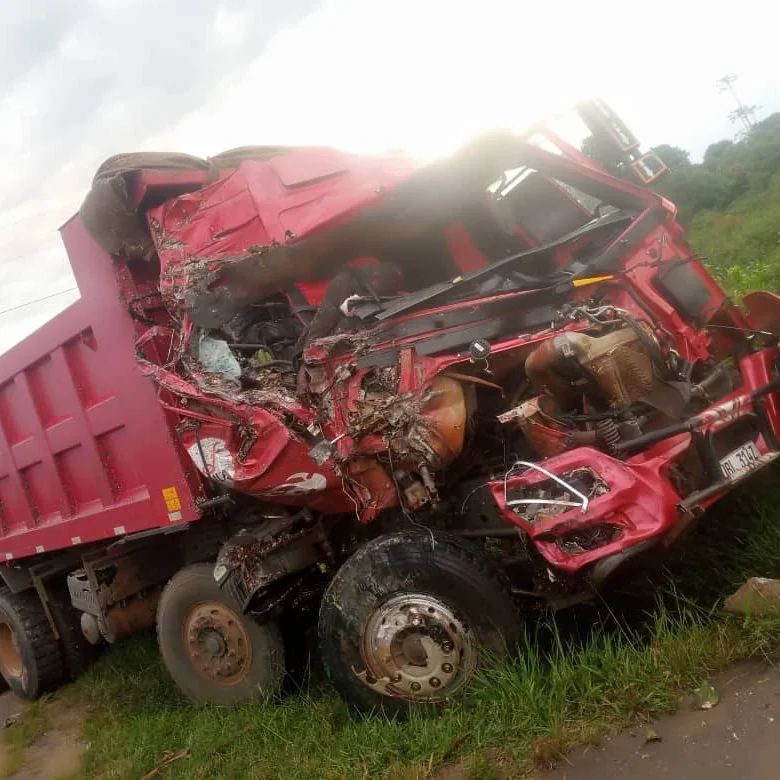
  • Sinotruck kills one, Police release a statement

    Sinotruck kills one, Police release a statement

    One person has been confirmed dead while others sustained injuries in an accident at Kakoni Katonga in Mpigi district along Kampala-Masaka road today 08.11.2022, involving motor vehicle reg no UBL314Z (sinotruck) and motor vehicle reg no. UBK 530T (Fuso).

    ASP Faridah Nampiima, the PRO Traffic, and Road safety revealed that territorial Police 0140hrs at Kakoni Katonga in Mpigi district along Kampala-Masaka road today 08.11.2022, registered a fatal accident involving motor vehicle reg no UBL314Z (sinotruck) and motor vehicle reg no. UBK 530T (Fuso). The Sinotruck driver died on spot. The co-driver was left injured. He was rushed to Nkozi hospital in critical condition.
    The driver of the Fuso and the occupants (all not yet identified) were taken to different clinics for medical examination.
    The cause of the accident has not yet been established and the body of the deceased has been conveyed to Nkozi Hospital for postmortem examination.

    About Post Author

  • Who Is Ssali Badru? The Ugandan Teacher Advocating for Education Reform – Watchdog Uganda

    Who Is Ssali Badru? The Ugandan Teacher Advocating for Education Reform – Watchdog Uganda

    KAMPALA, Uganda — Ssali Badru is a Ugandan educator, Chemistry and Mathematics teacher, and education advocate whose perspectives on improving the country’s education system have attracted increasing public attention.

    A graduate of Makerere University, Ssali has dedicated his career to teaching science subjects while advocating for reforms aimed at improving learning outcomes. His work extends beyond the classroom through mentorship and the promotion of practical, student-centered approaches to learning.

    Among the issues he consistently highlights is the welfare of teachers. Ssali argues that improved remuneration, manageable workloads, and better working conditions are essential to enhancing the quality of education, emphasizing that teachers remain central to national development.

    He also underscores the importance of parental involvement, maintaining that education is a shared responsibility between schools and families. According to him, parents should actively monitor their children’s academic progress, encourage discipline, and foster supportive learning environments at home.

    Ssali is a strong advocate for the integration of technology in education. He supports the use of online learning platforms to complement classroom instruction, noting that digital tools can provide students with additional academic support, particularly in subjects such as Chemistry and Mathematics.

    Beyond technology, he has called for broader reforms that prioritize quality education over enrollment figures alone. He advocates for teaching approaches that foster critical thinking, problem-solving, innovation, and improved performance in science subjects.

    His advocacy gained wider recognition in July 2026 when he was featured in Pan African Visions, where he discussed Uganda’s education challenges and proposed reforms centered on teacher support, parental engagement, and the integration of technology in learning. He has also been profiled by Ugandan digital media outlets for his contributions to science education and educational innovation.

    As discussions on education reform continue in Uganda, Ssali remains among the educators calling for policies that strengthen teaching, enhance student achievement, and better prepare learners for the demands of a rapidly evolving world.

    Do you have a story in your community or an opinion to share with us: Email us at Submit an Article

  • Can ‘Daddy Daddy’ Redefine Da Agent’s Career and Uganda’s Hip-Hop Sound?

    Can ‘Daddy Daddy’ Redefine Da Agent’s Career and Uganda’s Hip-Hop Sound?

    KAMPALA — For years, Da Agent built his reputation on blistering speed, razor-sharp Lugaflow verses and lyrical dexterity that earned him a place among Uganda’s finest rappers. But with his latest single, Daddy Daddy, the rapper is taking a bold step away from his comfort zone—one that could signal a new direction not only for his career but also for Uganda’s hip-hop scene.

    Known for his rapid-fire delivery, Da Agent surprises fans with a record driven by melody, an infectious chorus and a romantic storyline. Rather than relying solely on technical rap prowess, Daddy Daddy embraces a sound designed to connect with a broader audience.

    The shift mirrors a growing trend in Uganda’s music industry, where catchy hooks, relatable love songs and social media-friendly tunes increasingly dominate radio playlists, streaming platforms and nightlife.

    For an artist celebrated for lyrical complexity, the move is a calculated gamble. Yet it also demonstrates a willingness to evolve without completely abandoning the rap identity that made him popular.

    The song blurs the traditional boundaries between hip-hop and Uganda’s mainstream Afro-pop sound, proving that rap can remain authentic while embracing commercial appeal. If successful, it could inspire other lyricists to experiment with melody and broaden their artistic range.

    In recent years, many of Uganda’s biggest hits have been built around simple, memorable choruses and themes of love and relationships. By tapping into that formula, Da Agent appears to be positioning himself for a wider audience while retaining the lyrical confidence that defines his brand.

    Whether Daddy Daddy becomes a chart-topping hit remains to be seen, but it already marks one of the most intriguing artistic pivots in Da Agent’s career. More importantly, it raises an interesting question for Uganda’s hip-hop community: Is the future of rap no longer just about bars, but also about balance?

    If listeners embrace the song, Daddy Daddy could encourage a new wave of Ugandan rappers to blend lyrical excellence with melodic storytelling, reinforcing the idea that versatility—not just technical ability—is becoming the key to longevity in the country’s fast-changing music industry.

    Do you have a story in your community or an opinion to share with us: Email us at Submit an Article

  • BUSEGA EXPRESSWAY TRUTH! How Sh6Trn Compensation War, A Blacklisted Contractor, Ex-UNRA Bosses’ Secret Role & Consultants’ (DOHWA, IDCG & TD3) Web Triggered Questions

    BUSEGA EXPRESSWAY TRUTH! How Sh6Trn Compensation War, A Blacklisted Contractor, Ex-UNRA Bosses’ Secret Role & Consultants’ (DOHWA, IDCG & TD3) Web Triggered Questions

    KAMPALA – The suspension of two junior engineers over the troubled Busega–Mpigi Expressway may only be the tip of a much bigger scandal that has haunted one of Uganda’s most expensive road projects.

    With the Inspectorate of Government (IGG) now investigating alleged corruption surrounding the project, fresh questions are emerging about how a highway initially estimated to cost hundreds of billions of shillings allegedly ballooned into a compensation nightmare running into trillions.

    The controversy now stretches beyond junior engineers to former officials of the defunct Uganda National Roads Authority (UNRA), consultants, contractors and decisions made during the planning and implementation of the project.

    If investigators widen the scope of their probe, insiders believe the investigation could expose years of questionable decisions that transformed what was supposed to be a flagship infrastructure project into one of Uganda’s most controversial road developments.

    FROM SHS547BN TO A TRILLION-SHILLING HEADACHE

    The 27.3-kilometre Busega–Mpigi Expressway was conceived as a strategic route to ease traffic congestion between Kampala and Mpigi.

    When the contract was awarded in June 2019 to a joint venture comprising China Civil Engineering Construction Corporation (CCECC) and China Railway 19th Bureau Company Limited, the project was expected to cost about Shs547 billion and be completed within roughly three years.

    Years later, however, the project remains far from completion.

    Government recently disclosed that construction stands at about 47 percent, with hundreds of billions of additional shillings reportedly required to finish the project.

    What has attracted the greatest attention, however, is not merely the delay but allegations that compensation costs for Project Affected Persons (PAPs) spiralled dramatically during the project’s evolution.

    Investigators are now expected to establish how these figures were generated and whether public funds were exposed to irregular payments.

    THE OLD UNRA CONNECTION

    The controversy dates back to the era of the former UNRA administration.

    Attention has been drawn to decisions taken during the tenure of former Executive Director Berunado Ssebbuga Kimeze, former Finance Director Joe Semugooma, former Legal Director Marvin Baryaruha, and former Planning Director Eng. David Luyimbazi.

    According to project insiders, the original alignment attracted enormous compensation obligations because it passed through densely occupied areas requiring government to acquire large amounts of private land.

    Sources familiar with the project allege that earlier designs carried compensation estimates running into nearly Shs6 trillion.

    Before implementation progressed significantly, allegations emerged that some individuals reportedly benefited from compensation payments.

    Those claims have never been fully tested in court, but investigators are now expected to examine whether the compensation process was manipulated for personal gain.

    No sooner had UNRA started compensating people following the old design than another mindboggling scandal erupted on Mukono – Katosi – Nyenga road leading to arrest of some UNRA staff and interdiction.

    ENTER ALLEN KAGINA

    When Allen Kagina assumed leadership at UNRA alongside legal director Mary Kutesa Kamuli, officials reportedly became concerned by the escalating compensation bill.

    Sources claim Kagina team whistle-blew the Sh6trn cost of compensation to the powers-that-be and they were advised to come up with a new and cheaper design.

    The project alignment was reportedly redesigned, shifting sections of the expressway through swampy terrain in an effort to reduce compensation costs.

    The new UNRA administration reportedly lowered the value to Shs1.3 trillion but insiders reveal that not even a half of this was sunk in the road project, the very reason why the IGG should not leave any stone unturned while investigating the matter.

    It was at this point that the road was diverted to pass through the swamp. Instead of ending the controversy, critics argue the redesign created fresh technical and financial challenges.

    Questions are now being asked whether adequate environmental assessments were undertaken before the changes and whether all relevant approvals were secured before implementation.

    THE SWAMP CONTROVERSY

    Perhaps the most controversial aspect of the redesign involves allegations surrounding land ownership within swamp areas.

    Insiders allege that after learning about the new alignment, some individuals (names withheld for now) quickly acquired land titles in areas earmarked for the project.

    Those claims have fuelled speculation that government may have ended up compensating landowners who acquired titles after learning of the proposed route.

    If confirmed, investigators will have to determine who benefited and whether public officials played any role in facilitating the transactions.

    WHEN DESIGNS KEPT CHANGING

    Engineers familiar with the project say the expressway suffered from repeated design changes long after construction had commenced.

    Normally, road designs are expected to be substantially completed before contractors mobilise equipment.

    However, insiders allege the contractor repeatedly rejected designs presented by supervising consultants, forcing revisions even after works had begun.

    Among the reported concerns were bridge locations, drainage structures, pavement specifications and quantities of construction materials.

    Each redesign reportedly altered the bills of quantities, increasing costs and delaying implementation.

    Technical experts say continuous design alterations inevitably generate additional claims by contractors for time extensions, idle equipment, staff costs and revised construction quantities.

    CONTRACTOR, CONSULTANTS UNDER SCRUTINY

    UNRA awarded the contract to the two Chinese firms that formed the joint venture of China Civil Engineering Construction Corporation (CCECC) and China Railway 19th Bureau Company Limited in June 2019.

    The contractors were reportedly influenced to reject the designs that were presented by the supervisor, UNRA right away. And the supervisor had to commission for the new designs that came with a lot of challenges. For about a year, the passengers on that road could be witnesses to some activities that included drilling the swamp, bush clearing and grubbing. At Mpigi intersection the main road was closed and a diversion onto the 3.7 km route through Mpigi Town was opted with no Ugandan or authorities coming up to question why the road was closed up-to-date.

    Insiders are aware that the delays were brought by the contractor rejecting the first and the updated designs that were availed by UNRA.

    When the contractor rejected the first design, UNRA reverted to the consultants for update but the contractor again rejected the second batch of the designs leaving the roads body with no other option warranting legal redress that may result in the termination of the contract.

    It was the first time in the history of road construction where a contractor was given a chance to advise the consultants on the changes in the design.

    The consultants for Busega – Mpigi expressway are three; DOHWA Engineering Co. Ltd (for Koreans), IDCG Engineering Services (Kenyan company that does consultancy services to DOHWA Engineering Co. Ltd and TD3 Engineering group.

    DOHWA Engineering Company Limited is a privately owned engineering, construction company in South Korea. DOHWA is one of the largest engineering design firms in South Korea and in the Busega – Mpigi expressway; it provided the resident engineer and the Highway engineer who at some point abandoned their roles for unclear reasons.

    IDCG Engineering Services provided materials engineer and the deputy resident engineer who was in charge of drainage.

    TD3’s role was to provide an environmentalist, sociologist and safety agent.

    These consultants made the designs way back before the contactor was on the ground. However, on reaching the site, the contractor reportedly found loopholes. While addressing the contractors’ comments, the consultants redesigned to include some details that were left out in the initial design. However, CCECC engineers were not content to feel more changes should be made.

    The designs required for road construction include width of the road, cross and box culverts, pavement structures (top of the road – asphalt, base and sub-base), Terrain (climbing lanes), road signs, guard rails and road markings.

    The bills of quantities are normally based on the designs and once the designs keep changing even the cost shoots up. A case in point was on the number of bridges; Busega-Mpigi expressway was expected to have 9 – 13 bridges but the contractor discovered that the exact number and locations were not included in the design.

    The general design in this case included four major interchanges at Nabbingo, Nsangi, Maya and Lugala. These interchanges were designed to allow connection with the Kampala Northern Bypass Highway and the Entebbe–Kampala Expressway.

    The Construction which was expected to last 36 months is far behind the schedule due to excuses that included endless changes in the designs.

    The contractor encroached on the taxpayers’ money by putting in claims for extension of time based on lack of all design drawings by the supervisor, delayed instructions, idle road equipment and site staff payments.

    CONTRACTOR ISSUES

    It should be mentioned that the two Chinese firms that won the tender to construct Busega-Mpigi Expressway were at that time blacklisted by the World Bank.

    The Uganda National Roads Authority (UNRA) announced the award of the contract on July 11, 2019 two months after the World Bank announced that it had blacklisted the two firms.

    Given that both the World Bank and the African Development Bank (ADB) have cross-debarment agreements, which means when a firm is blacklisted by any one of them, it has to be blacklisted by the other, and the firms would be ineligible for the award of the contract, which was meant to be executed with funding from ADB. This was however ignored by UNRA and the firms took the contract. With the then status quo of rejecting designs, UNRA was legally expected to terminate their contract. Owing to the rapport between some individual top honchos and the contractor, the latter remained in charge despite the mess.

    This was not the first time China Civil Engineering Construction Corporation (CCECC) was having issues with contracts in Uganda. In 2014, the firm was named in the deal where the Ministry of Defence was supposed to award USD8.5bn (Sh22tn) tender for the construction of the standard gauge railway.

    However, the deal to construct the railway line hit a snag after the then Works State Minister John Byabagambi cancelled an understanding with China Civil Engineering Construction Corporation (CCECC) to construct the eastern route of the line and handed the project to another China Harbour Engineering Corporation (CHEC) that was later kicked out.

    THE BIG QUESTIONS

    As the IGG investigation gathers momentum, several questions remain unanswered.

    Who approved repeated design changes?

    Were compensation values properly verified?

    Why did costs escalate so dramatically?

    Were procurement and contract management procedures followed?

    Did any public officials or private actors improperly benefit from compensation or contract variations?

    THE ROAD AHEAD

    For now, the suspension of two junior engineers appears to be only the beginning.

    Should investigators pursue the entire chain of decisions—from project design and land acquisition to compensation, supervision and contract management—the Busega–Mpigi Expressway could become one of Uganda’s biggest infrastructure corruption investigations.

    The Ministry of Works and Transport, the former UNRA leadership, consultants and contractors are all likely to come under increasing public scrutiny as investigators piece together what happened on a road that has consumed billions of taxpayers’ money while remaining unfinished.

    The allegations referred to above remain subject to investigation, and no findings of criminal liability have been made against the individuals or organisations mentioned.

    Watch this space for more details!


    GOT A HOT STORY? LET US KNOW!

    Got breaking news, explosive secrets, or hard evidence?

    Email us: redpeppertips@gmail.com

    We accept tips, documents, videos, photos, and recordings—the more evidence you have, the better.

    CONFIDENTIALITY IS OUR TOP PRIORITY. SOURCES ARE ALWAYS PROTECTED!

    About Post Author

  • OIL COUNTDOWN REALITY CHECK! Inside Hidden Economic Battles That Could Make Or Break Uganda’s Oil Dream

    OIL COUNTDOWN REALITY CHECK! Inside Hidden Economic Battles That Could Make Or Break Uganda’s Oil Dream

    When Uganda’s government and its joint venture partners reached the Final Investment Decision (FID) in February 2022, it marked the end of years of negotiations and the beginning of what many believed would be the country’s most transformative economic project.

    The agreement unlocked the development of the Tilenga and Kingfisher oilfields, the construction of the 1,443-kilometre East African Crude Oil Pipeline (EACOP), and billions of dollars in investment expected to reshape Uganda’s economy.

    Expectations were high that the petroleum sector would create jobs, strengthen local businesses, increase government revenues and provide the financial muscle to accelerate industrialisation.

    Much of that activity is already visible. Roads built to support oil operations have opened up previously inaccessible areas of the Albertine Graben.

    Kabalega International Airport is nearing completion, while drilling sites, central processing facilities and pipeline construction continue to employ thousands of workers.

    Ugandan companies have won contracts to supply goods and services to international oil companies, and the government has earned revenues through licence fees, taxes, signature bonuses and other petroleum-related payments.

    Yet even as construction gathers pace, some analysts argue that the economics underpinning Uganda’s oil ambitions have shifted considerably since the projects were first conceived.

    The Institute for Energy Economics and Financial Analysis (IEEFA), an independent energy think tank, says the delays that characterised Uganda’s journey to first oil have coincided with profound changes in the global energy market.

    In one of the report’s strongest conclusions, the institute states: “Uganda’s oil industry is delayed, over budget and likely to disappoint when it comes to financial returns. The delays to get Uganda’s oil industry off the ground and the realities of a quickly decarbonizing world could mean Uganda sees much lower fiscal benefits from the oil industry than expected.”

    The report argues that the industry’s long development timeline has exposed it to rising construction costs, supply chain disruptions triggered by the COVID-19 pandemic, higher financing costs and an international energy landscape that is increasingly influenced by climate policies and investment in lower-carbon technologies.

    According to IEEFA, these developments have altered many of the assumptions that informed earlier projections of Uganda’s oil revenues. The institute notes that before the Final Investment Decision, the combined cost of the upstream developments and EACOP was estimated at around US$9 billion.

    Since then, inflation, higher material costs and financing pressures have pushed costs substantially higher, increasing the financial burden on investors and reducing expected returns.

    The report also challenges a widely held perception that Uganda’s oil wealth will provide a steady stream of income over several decades. Instead, it argues that government revenues are likely to be heavily concentrated during the industry’s early years.

    “Seventy-two percent of Uganda’s value comes from before-tax items, primarily royalties and profit oil, and approximately 78 percent of the total value is expected to be earned during the first ten years of production.”

    That finding has important implications for public policy. If the bulk of petroleum revenues arrive during the first decade of production, economists say decisions made during that period, whether to reduce debt, expand infrastructure or save for future generations, could have consequences that outlast the oil industry itself.

    The report cautions against assuming that petroleum revenues alone will transform Uganda’s economy. “Making the country’s oil industry genuinely transformative, that is, making economic benefits into something that improves the lives of many Ugandans, will not be a simple task.”

    On the other hand, the Natural Resource Governance Institute (NRGI) argues that the central issue is not how much oil Uganda produces but how wisely the proceeds are managed. Its report, Strengthening Uganda’s Management of Uncertain Oil Revenues, argues that uncertainty is an inherent feature of petroleum development.

    Oil prices fluctuate, production forecasts change, and global energy markets evolve. Those uncertainties, it says, make strong institutions and fiscal discipline indispensable.

    The report reminds policymakers that Uganda’s oil resources are finite. “Uganda’s oil reserves are expected to produce oil for 25 years or less. This means the country has a relatively short period in which to convert petroleum wealth into broader and more sustainable economic development.”

    Rather than focusing solely on maximising revenue, NRGI urges the government to strengthen the rules governing the Petroleum Fund, improve transparency and ensure spending decisions are anchored in long-term national development priorities. The institute warns that good laws alone are not enough.

    “The revenue management framework must be enforceable; otherwise it risks being undermined by a lack of government compliance.”

    The report further argues that uncertainty over future oil income should encourage prudence rather than optimism.

    “Given the uncertainty surrounding future petroleum revenues, Uganda’s fiscal framework should be robust enough to manage volatility while ensuring oil wealth contributes to sustainable development.”

    Not all observers believe Uganda’s petroleum outlook has become less favourable.

    Analysts at MCB Research argue that many of the economic benefits associated with the oil industry are already becoming visible, even before commercial production begins.

    In a recent assessment of Uganda’s economy, the firm says the country’s long-awaited oil story is beginning to shift from expectation to delivery.

    “Uganda’s economic narrative has long centred on potential. Today, that story is gradually shifting towards delivery, supported by robust economic growth, contained inflation and major infrastructure investments linked to the oil sector.”

    The report points to stronger economic growth, improving foreign exchange reserves and increased investor confidence as evidence that oil-related investment is already supporting Uganda’s broader economy.

    It concludes that: “The broader macroeconomic backdrop is becoming increasingly supportive for investors seeking exposure to East Africa’s growth story.”

    The contrasting assessments reveal that Uganda’s oil debate is no longer centred on whether the country possesses commercially viable petroleum reserves.

    That question was settled years ago. Instead, the debate has shifted to a more complex set of questions: How much value will the industry ultimately generate? How should that wealth be managed?

    And will the benefits extend beyond government revenues and corporate balance sheets to improve the lives of ordinary Ugandans?

    Those are the questions government officials and the Uganda National Oil Company say critics too often overlook.


    GOT A HOT STORY? LET US KNOW!

    Got breaking news, explosive secrets, or hard evidence?

    Email us: redpeppertips@gmail.com

    We accept tips, documents, videos, photos, and recordings—the more evidence you have, the better.

    CONFIDENTIALITY IS OUR TOP PRIORITY. SOURCES ARE ALWAYS PROTECTED!

    About Post Author

  • Woman Bites Rapist’s Tongue But Also Loses Ear In Horror Sex Attack

    Woman Bites Rapist’s Tongue But Also Loses Ear In Horror Sex Attack

    Territorial police in Kasese district are hunting for suspects linked to a brutal attack on a 29-year-old woman, Masika Moreen, a resident of Kidodo Cell, Railway Ward, Central Division.

    According to police reports, the incident occurred Friday at around 1:15 a.m.

    The victim, riding on a motorcycle with her brother-in-law, was stopped by individuals who had placed stones on the road as a makeshift roadblock.

    During the confrontation, a male suspect dressed in a black mask emerged from the nearby bush and reportedly threatened to kill and rape her.

    A struggle ensued, during which the suspect attempted to kiss her. In a desperate act of self-defense, Masika bit the suspect’s tongue.

    The assailant then drew a sharp object from his bag and inflicted a brutal injury, cutting off her right ear.

    The brother-in-law reportedly struggled with another suspect, but a passing boda boda rider, who was on the scene, managed to flash his lights, causing the suspects to flee the scene.

    The victim was quickly taken to St. Mary’s Hospital for medical treatment and was admitted for further care.

    The police responded promptly, visited the scene, documented evidence, and collected the severed ear, which was taken to Kasese Municipality Health Center mortuary for examination.

    One suspect has been identified as a boda boda rider residing in Kidodo Cell. The police are actively investigating the incident and pursuing leads to apprehend the perpetrators.

    ASP Maate Elly, Public Relations Officer for Rwenzori East, confirmed that inquiries are ongoing and urged the public to assist with any information that could lead to the arrest of the suspects.


    GOT A HOT STORY? LET US KNOW!

    Got breaking news, explosive secrets, or hard evidence?

    Email us: redpeppertips@gmail.com

    We accept tips, documents, videos, photos, and recordings—the more evidence you have, the better.

    CONFIDENTIALITY IS OUR TOP PRIORITY. SOURCES ARE ALWAYS PROTECTED!

    About Post Author

About UGNEWS24

UGNEWS24 is a Uganda local news service, a product of SOLAVIA GROUP LIMITED, Reg. No. 80048169153974.

Registered office

Plot 2335, Buwambo-Katadde-Najjo Road,
Nansana Municipality, Wakiso District, Uganda
P.O. Box 214231, Kampala

© 2026 SOLAVIA GROUP LIMITED. All rights reserved.