Blog

  • King David Junior school pupils’ accident. Could this accident have been avoided?

    King David Junior school pupils’ accident. Could this accident have been avoided?

    By Samson Tinka

    In the early night of 16th July 2026 at around 8pm news streamed in on most media channels that a liberty bus carrying 107 pupils had gotten an accident and 20+ pupils lost their lives including the proprietor of the school.  Several others were critically injured and are currently receiving treatment from different hospitals. This is one of the darkest days in Uganda’s education sector. Losing 20+ children is so painful, unimaginable and heartbreaking. Condolences to the parents, school authorities and relatives of those that lost their loved ones. 

    Not long ago, a similar accident involving school bus and train happened on 10th July 26 un Mukono. One person lost her life and others suffered injuries. On 7th July another fatal accident involving a bus and trailer happened along Gulu highway Otit Bobi. Both drivers of the bus and trailer died instantly. 

    What is road traffic accident?road traffic accident is defined as an incident resulting in bodily injury to any person caused by, or arising out of, the use of a motor vehicle on a road or public place. It typically involves at least one road vehicle in motion on a public road or private road accessible to the public, resulting in at least one injured or killed person

    Every year the lives of approximately 1.19 million people are cut short because of a road traffic crash. Between 20 and 50 million more people suffer non-fatal injuries, with many incurring a disability.

    Road traffic injuries cause considerable economic losses to individuals, their families, and to nations. These losses arise from the cost of treatment as well as lost productivity for those killed or disabled by their injuries, and for family members who need to take time off work or school to care for the injured. Road traffic crashes cost most countries 3% of their gross domestic product. When it comes to Uganda, the health sector spends lots of resources on accidents and related accident victims. At Arua reginal hospital, there is a hospital ward called Senke ward- This was named so against the famous motorcycle called Senke that was commonly used in Arua. I

    Socioeconomic status

    More than 90% of road traffic deaths occur in low- and middle-income countries. Road traffic death rates are highest in the WHO African Region and lowest in the European Region. Even within high-income countries, people from lower socioeconomic backgrounds are more likely to be involved in road traffic crashes. For example in 2024, Uganda police official figures published shows that 4,434 people died compared to 83 people that died because of road accidents in Hongkong. These figures are alarming. As a country you can lose 1% of your population through accidents. Road traffic injuries are the leading cause of death for children and young adults aged 5–29 years. Two thirds of road traffic fatalities occur among people of working age (18–59 years)

    Males are typically 3 times more likely to be killed in road crashes than females. 

    Risk factors

    Speeding 

    • An increase in average speed is directly related both to the likelihood of a crash occurring and to the severity of the consequences of the crash. For example, every 1% increase in mean speed produces a 4% increase in the fatal crash risk and a 3% increase in the serious crash risk.
    • The risk of death for pedestrians hit by car fronts rises rapidly (4.5 times from 50 km/h to 65 km/h).
    • In car-to-car side impacts the fatality risk for car occupants is 85% at 65 km/h.

    Driving under the influence of alcohol and other psychoactive substances

    • Driving under the influence of alcohol and any psychoactive substance or drug increases the risk of a crash that results in death or serious injuries.
    • In the case of drink-driving, the risk of a road traffic crash starts at low levels of blood alcohol concentration (BAC) and increases significantly when the driver’s BAC is ≥ 0.04 g/dl.
    • In the case of drug-driving, the risk of incurring a road traffic crash is increased to differing degrees depending on the psychoactive drug used. For example, the risk of a fatal crash occurring among those who have used amphetamines is about 5 times the risk of someone who hasn’t.

    Non-use of motorcycle helmets, seat-belts and child restraints

    • Correct helmet use can reduce the risk of death in a crash by more than 6 times and the risk of brain injury by up to 74%.
    • Wearing a seatbelt can reduce the risk of death among vehicle occupants by up to 50%.
    • The use of child restraints can lead to a 71% reduction in deaths among infants.

    Distracted driving

    There are many types of distractions that can lead to impaired driving. The distraction caused by mobile phones is a growing concern for road safety.

    • Drivers using mobile phones are approximately 4 times more likely to be involved in a crash than drivers not using a mobile phone. Using a phone while driving slows reaction times (notably braking reaction time, but also reaction to traffic signals) and makes it difficult to keep in the correct lane, and to keep the correct following distances.
    • Hands-free phones are not much safer than hand-held phone sets. Texting considerably increases the risk of a crash.

    Unsafe road infrastructure

    The design of roads can have a considerable impact on their safety. Ideally, roads should be designed to keep in mind the safety of all road users. This would mean making sure that there are adequate facilities for pedestrians, cyclists and motorcyclists. Measures such as footpaths, cycling lanes, safe crossing points and other traffic calming measures can be critical to reducing the risk of injury among these road users.  

    Unsafe vehicles

    Safe vehicles play a critical role in averting crashes and reducing the likelihood of serious injury. This is among the most cause of accidents in Uganda. Several DMCs are on the roads in Uganda notwithstanding the 1000s traffic police officers on the road. The most disturbing and yet to be comprehended is that between Kampala and Kapchorwa where this accident happened, these fully overloaded buses in dangerous mechanical conditions passed through multiple traffic police checkpoints but at no time were these buses flagged off at least for overloading. As a traffic police officer, it should be easier to get hold of a bus that is overloaded. You don’t need to have a a degree, master’s degree or study rocket science to know that this bus, taxi or coata is overloaded. How can traffic police justify why these overloaded buses were not detected, stopped and flagged off?

    Inadequate post-crash care

    Delays in detecting and providing care for those involved in a road traffic crash increase the severity of injuries. Care of injuries after a crash has occurred is extremely time-sensitive: delays of minutes can make the difference between life and death. Improving post-crash care requires ensuring access to timely prehospital care, and improving the quality of both prehospital and hospital care. 

    Inadequate law enforcement of traffic laws

    If traffic laws on drink-driving, seatbelt wearing, speed limits, helmets and child restraints are not enforced, they cannot bring about the expected reduction in road traffic fatalities and injuries related to specific behaviors. Thus, if traffic laws are not enforced or are perceived as not being enforced, it is likely they will not be complied with and therefore will have very little chance of influencing behavior. In Uganda, its where you will find a traffic police officers every 50kms radius in upcountry districts and every 3 kilometers in urban centres. But these officers seem to be scare craws. They simply collect illegal fees from Ugandans, especially commercial vehicles. Its painful where a truck carrying merchandise is flagged down 30 times from Isingiro to Kampala. And it will cost an average of 5 minutes on every traffic checkpoint. Drivers lose at least 1 and half hours just attending and paying traffic officers. This is another not only non-trade barrier but both physical and economical inconvenience to business owners and drivers. It’s very hurting when a traffic officer stops me at 7am in the morning and asks for a driving permit. Very hurting and inconvenience. When shall we know that every minute lost is a loss to the nation? 

    Prevention

    Road traffic injuries can be prevented. Governments must take action to address road safety in a holistic manner. This requires involvement from multiple sectors such as transport, police, health and education, as well as the private sector and civil society organizations. It requires actions that address the safety of roads, vehicles and all road users.

    Effective interventions include designing safer infrastructure and incorporating road safety features into land-use and transport planning, improving the safety features of vehicles; enhancing post-crash care for victims of road traffic crashes; setting and enforcing laws relating to key risks, and raising public awareness.

    Is traffic police doing a lot to improve road safety or just collecting money on the many unnecessary traffic check points?

    Your answer is as good as mine. Whereas traffic police assists with traffic flow especially in Kampala and other cities, these chaps deployed on highways are more concerned with stopping commercial vehicles and pick a few shillings and let them proceed. Overloaded trucks, DMCs, are sighted on all Ugandan roads. It’s common to see drivers embarking off their vehicles and greet traffic officers, exchange pleasantries, shake hands and are given green lights to proceed. Over speeding is not a crime in Uganda. Stand on a road 60 kilometers outside Uganda and you will give a testimony. Speed limit is violated by especially senior government officers whose vehicles have sirens and will speed past trading centers at 120kms per hour instead of 50kms. 

    Whereas we can blame police officers for not enforcing traffic regulations, we must in the same width and length hold accountable to Ugandan drivers who seem possessed by demons. Road discipline is the ultimate medicine for safer roads. No enforcement will ensure safety on the roads. As a country we have bad road infrastructure with no signs and markings, potholed roads etc. The remedy for all this is  discipline on the road. Use seat belts, ensure speed limits are observed, check and ensure the car you driving is in good mechanical condition and respect other road users. Government drivers and officers with big cars, remember that this small road is for us all. Behave otherwise you may meet your creator tomorrow.

    The Kapchorwa accident was avoidable if two things were adhered too, 1-carrying the right number of passengers and if the mechanical problems suffered during the day were rectified before proceeding with the journey. Now the parents will live a traumatized life every day and nights of their lives . 

    Schools, your appetite for money will send you to heaven or hell early. If school proprietors continue to manage schools as businesses and put away safety and security concerns, I can assure you we will continue to loose both our children and other valuables. Education is a social need not a business. Earn small and live longer. Earn big and die tomorrow. 

    May the sweet souls rest in peace.

    Samson Tinka 


    Do you have a story in your community or an opinion to share with us: Email us at Submit an Article

  • JASON MUGIZI: Guarding the Sacred Silence: Why the Church Must Resist Campaigns for the Next Archbishop

    JASON MUGIZI: Guarding the Sacred Silence: Why the Church Must Resist Campaigns for the Next Archbishop

    As the Most Right Reverend Dr. Stephen Samuel Kaziimba Mugalu continues his pastoral farewell visits across the dioceses of the Church of Uganda in anticipation of his mandatory retirement in August 2027, the Church finds itself standing upon the threshold of an important ecclesiastical transition.

    These visits have been occasions of gratitude, reflection, and renewed fellowship, celebrating years of faithful episcopal ministry while strengthening the bonds that unite the Province. Yet, accompanying these moments of thanksgiving has emerged a steadily growing chorus of public speculation concerning the election of the Church of Uganda’s Tenth Archbishop.

    What ought to remain a season of prayerful expectation is increasingly threatened by the vocabulary and habits of secular politics. Lobbying, regional calculations, ethnic arithmetic, media speculation, and subtle campaigns of preference are beginning to cast long shadows over a process that belongs not to political contest but to spiritual discernment.

    At such a moment, the Church must recover the discipline of sacred restraint. The office of Archbishop is not a prize to be pursued, nor a constituency to be negotiated; it is a vocation discerned under the sovereign providence of God.

    To interpret the forthcoming archiepiscopal transition through the logic of electoral politics is to commit a profound theological error. Politics, by its very nature, thrives upon competition, coalition-building, persuasion, and the strategic acquisition of influence. The Church, however, is constituted by an altogether different grammar. She is not sustained by ambition but by obedience; not governed by expediency but by truth; not animated by human calculation but by the gracious leading of the Holy Spirit.

    Ecclesiastical authority does not arise from popularity or public acclaim. It is received as a sacred trust and exercised in humble service under the Lordship of Christ.

    This distinction is not merely spiritual idealism; it is deliberately embodied within the constitutional and canonical life of the Church of Uganda.

    The Provincial Constitution and Provincial Canons carefully establish an episcopal order that shields the election of a Primate from precisely the kinds of external pressures that accompany political contests. The election of an Archbishop is entrusted exclusively to the House of Bishops, gathered not as rival factions seeking victory but as consecrated shepherds seeking together the mind of Christ.

    Their responsibility is neither to satisfy public opinion nor to reflect regional preferences, but to remain in prayerful deliberation until a candidate receives the constitutionally required two-thirds majority.

    Such a process reveals a profound theological conviction. The qualifications that matter most cannot be measured by newspaper headlines, public endorsements, or social media enthusiasm.

    They are the quieter virtues that Scripture consistently esteems: spiritual maturity, doctrinal fidelity, pastoral wisdom, moral integrity, humility of character, and proven faithfulness in ministry. These are qualities that emerge over decades of sacrificial service rather than moments of public prominence. They are discerned through prayer more readily than through publicity.

    The Church’s constitutional framework likewise reflects remarkable institutional wisdom. By limiting an Archbishop’s tenure to a maximum of ten years or until the mandatory retirement age of sixty-five, whichever comes first, the Canons ensure both continuity and renewal while guarding against the concentration of personal authority. Leadership within the Church is therefore understood as stewardship rather than possession, vocation rather than entitlement.

    Given this carefully ordered constitutional framework and the limited electorate entrusted with the decision, external lobbying serves no legitimate ecclesiastical purpose. It can only introduce unnecessary pressures into a process intentionally insulated from such influences.

    Yet recent commentary in sections of the secular press has increasingly portrayed the forthcoming transition as though it were a national political contest. Bishops are discussed as though they were electoral frontrunners; institutional relationships are interpreted as political alliances; regional backgrounds become subjects of numerical calculation; and public conversations occasionally venture so far as to urge the Church to prefer particular individuals over others.

    Such commentary, however well intentioned, subtly shifts the Church’s imagination from spiritual discernment toward political prediction.

    The consequences of such a shift extend beyond the election itself. If the discernment of spiritual leadership becomes captive to ethnic expectations, regional entitlement, media narratives, or worldly influence, the Church gradually diminishes her own prophetic credibility. A Church that mirrors the divisions and ambitions of the surrounding culture will find it increasingly difficult to challenge them. The moral authority to speak against corruption, injustice, tribalism, or the abuse of power is weakened whenever the Church appears willing to imitate the very patterns she is called to transform.

    It is therefore significant that retired Archbishop Henry Luke Orombi recently reminded the Uganda Christian University community that the office of Archbishop is not a political trophy but a heavy cross. Drawing upon the weight of his own experience, he cautioned believers against ambition, speculation, and premature campaigning, insisting that the leadership of Christ’s Church ultimately belongs to God rather than to human manoeuvring. His counsel echoes an enduring biblical truth: throughout the history of redemption, God has consistently called servants before they sought prominence. Divine vocation has always preceded human recognition.

    The demands confronting both Uganda and the wider Anglican Communion make this moment one of exceptional consequence. The Church requires a leader whose theological depth is matched by pastoral tenderness; whose fidelity to Scripture is joined with intellectual seriousness; whose moral courage is tempered by humility; and whose ministry possesses the capacity to gather rather than divide the people of God.

    The next Archbishop must be able to speak with biblical clarity into a rapidly changing world while nurturing unity across every diocese of the Province. Such leadership cannot be manufactured by public relations, cultivated through strategic endorsements, or secured by regional mobilisation. Spiritual authority is not produced by campaigns; it is recognised through faithful discernment.

    There is, therefore, an urgent need to preserve what might be called the Church’s sacred silence. Political contests belong in Parliament.

    Commercial competition belongs in the marketplace. The discernment of an Archbishop belongs in prayer. The House of Bishops must be afforded the quiet freedom to seek the guidance of the Holy Spirit without the noise of orchestrated expectations or public pressure. Silence, in this context, is not passivity.

    It is an act of theological confidence, aconfession that Christ remains the Head of His Church and that He continues to raise shepherds according to His own gracious purposes.

    The hill upon which Namirembe Cathedral stands has witnessed generations of faithful leadership, not because human planning has always been flawless, but because the Church has long believed that God remains sovereign over her life. That confidence must not be surrendered to the anxieties of political culture. As the Church approaches this sacred transition, her most faithful response is neither to speculate nor to campaign, but to pray: for wisdom rather than preference, for unity rather than faction, and for the humility to receive, with gratitude and obedience, the servant whom God, in His perfect time, shall call to lead His Church.

    If that sacred silence is carefully guarded, the Church of Uganda will do more than elect her Tenth Archbishop with dignity and integrity.

    She will offer to a restless and divided nation a rare and compelling testimony that authentic spiritual leadership is never the achievement of human ambition, but always the gracious gift of God’s providence.

    The author is a parishioner in the Diocese of Kampala, a lay leader, and a lawyer.

    Do you have a story in your community or an opinion to share with us: Email us at Submit an Article

  • Inaugural Dettol Hygiene Quest Festival sees Burugo Primary School Crowned National Champion

    Inaugural Dettol Hygiene Quest Festival sees Burugo Primary School Crowned National Champion

    By Brian Musaasizi

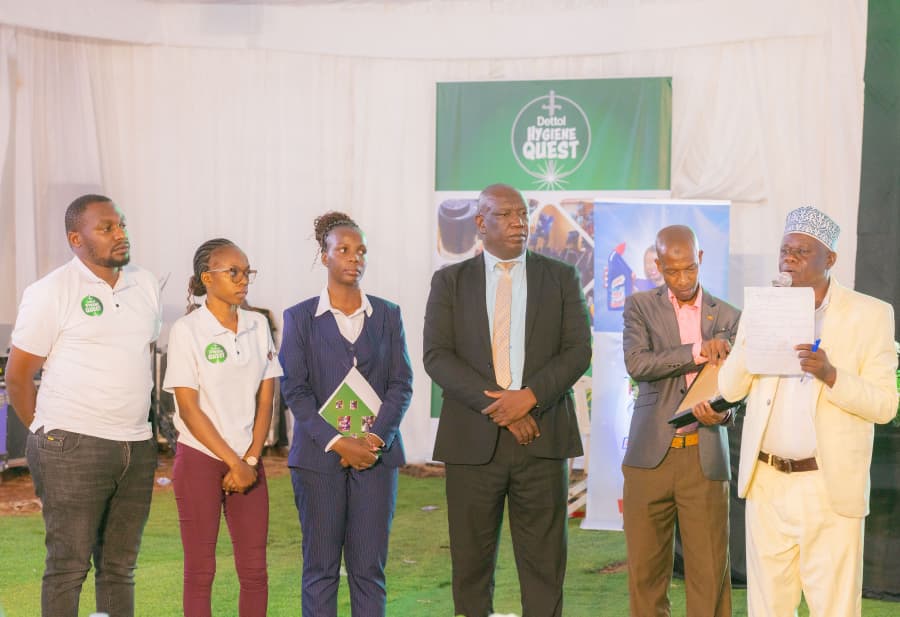
    The National Dettol Hygiene Quest Festival has successfully concluded its maiden edition, ushering in a vibrant new chapter in school health education across Uganda. The event powerfully demonstrated how Music, Dance and Drama (MDD) can serve as highly effective tools for instilling lifelong hygiene habits in young learners by blending cultural expression with critical public health messages.

    A total of 159 schools participated nationwide, with 25 schools advancing to the grand finale. After outstanding performances that creatively promoted sanitation, hand hygiene and disease prevention, Burugo Primary School from Jinja District emerged as the national winner. The school received a small token of appreciation in recognition of its commitment to hygiene improvement.

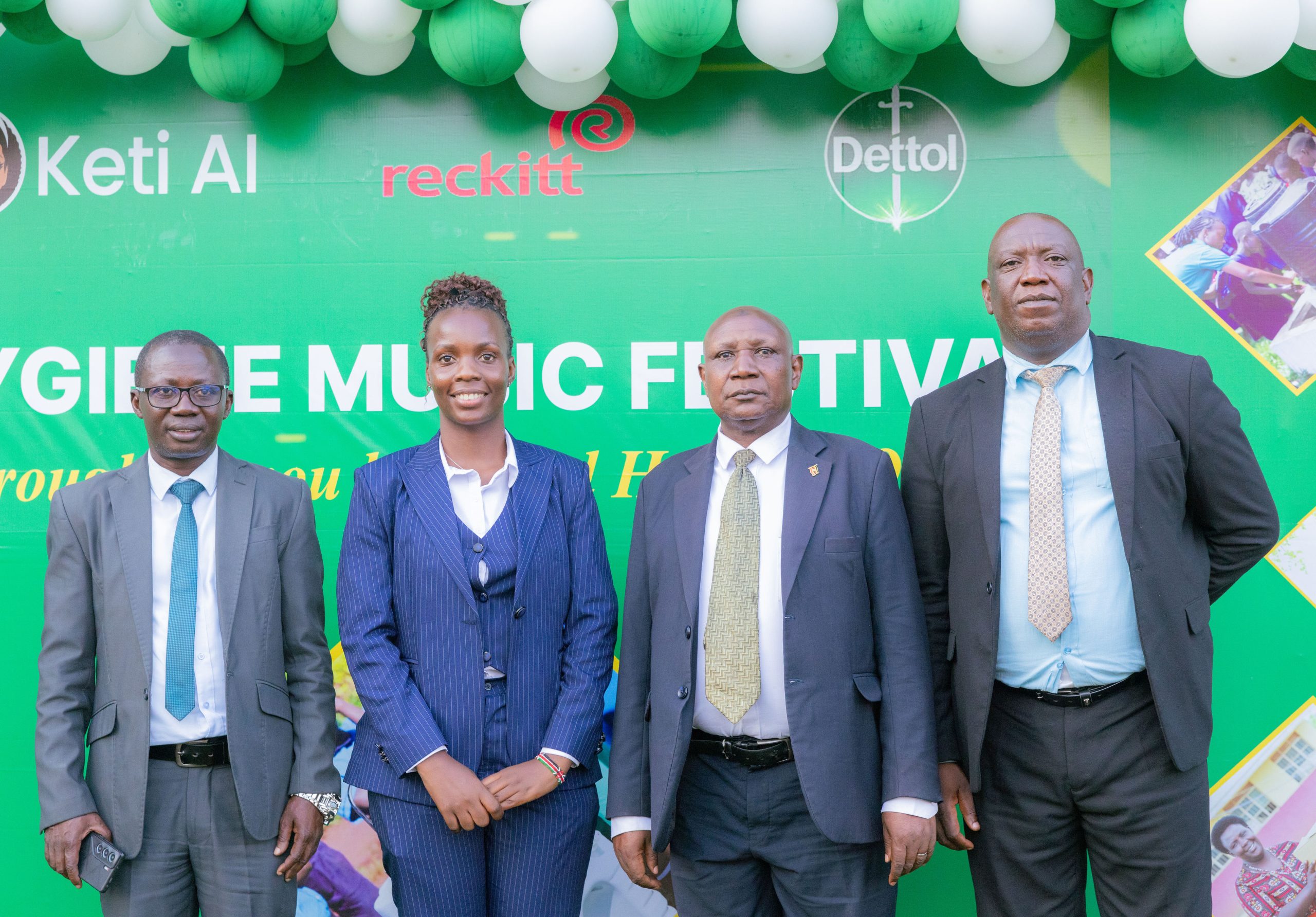
    The finale was graced by senior officials from the Ministry of Education and Sports, district local government leaders and representatives of non-governmental organisations, who underscored the importance of innovative, participatory approaches in advancing national health and education goals.

    Dr. Shamim Nabuuma Kaliisa, Founder and CEO of Chil AI Lab and Focal Person for the Dettol Hygiene Quest Uganda, said:

    “By using Music, Dance and Drama, we have seen students move beyond rote learning to internalise hygiene as part of their cultural identity. The creativity displayed by Burugo Primary School and all our finalists proves that when we engage children through the arts, the message of health resonates deeply and effectively.”

    She added: “The success of this year’s festival proves that our children are the best ambassadors for change. We are committed to bringing this platform back next year bigger and bolder to ensure that the culture of health through music, dance and drama continues to inspire every school across Uganda.”

    The Dettol Hygiene Quest, supported by Reckitt,the makers of Dettol, Jik, and other consumer products.

    Technology partners including Chil AI Lab, continue to combine digital innovation such as the Dettol Hygiene Quest AI Chatbot with community-based creative platforms. The initiative integrates these tools into school activities to reduce hygiene-related absenteeism and nurture a generation of healthy, responsible citizens.

    The Dettol Hygiene Quest is a comprehensive education programme dedicated to equipping children with lifelong hygiene habits. In Uganda, the initiative bridges digital literacy and cultural engagement, working with government and school partners to improve sanitation infrastructure and promote better health outcomes for all students.

    About Post Author

  • TRIPS OF DEATH! Here is How King David Crash Has Exposed Years of Failure to Enforce School Trip Safety Rules

    TRIPS OF DEATH! Here is How King David Crash Has Exposed Years of Failure to Enforce School Trip Safety Rules

    When pupils from King David Junior School died in a Thursday Road crash in Kapchorwa District, the tragedy prompted an immediate government response.

    The Ministry of Education and Sports suspended all school trips nationwide pending a review of existing safety guidelines.

    But as investigations continue into what caused one of Uganda’s deadliest school transport disasters in recent years, a more troubling picture is emerging.

    The Ministry of Education already had detailed guidelines governing educational tours and school trips.

    Many of the safety measures now being discussed, including advance approval of journeys, roadworthy vehicles, qualified drivers and restrictions on long-distance travel for young children, were already contained in the Ministry of Education’s Guidelines on Educational Tours and Field Studies.

    The question now confronting government is not whether new rules are needed, but why existing ones failed to prevent another tragedy.

    The King David crash is the latest in a series of serious accidents involving school transport. Just days before the Kapchorwa tragedy, a bus carrying 73 students from St. Paul Secondary School in Katakwi District rammed into a stationary trailer in Bugweri District, killing the driver and injuring 15 people, including 13 students.

    For many parents, the two crashes have reinforced concerns that school trips are increasingly being organised without adequate attention to safety.

    Tom Buule, a parent from Zana, believes schools should not be allowed to undertake long-distance journeys without mandatory clearance from education authorities and traffic police.

    “Before any school goes for a trip beyond its district, police should inspect the vehicle and clear the driver,” Buule said.

    “Most of the accidents we have seen are linked to the mechanical condition of the vehicles transporting children. Accidents happen, but many risks are preventable.”

    Buule proposes a mandatory travel permit issued only after inspectors verify the vehicle’s roadworthiness, the driver’s qualifications, passenger numbers and the planned route.

    Another parent, Martha Nakato, argues that schools often place greater emphasis on collecting excursion fees than demonstrating how children’s safety will be protected.

    “Schools should submit detailed routes, rest points and travel schedules. “Sometimes drivers are rushing to keep time instead of resting.” ,” she said.

    For Mariam Nakigudde, whose child attends King David Junior School, the focus should be on regulating transport providers rather than banning educational trips altogether.

    She says parents deserve to know whether the vehicle has undergone mechanical inspection, whether the driver is properly licensed, and who owns the bus before children are allowed to travel.

    Yet many of these concerns are already addressed in government policy.

    Pictures of the tyres of the bus in which the learners died have equally raised questions about traffic policing in the country.

    By observation, it appeared that two tyres were totally worn out, yet the bus was allowed to travel all the way from Kampala to Kapchorwa without being noticed by the traffic police deployed in the cities and beyond. Where was the traffic police?

    Is this a typical case of systemic failure to enforce laws and regulations? Under the Ministry of Education’s Guidelines on Educational Tours and Field Studies, schools are required to obtain approval before undertaking educational tours, submit detailed itineraries indicating destinations, travel routes and stopovers, ensure that vehicles used are mechanically sound and complete journeys before 6 p.m.

    The guidelines also discourage long-distance educational trips for nursery and lower primary pupils because of their age and vulnerability. Had those requirements been fully implemented, education stakeholders say several of the risks associated with the King David trip should have been identified before the bus left Kampala.

    The tragedy is also not the first warning government has received. Last year, Parliament debated the safety of school trips following the deaths of two Daystar Junior School pupils in a crash on Mityana Road while returning from Kasese. Eleven other learners were injured.

    The driver was reportedly fatigued after the long journey. During that debate, Kalungu West MP Joseph Ssewungu questioned why nursery and lower primary pupils continued to undertake long-distance trips despite clear ministry guidelines discouraging the practice.

    He also criticised the Ministry of Education and Sports for failing to enforce its own regulations. Beyond safety, Ssewungu questioned whether expensive educational trips had become more commercial than educational.

    “How can a trip cost more than the school fees parents are already paying, yet some of these children do not even get proper meals?” he asked. Then Speaker of Parliament Anita Among expanded the debate further, expressing concern over unsafe transport practices.

    “I have even seen students and pupils travelling on lorries,” Among said. “At least those children were in a bus, but I have seen schools transporting learners on lorries.”

    She also questioned whether costly domestic and international trips were creating inequality among learners while placing unnecessary financial pressure on parents.

    Responding on behalf of the government, then Minister of State for Trade, Industry and Cooperatives David Bahati assured Parliament that the Ministry of Education would address the concerns.

    “We will convey these concerns to the Minister for Education and Sports, and I am sure they will come to the House next week and make a statement,” Bahati said.

    While guidelines remained in place, there has been little public evidence of stronger enforcement since that debate.

    The latest tragedy has therefore shifted attention from the rules themselves to the institutions responsible for enforcing them.

    Among the questions now being raised is whether the King David bus complied with existing requirements before it departed Kampala.

    If reports that the bus was mechanically defective and overloaded are confirmed by investigators, how did it travel hundreds of kilometres without being stopped at any police checkpoint? Did education authorities verify the journey before departure? Were traffic officers notified as required? Was the vehicle inspected before leaving?

    Police have not publicly answered those questions. However, one senior traffic police officer, who spoke on condition of anonymity because they were not authorised to comment publicly, acknowledged that enforcement remains complicated by legal limitations.

    According to the officer, many of the Ministry of Education’s school travel guidelines are administrative directives rather than legally enforceable provisions under the Traffic and Road Safety Act.

    As a result, police cannot automatically prosecute schools simply for violating ministry guidelines unless a specific offence under traffic law has also been committed.

    “The ministry issued the directives, but some of them are not enforceable in their current form,” the officer said.

    The officer cited the requirement that school buses complete their journeys before 6 p.m.

    Although the ministry directs schools to observe the deadline, police have limited legal authority to stop or prosecute a bus travelling after that time unless another traffic offence has occurred.

    Following the King David crash, police intensified inspections of school transport and impounded two buses found to be operating in violation of traffic requirements. Even so, concerns remain.

    While travelling from Ndejje to Kampala on Friday, this reporter observed four school buses near Freedom City.

    One of the buses appeared visibly overcrowded, with several learners seated on one another, raising fresh questions about the effectiveness of enforcement even after the latest tragedy.

    Traffic Police spokesperson SP Michael Kananura said the government is now reviewing the entire school transport safety framework.

    He said an inter-ministerial committee comprising the Uganda Police Force, the Ministry of Education and Sports, and other agencies will review existing guidelines, identify legal gaps and recommend stronger enforcement mechanisms.

    Private school leaders also acknowledge that the sector must accept part of the responsibility. Private Schools Association leader Hasadu  Kirabira said preliminary reports suggest the King David bus developed mechanical problems before the crash, but the journey reportedly continued.

    “We, as stakeholders, need to sit down and talk about this,” Kirabira said, adding that strict compliance with existing guidelines could prevent similar tragedies.

    Meanwhile, King David Junior School has closed for two weeks as families mourn.

    On Friday, grieving parents gathered at the school compound, praying and waiting for confirmation about the fate of their children.

    For many of them, however, the tragedy has become about more than one crash.

    The government has suspended school trips while reviewing the existing framework.

    But parents, legislators and road safety advocates argue that Uganda’s greatest challenge may not be the absence of regulations.

    It is ensuring that the safeguards already in place are consistently enforced before another bus carrying schoolchildren sets off on the next journey.


    GOT A HOT STORY? LET US KNOW!

    Got breaking news, explosive secrets, or hard evidence?

    Email us: redpeppertips@gmail.com

    We accept tips, documents, videos, photos, and recordings—the more evidence you have, the better.

    CONFIDENTIALITY IS OUR TOP PRIORITY. SOURCES ARE ALWAYS PROTECTED!

    About Post Author

  • BUGISU CULTURAL WAR! Bukuka Cries To M7 To Stop Mps From ‘Toppling’ Umukuka…Spokesperson Steven Masiga Likens Move To Obote’s 1966 Abolition Of Kingdoms

    BUGISU CULTURAL WAR! Bukuka Cries To M7 To Stop Mps From ‘Toppling’ Umukuka…Spokesperson Steven Masiga Likens Move To Obote’s 1966 Abolition Of Kingdoms

    The spokesperson of the Bugisu Cultural Institution, Steven Masiga, has written a detailed petition to President Yoweri Museveni asking him to intervene and restrain Bugisu Members of Parliament whom he accuses of attempting to abolish or undermine the authority of the gazetted Umukuka, His Highness Jude Mike Mudoma.

    In the letter, Masiga begins by thanking President Museveni for what he describes as unwavering support to the Bugisu Cultural Institution and the Bagisu community. He says that during the three years he has served as spokesperson, he has personally witnessed the President’s contributions to the region and has consistently explained them to the community.

    Masiga credits Museveni for supporting the construction of community roads across the Bugisu sub-region, including the Bukalasi–Bukharela road in Bududa District, noting that areas where people once relied on donkeys to transport produce are now accessible by trucks and other motor vehicles.

    He also recalls the President’s financial support towards the burial of the late Umukuka Emeritus Wilson Wamimbi, saying the Shs150 million contribution made in April 2024 was well received by the institution. According to Masiga, Museveni also contributed Shs300 million towards the 2024 Imbalu launch, funds which he says were utilized in accordance with the ceremony’s approved budget.

    The spokesperson further praises the President for donating more than 26 cows to families in Bunambutye Resettlement Camp during the Christmas period and for providing financial support that enabled the Umukuka to engage clan chairpersons on various national issues. He says government support to the Umukuka has continued through quarterly facilitation from the Ministries of Finance and Gender as well as fulfilment of mobility pledges made to the cultural leader.

    Masiga says the Office of Public Relations at the Bugisu Cultural Institution has continued using airtime allocated to the Umukuka to explain government programmes and projects to the people of Bugisu, adding that the community appreciates these efforts.

    Turning to the history of cultural institutions in Uganda, Masiga reminds the President that traditional leadership was restored under Article 246 of the 1995 Constitution following its abolition in 1967. He says Museveni made the restoration of cultural institutions one of his political commitments during the bush war and fulfilled that promise after taking power.

    He explains that although Article 246 restored traditional and cultural institutions, a comprehensive legal framework only came into force in 2011 through the Institution of Traditional or Cultural Leaders Act, which provided detailed procedures on how cultural leaders are recognised and the roles they perform.

    Masiga then traces the origins of the current Bugisu cultural dispute back to 2020 following the election of the current Umukuka, when disagreements emerged over who the rightful cultural leader was. He says the dispute left Bugisu without an accepted cultural leader for three years until the Ministry of Gender invoked Section 16(1) of the Traditional and Cultural Leaders Act to facilitate mediation.

    According to the letter, neutral mediators worked with Bugisu clan chairpersons and the process culminated in the gazettement of His Highness Jude Mike Mudoma in 2023.

    Masiga argues that Mudoma is the first Umukuka to assume office through procedures established under the national law governing cultural institutions, unlike previous leaders who, according to him, were elected under locally developed cultural arrangements. He notes that courts have since been asked to determine whether the Bagisu can independently enact laws governing the installation of their cultural leaders or whether they must comply with national legislation, adding that he cannot comment further because the matter is before court.

    Masiga says tensions escalated again on July 9, 2026, barely two weeks before the launch of this year’s Imbalu ceremonies, when the Bugisu Parliamentary Caucus allegedly declared that the Umukuka would not preside over the cultural functions. He says there is video evidence of the statements made by the legislators.

    Describing the incident as one of the darkest moments in Bugisu’s history, Masiga compares it to the events of 1966 when the then government abolished traditional kingdoms across Uganda. He argues that powers conferred by law cannot be taken away through political pronouncements.

    He questions whether Members of Parliament have the authority to remove powers from a gazetted cultural leader, arguing that if they possess such powers they should equally dismantle every cultural institution established under the Constitution.

    Masiga insists that no Member of Parliament, regardless of political affiliation, has legal authority to campaign against or interfere with a recognised cultural institution.

    He also accuses the legislators of ignoring guidance from the State Minister for Gender, Hon. Mary Karooro Okurut Kamuli Kutesa, whom he says advised them not to act contrary to the law.

    The spokesperson reminds the President of his maiden speech after the 2026 General Election, in which Museveni reportedly praised cultural institutions that mobilised communities in support of government programmes. He says the Mufti of Uganda, Sheikh Shaban Mubajje, later informed the Umukuka that the President appreciated his mobilisation efforts during the elections.

    Masiga argues that under Article 246 of the Constitution and the Traditional and Cultural Leaders Act, mobilisation of communities behind government programmes forms part of a cultural leader’s recognised role.

    He also recalls accompanying the Umukuka to a meeting with President Museveni at Mbale State Lodge in November 2025 alongside Bugisu Prime Minister Dr Paul Mwambu and Permanent Secretary Dorcas Okalany. During that meeting, he says, the delegation pledged to promote unity in Bugisu and support government programmes while the Umukuka requested deployment of his teams to implement agreed initiatives.

    Masiga alleges that a small group of individuals thrives on conflict and violence and accuses some MPs of creating fertile ground for renewed instability in Bugisu by undermining the gazetted cultural leadership.

    To illustrate his point, he cites a passage he says he studied while at Makerere University from a work titled The Making of a Modern Mercenary, in which a mercenary rejects wishes of peace because peace would deprive him of his livelihood. Masiga says certain groups in Bugisu similarly fear the prevailing peace and prefer chaos for their own interests.

    The letter also alleges attacks on the security establishment, saying some paid groups have verbally attacked security agencies while attempting to pressure them into recognising rival cultural leaders allegedly backed by influential individuals. He commends security agencies for maintaining neutrality by protecting the gazetted Umukuka.

    Masiga further claims that while government officially facilitates the gazetted cultural leader, rival cultural claimants are receiving cash, fuel and other logistical support from sponsors both within Uganda and abroad.

    In his concluding appeal, Masiga urges President Museveni to condemn what he describes as the Bugisu MPs’ attempt to strip the Umukuka of his customary and cultural powers, insisting the actions have no legal foundation and may expose those responsible to legal claims for damages.

    He also reveals that Bugisu clan chairpersons are planning demonstrations over the parliamentary caucus’ actions, arguing that cultural matters fall under the authority of the Umukuka and clan structures rather than elected politicians.

    Referring to a recent social media post in which President Museveni described the Bagisu as hardworking people who lacked proper leadership, Masiga argues that attacking a government-gazetted cultural leader is itself evidence of poor leadership.

    He ends the petition by acknowledging that protocol ordinarily requires such concerns to be communicated privately but says the circumstances are exceptional because, in his view, Bugisu lawmakers are attempting to undo the President’s efforts in restoring and supporting cultural institutions.

    Masiga asks the President to intervene “through his revolutionary lenses” and reiterates that what the law has established can only be altered by law. He concludes by rejecting what he terms “jungle justice” and political attempts to impose a different Umukuka on the Bagisu people, insisting that the cultural institution is non-partisan and should remain free from political interference.


    GOT A HOT STORY? LET US KNOW!

    Got breaking news, explosive secrets, or hard evidence?

    Email us: redpeppertips@gmail.com

    We accept tips, documents, videos, photos, and recordings—the more evidence you have, the better.

    CONFIDENTIALITY IS OUR TOP PRIORITY. SOURCES ARE ALWAYS PROTECTED!

    About Post Author

  • INSURANCE TRAINING COLLEGE IN DOCK! CEO Sseremba, Board Chair Dr. Walusimbi Under Spotlight Over HR Irregularities, Unbudgeted Spending & Stalled Sh3Bn Land Deal

    INSURANCE TRAINING COLLEGE IN DOCK! CEO Sseremba, Board Chair Dr. Walusimbi Under Spotlight Over HR Irregularities, Unbudgeted Spending & Stalled Sh3Bn Land Deal

    The leadership of the Insurance Training College (ITC), led by Chief Executive Officer and Principal Saul Sseremba and Board Chairperson Dr. Abdul Hafiz Walusimbi, has come under scrutiny after the Auditor General highlighted a series of governance, human resource and financial management weaknesses that point to shortcomings in the institution’s administration.

    The findings, contained in the Auditor General’s December 2025 report for the financial year ended June 30, 2025, reveal that despite receiving an unqualified audit opinion on its financial statements, the College continues to grapple with management deficiencies that could undermine its mandate of developing professional capacity within Uganda’s insurance industry.

    The Insurance Training College, founded in 1964 and restructured as a public tertiary institution under the Insurance Act of 2017, serves as the education and professional training arm of Uganda’s insurance sector. The institution offers National Council for Higher Education-accredited certificate and diploma programmes in insurance and is responsible for training professionals who support the country’s growing insurance industry.

    However, according to the Auditor General, weaknesses in human resource management remain unresolved.

    The audit established that the College’s Human Resource Manual is not fully aligned with the Uganda Public Service Standing Orders. Auditors found that ITC had continuously extended staff loans and salary advances throughout the same financial year beyond the maximum limits permitted under the statutory framework.

    The report further notes that although the College adopted a Human Resource Manual in 2021, it has never been updated to reflect the requirements of the Uganda Public Service Standing Orders and the Public Finance Management Act Regulations. This omission has resulted in inconsistencies in the approval, management and recovery of salary advances beyond the prescribed periods, exposing weaknesses in internal controls and compliance with government regulations.

    The Auditor General also questioned the College’s budget discipline after establishing that UGX 172 million was paid out as arrears despite the institution having made no budgetary provision for such expenditure during the financial year. According to the audit, failure to budget for arrears results in the diversion of funds away from planned activities, undermines approved budget priorities and creates a mismatch between intended objectives and actual spending.

    The report also highlighted shortcomings in the implementation of planned procurements. During the 2024/25 financial year, the College planned to procure land valued at UGX 3 billion. However, by the close of the financial year, the procurement had not been implemented.

    The Auditor General warned that failure to execute planned procurements limits service delivery and delays the achievement of institutional objectives.

    Although the audit opinion on the College’s financial statements remained unqualified, the findings place fresh responsibility on the institution’s leadership under CEO and Principal Saul Sseremba and Board Chairperson Dr. Abdul Hafiz Walusimbi to address the identified governance, financial management and human resource weaknesses.

    For an institution mandated to build professional competence, uphold standards and strengthen Uganda’s insurance industry through education and training, the Auditor General’s findings suggest that improvements in internal governance, compliance with public service regulations, budget discipline and implementation of planned activities will be critical if the College is to fully deliver on its mandate.


    GOT A HOT STORY? LET US KNOW!

    Got breaking news, explosive secrets, or hard evidence?

    Email us: redpeppertips@gmail.com

    We accept tips, documents, videos, photos, and recordings—the more evidence you have, the better.

    CONFIDENTIALITY IS OUR TOP PRIORITY. SOURCES ARE ALWAYS PROTECTED!

    About Post Author

  • Vinka reflects on how exhausting managing artists is

    Vinka reflects on how exhausting managing artists is

    Vinka has admitted that she is no longer interested in managing artists, describing the role as demanding, frustrating, and often disappointing.

    Speaking in a recent interview, the Swangz Avenue star reflected on her time as Irene Ntale’s manager before launching her own music career. Vinka revealed that the experience gave her firsthand insight into the pressures that come with handling another person’s career.

    Good Old Days: Irene Ntale and her former manager Vinka.

    According to the singer, artist management can become emotionally draining because the effort put in is not always appreciated.

    “The other person might think they are just helping you,” she said, explaining that the relationship between an artist and manager can easily become complicated despite the sacrifices involved.

    Asked whether she would be happy to see Irene Ntale at her upcoming concert, Vinka said she would welcome her but would not send a personal invitation.

    “That would be nice for her. I won’t invite her individually, but I’ll invite all my fans to attend. Everyone is welcome,” she said, adding that the concert is open to anyone who wishes to support her.

    @galaxytv_ug

    I’m afraid of managing human beings (artists); it’s hard and very disappointing. — @ViNKA #JikonkoneFlexx

    ♬ original sound – Galaxy TV 𝐉𝐢𝐤𝐨𝐧𝐤𝐨𝐧𝐞!

    The post Vinka reflects on how exhausting managing artists is appeared first on MBU.

  • Probe Raises Red Flags Over Multi-Billion FIEFOC (Farm Income Enhancement & Forestry Conservation) Projects!

    Probe Raises Red Flags Over Multi-Billion FIEFOC (Farm Income Enhancement & Forestry Conservation) Projects!

    The Auditor General has raised fresh concerns over the implementation of Uganda’s multi-billion Farm Income Enhancement and Forestry Conservation (FIEFOC) projects, exposing funding shortfalls, delayed implementation of planned activities, outstanding receivables running into billions of shillings and significant unspent funds despite the programmes being established to improve food security, boost farm incomes and strengthen climate resilience.

    The findings are contained in the December 2025 Auditor General’s report covering both the Farm Income Enhancement and Forestry Conservation Project Phase II (FIEFOC II) and the Farm Income Enhancement and Forestry Conservation Project III (FIEFOC III), two flagship government programmes being implemented under the Ministry of Water and Environment and the Ministry of Agriculture, Animal Industry and Fisheries with support from international development partners.

    FIEFOC II, a USD 91.43 million programme financed by the African Development Bank and the Nordic Development Fund, was designed to improve food security and climate resilience through sustainable agriculture and natural resource management. The project targets more than 1.8 million people in Pakwach, Oyam, Butaleja, Kween and Kasese through the construction of major irrigation schemes, promotion of agribusiness development and restoration of degraded landscapes.

    Despite these ambitious objectives, the Auditor General found that UGX 2.37 billion advanced to 102 agripreneurs remained outstanding and had not been recovered for periods ranging from the 2020/21 financial year to 2024/25, raising concerns over accountability for project funds.

    The audit further established that although the financing agreement expected total disbursements of UGX 311.92 billion, only UGX 292.46 billion had been received, representing 93.7 percent of the anticipated funding.

    Project implementation also fell behind expectations. Out of six sampled activities valued at UGX 221.80 billion, only four activities worth UGX 25.77 billion were fully achieved, while the remaining two activities valued at UGX 196.04 billion were only partially implemented.

    Funding constraints also affected implementation during the financial year. The Auditor General reported that out of the approved budget of UGX 2.31 billion, only UGX 1.65 billion was released for expenditure, leaving a funding shortfall of UGX 660 million, equivalent to a budget performance of 71 percent.

    Even the funds that were made available were not fully utilised. Out of total available resources amounting to UGX 2.79 billion, including UGX 1.14 billion carried forward from the previous year, only UGX 1.91 billion was spent, leaving UGX 880 million unutilised and translating into an absorption rate of only 68.5 percent.

    The Auditor General also reviewed the implementation of FIEFOC III, a five-year programme running from 2023 to 2028 with a budget of USD 112.12 million financed by the Islamic Development Bank, BADEA and the Government of Uganda. The project seeks to increase irrigated agriculture over 1,800 hectares, improve food security, raise household incomes and promote sustainable land management through irrigation schemes in Amuru, Gulu, Bulambuli and Nakapiripirit.

    However, auditors found that implementation had also faced major financial challenges. Out of the expected cumulative funding of UGX 97.91 billion from project commencement to date, only UGX 14.2 billion, representing just 15 percent, had been disbursed.

    Implementation performance similarly lagged behind planned targets. Of the twelve sampled activities worth UGX 13.43 billion, only seven activities valued at UGX 3.84 billion had been fully achieved. Four activities worth UGX 9.58 billion had only been partially implemented, while one planned activity had not yet commenced.

    Funding during the 2024/25 financial year also remained well below target. Although the approved budget stood at UGX 40.31 billion, only UGX 16.47 billion was available for spending, creating a funding gap of UGX 23.84 billion and translating into budget performance of just 41 percent.

    Of the funds released, the project spent UGX 14.81 billion, leaving UGX 1.65 billion unspent and achieving an absorption level of 90 percent.

    The Auditor General’s findings highlight the implementation challenges facing two flagship agricultural and irrigation programmes intended to transform rural livelihoods, improve food production, strengthen climate resilience and expand irrigation infrastructure across Uganda. The report points to outstanding advances, funding shortfalls, delayed implementation of activities and unspent funds as key issues that continue to affect the pace at which the projects can deliver their intended benefits to farming communities targeted under the programmes.


    GOT A HOT STORY? LET US KNOW!

    Got breaking news, explosive secrets, or hard evidence?

    Email us: redpeppertips@gmail.com

    We accept tips, documents, videos, photos, and recordings—the more evidence you have, the better.

    CONFIDENTIALITY IS OUR TOP PRIORITY. SOURCES ARE ALWAYS PROTECTED!

    About Post Author

  • Vinka explains partner’s initial resistance to her music path

    Vinka explains partner’s initial resistance to her music path

    Vinka has revealed that her partner Nelly Witta was initially not supportive of her decision to pursue music, saying he was worried about the perception surrounding musicians rather than her becoming a star.

    Speaking in an interview with Galaxy TV, Vinka said she and Nelly started out as friends before their relationship grew, with their bond developing around the time she was transitioning from artist management into becoming a recording artist.

    Vinka explained that Nelly was among the first people outside her record label she opened up to about her plans to start singing.

    At the time, she was still working as an artist manager before taking on her own music career.

    During that time we were just friends but liked each other and I think we started dating after my first three songs, but he didn’t like that idea of me singing.

    Vinka, however, clarified that Nelly’s concerns were not about her ability to succeed or becoming famous, but rather the stereotypes and challenges often associated with the music industry.

    He wasn’t afraid of me becoming a star, he was just afraid of the whole perspective around musicians and what they do.

    She praised Nelly for being patient with her throughout her journey, noting that their relationship began during a period when she was making a major career shift from managing artists to building her own identity as a performer.

    @galaxytv_ug

    Our journey started as a simple friendship while I was an artist manager. We only began dating later on, right around the time I launched my music career with my first 3 songs. — @ViNKA on her relationship beginnings with Bonkmate #JikonkoneFlexx

    ♬ original sound – Galaxy TV 𝐉𝐢𝐤𝐨𝐧𝐤𝐨𝐧𝐞!

    The post Vinka explains partner’s initial resistance to her music path appeared first on MBU.

  • How Zari Hassan uses frequent calls to maintain trust with Shakib Cham

    How Zari Hassan uses frequent calls to maintain trust with Shakib Cham

    Socialite and entrepreneur Zari Hassan has opened up about how she maintains her long-distance relationship with husband Shakib Cham, revealing that constant communication has played a key role in keeping them connected.

    Zari admitted that being away from each other is not always easy, but said they make an effort to stay updated about each other’s daily activities through frequent phone calls and conversations.

    We call each other like 1000 times daily. I update him about my stressful meetings and he comforts me, advising me to take some juice.

    He does the same to tell me about his day, when he’s from praying at the mosque, when he has gone to the shop, or when he is with his friends.

    The mother of five explained that their regular communication should not be mistaken for controlling behaviour, saying it is simply a way of maintaining trust and closeness despite the distance between them.

    There’s nothing wrong with that, it doesn’t mean you control the man. We are in long distance, communication is key.

    She revealed that Shakib is intentional about keeping her informed because he knows how important communication is to her, joking that failure to update her could lead to disagreements between them.

    According to Zari, people often misunderstand her expectations in the relationship and interpret her desire for communication as being controlling, yet she believes couples should define what works for them.

    “People want to think for you how your relationship should be more than you,” she said.

    Zari also shared that even during personal moments, Shakib ensures they remain connected, giving an example of how he informs her about his whereabouts, including when he goes for steam baths.

    Even when Shakib is going for steam, he tells me he has left the phone charging at the reception and calls me after the steam, all sweating. I also tell him what I’m doing.

    The post How Zari Hassan uses frequent calls to maintain trust with Shakib Cham appeared first on MBU.

About UGNEWS24

UGNEWS24 is a Uganda local news service, a product of SOLAVIA GROUP LIMITED, Reg. No. 80048169153974.

Registered office

Plot 2335, Buwambo-Katadde-Najjo Road,
Nansana Municipality, Wakiso District, Uganda
P.O. Box 214231, Kampala

© 2026 SOLAVIA GROUP LIMITED. All rights reserved.