Bella Shmurda has shared a cautionary story about fame, money, and the cost of trying to keep everyone happy.
The Nigerian singer revealed that he nearly went bankrupt after spending excessively and taking on financial responsibilities that went beyond his means.
He said he once had a lot of money but did not apply wisdom in how he used it.
Part of the problem, he explained, was trying to maintain a certain lifestyle.
He accommodated several friends, funded their activities, and kept up appearances that required constant spending.
He admitted that he bought three cars at once so his group could travel together, describing the decision as reckless in hindsight.
Now, Bella Shmurda says his mindset has changed.
He approaches money with more discipline and thinks through every move before spending.
He is now using his experience to advise others, stressing that financial discipline is key to long-term success.
The self-styled King Kong also noted that when he loves, he sets boundaries never to cross in order to protect himself from such hurt.
Yes, I have been in love before, but I have never failed to eat because of it. Love cannot hurt me to such an extent because of failing to eat and hating myself.
I have a lot of love for myself, too, so I can’t fail to eat because someone else doesn’t love me. I have love, and I share it, but to a certain extent. I never get to that extent of hurting myself because of love, because of someone else.
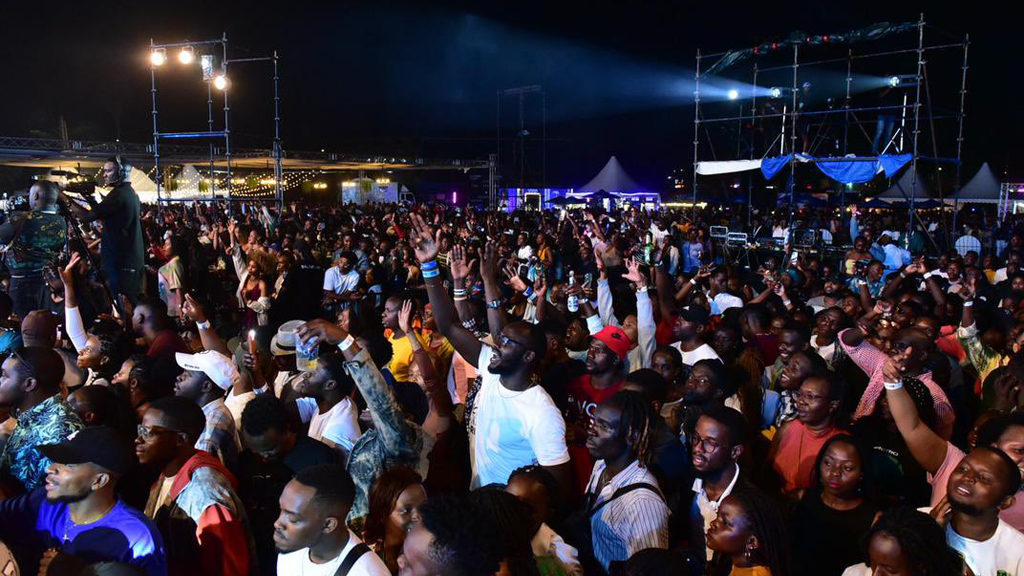
Vyper Ranking, Omega 256, and Michelle Kyalisiima, among other artists, have released new visuals for their music projects, and we look at them in this piece.
Ononzitamu Omuntu – Vyper Ranking
Vyper Ranking’s talent is not questionable. His only weakness over the years has been his consistency, something he seems to have finally gotten a hold of. His newest track now has visuals that you must watch.
He opens up about the kind of pain that doesn’t just end with a goodbye, the kind that changes you as a person. Through soulful melodies and heartfelt lyrics, he expresses the feeling of giving your all to someone, only to be left with scars that reshape who you are.
Company (Remix) – Leo K.i.G feat Mimi Kampala
Now on a roll, Mimi Kampala’s music is dominating the airwaves locally, and she is sharing her shine with her fellow newcomers in the industry. Her latest release is a remix of the song ‘Company’ owith Leo K.i.G.
Today – Omega 256 feat. Labella
The self-styled Queen of the West, Omega 256, is back with another song of love assurance. Today is a song you might want to share with your lover to calm their heart, assuring them that your relationship is forever.
Tiiguta – Shon Wyz
Shoz Wyz’s love song Tiiguta (sung in Lusoga as produced by Yee Femi) is a showcase of raw talent that Ugandans must pay attention to. The visuals are kept simple but pleasing to the eye.
Finally Atuuse – Michelle Kyalisiima
For many, Michelle Kyalisiima is the new big thing in Ugandan music. The ‘Border to Border‘ singer’s vocals and songwriting skills have been highlighted as the best incoming talent.
She continues to showcase that in her new song ‘Finally Atuuse’.
The proposed 6 per cent tax on public entertainers’ fees by the government of Uganda has stired debate and split public opinion in the country.
The Minister of State for Finance, Planning and Economic Development (General Duties) Henry Musasizi presented the tax proposal on Wednesday as part of the eight amendment Bills targeting Shs1.74 trillion Ugandan in extra revenue for the Financial year 2026/2027. Organizers of events would deduct the final 6% from payments to musicians, comedians, and theater artists to formalize the informal sector amid rising Uganda Revenue Authority (URA) scrutiny on incomes from copyright collections. Some of the supporters of the proposed tax like media personality Douglas Lwanga called for artists to get tax consultants and track expenses, while critics including music consultant Wayne Frank Ntambi predicted more hiding of cash gigs at weddings and clubs.
The Parliment Bills remain under House review.
The development comes weeks after Parliament on March 17, 2026, passed the Copyright and Neighbouring Rights (Amendment) Bill, 2025, marking a major victory for creatives by enhancing remuneration, strengthening enforcement against piracy, and updating protections for the digital age.
Key changes include mandatory royalties for broadcast usage, stricter fines for violations, and the introduction of a digital management system to track content.
Civil servants, politicians, businessmen, and all working Ugandans have been issued a stark warning: fail to plan for your retirement, and you could face a miserable and stressful old age.
Speaking at Rwenjeru Agro-Tourism Demonstration and Training Farm in Biharwe, Mbarara City North, 66-year-old Martin Kananura, director of the facility and a former headteacher of several prominent schools in Mbarara, urged the elderly and those approaching retirement to invest time and resources wisely to secure their golden years.
“I am now six years in retirement,” Kananura shared candidly with members of the Ankole Old Persons Foundation and Kamwengye Old Persons Association. “When I retired, I became a bit stuck. But fortunately, I had some land, including my family land, so I improved it, added innovations, and started this farm. That keeps me busy and provides an income. If I had not prepared, life would have been very hard. People who retire with nothing often get sick, suffer stress, depression, or even die.”
Kananura emphasized the importance of having a plan and a support program that can sustain one through retirement. He further encouraged old persons to unite in associations to remain active, share experiences, and support one another.
Jolly Kagira, founder and Executive Director of the Ankole Old Persons Foundation, echoed Kananura’s sentiments. She highlighted the gaps between old and young generations, noting that most grown children neglect their parents, leaving many elders lonely, unsupported, and unable to access medical care. “It is important to plan for old age when we are still active. By forming associations, we can give ourselves a voice, access government support, and help one another like a family,” Kagira said.
Jolly Kagira, ED Ankole Old Persons Foundation speaking at Rwenjeru farm
The Ankole Old Persons Foundation, which stretches across 38 districts in Western Uganda with offices in Rwobuyenje Kishasha ward in Mbarara City North Division, has been at the forefront of advocating for elder welfare. On 30th March 2026, its leadership hosted a team of elders from Kamwengye Old Persons Association at the Rwenjeru farm, where discussions included forming a larger Western Uganda Old Persons Association to strengthen support networks for the elderly.
The message was clear: proactive planning, smart investments, and community solidarity are the lifelines to surviving and thriving in retirement. As Kananura put it, “You must have a program at the back that will support you when you are old—otherwise, life can be cruel.”
This gathering marks a critical push for elder empowerment in Western Uganda, underlining the urgent need for individuals and communities to take responsibility for their future before it is too late.
In the beginning, Genesis offers more than a story of origins; it reveals a moral vision of existence. Humanity is described as created in the image and likeness of God, suggesting that to be human is to reflect divine attributes—love, justice, creativity, and responsibility. The word human itself comes from the Latin humanus, rooted in humus, meaning earth, reminding us of both our humility and our shared origin.
We are beings formed from dust, yet animated by breath, carrying within us a paradox of fragility and sacred worth. Socrates’ assertion that “the unexamined life is not worth living” reinforces that humanity is not automatic; it is cultivated through reflection and ethical living.
To be human, in its truest sense, is to consciously embody compassion, pursue truth, and act with moral clarity. But what if we truly lived this way? What if being human were not just a biological condition, but a deliberate practice of dignity and love?
Violence, whether physical or systemic, has become an accepted language of power. Inequality persists as societies elevate wealth above well-being. Corruption erodes trust, while discrimination divides people along lines of race, tribe, class, and belief.
Even indifference has become a vice; we witness suffering and move on, numbed by repetition. In many ways, we have grown comfortable with dehumanization, excusing it as necessity or inevitability. But this raises a critical question: if our actions consistently deny dignity, can we truly claim to be human? Or have we simply inherited the name while abandoning its meaning?
The philosophy of Ubuntu teaches that “I am because we are,” emphasizing that our humanity is interconnected. Leaders and thinkers have long reminded us that dignity cannot be selective and justice cannot be partial. Their words challenge us to confront systems that degrade life and to imagine societies grounded in equality and compassion.
Scripture reinforces this call with clarity and urgency: “What does the Lord require of you but to do justice, to love mercy, and to walk humbly?” (Micah 6:8). Here, humanity is defined not by status or identity, but by action. Similarly, “faith without works is dead” (James 2:17) reminds us that belief must be lived to have meaning. The parable of the Good Samaritan illustrates that true humanity transcends boundaries; it is revealed in acts of compassion, especially toward those we might otherwise ignore. These teachings insist that to be human is to act—to defend dignity, to extend mercy, and to resist indifference. What if we allowed these principles to guide our lives?
To become human, then, is an ongoing process rather than a fixed state. It demands courage to challenge injustice, humility to acknowledge our failures, and love to bridge our differences. Love, in this sense, is not mere emotion but a commitment to the well-being of others. Unity does not erase diversity; it harmonizes it within a shared respect for life. Imagine a world where people consistently choose honesty over deception, kindness over hostility, and service over selfishness. Such a world is not beyond reach; it begins with individual choices repeated across communities.
The question “What if we become human?” is ultimately personal. It asks each of us to reflect on how we live and how we treat others. What if we refused to participate in systems that harm? What if we chose empathy where there is division? What if we lived as though every person carries inherent worth? These questions are not rhetorical; they are transformative when answered through action. They invite us to align our lives with the deeper purpose embedded in our existence. To become human is to return—to humility, to compassion, and to justice. And perhaps, if we truly embraced this calling, the world would not need to ask what humanity is, because it would finally see it lived.
The Government of Uganda has approved Shs1.5 billion to support efforts by the Federation of Uganda Football Association to recruit footballers of Ugandan heritage from abroad in a bid to strengthen the national team, the Uganda Cranes.
The funding will help facilitate the naturalisation process for players with Ugandan roots who are currently playing professional football in Europe and are eligible to represent Uganda at international level.
FUFA President Moses Magogo revealed the development during an appearance on a sports programme on CBS FM. He explained that the move is part of a broader strategy used by several successful African football nations to strengthen their national teams.
Magogo noted that countries such as Morocco and Senegal have benefited from tapping into players in the diaspora, many of whom were trained in top European academies.
Uganda has already started seeing results from this approach. One of the notable examples is defender Elio Capradossi, who switched allegiance and now represents the Uganda Cranes.
To expand the search, FUFA appointed Mathias Ndawula to identify talented players of Ugandan descent across Europe who may be eligible to play for the national team.
Among the players currently being considered are teenage midfielder Divine Mukasa, who belongs to Manchester City and is currently on loan at Leicester City. Others include goalkeeper Arthur Okonkwo of Wrexham AFC, defender Bashir Humphreys who plays for Burnley FC, and defender Joshua Muwana from Crystal Palace FC.
All these players are eligible to represent either England or Uganda through their heritage.
If the naturalisation process is completed in time, some of these players could be available for selection for the Uganda Cranes as early as the upcoming June international window.
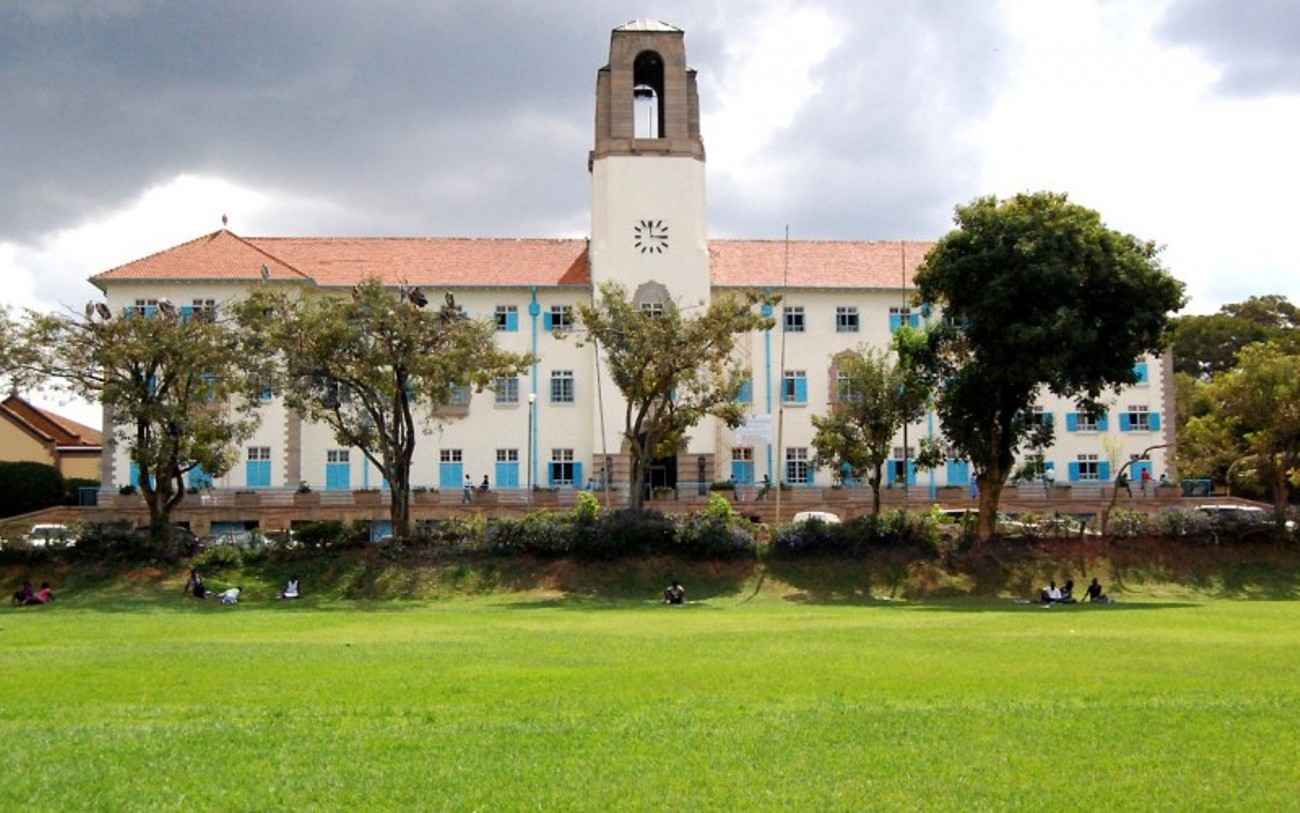
Masters, PhD, And Postgraduate Diploma Applications Now Open As University Extends Closing Date By One Month
If pursuing a postgraduate degree at Makerere University has been on your academic roadmap, the window is now open — and following an update issued on March 31, 2026, you have until Thursday, April 30, 2026 to submit your application.
ADVERTISEMENT
The Academic Registrar of Makerere University has formally invited applications for admission to Graduate Programmes — covering Postgraduate Diplomas, Masters Degrees, and Doctoral Degree Programmes — for the 2026/2027 Academic Year. The deadline was extended from its original date, giving prospective applicants additional time to prepare their submissions.
Who Qualifies
To be eligible for consideration, applicants must hold at least a First or Second Class degree — or its equivalent — from a Chartered University at the time of completion. Applicants must also possess a Uganda Certificate of Education and a Uganda Advanced Certificate of Education, or their respective equivalents.
It is important to note that all graduate programmes at Makerere University are privately sponsored. There is no government sponsorship available for postgraduate programmes. Applicants who have secured sponsorship from an employer or external organisation must have their applications formally endorsed by their respective sponsors. The tuition fees listed for each programme exclude functional fees, accommodation, books, research costs, and other personal expenses — meaning applicants should budget for the full cost of postgraduate study, not just tuition.
How To Apply
The application process is conducted entirely online through Makerere University’s admissions portal. Here is the step-by-step procedure:
Step 2: Sign up using your full name, email address, and mobile number. Your name on the portal must exactly match the name on your academic documents — any discrepancy will render your application invalid.
Step 3: A password will be sent to both your email and mobile number. You will then be prompted to change it to one you can easily remember.
Step 4: Click the APPLY NOW button if you are a first-time applicant, or the MY PORTAL button if you are renewing a previous application. Select the appropriate scheme — either Taught PhDs, Masters and Postgraduate Diplomas, or PhD by Research.
Step 5: Complete all sections of the application form. Incomplete forms will not be considered.
Step 6: Scan and upload all academic transcripts, certificates, and a passport photograph directly onto the system.
Step 8: Generate a Payment Reference Number (PRN) by clicking the Pay for Form button on the portal.
Step 9: Pay the application fee at any URA-designated bank using the following details — Account Name: Uganda Revenue Authority Collections, Account Number: 003410158000002. The fee is UGX 50,000 for East African applicants and UGX 151,500 for international applicants. International applicants may also transfer payment via EFT or other means in Uganda Shillings to the designated URA collection account at Bank of Uganda — Swift Code: UGBAUGKAU.
Step 10: Submit before the deadline of Thursday, April 30, 2026.
Special Requirements For LLM And MBA Applicants
Two programmes carry additional admission requirements beyond the standard application process.
All applicants for the Master of Laws (LLM) will be required to sit a Graduate Admission Test (GAT) consisting of both an oral interview and a written test. Dates and further requirements will be communicated by the School of Law directly.
All applicants for the Master of Business Administration (MBA) — whether through the College of Business and Management Sciences or Makerere University Business School — will be required to sit a GMAT test. Dates will be communicated separately by the respective colleges.
If you are applying for either of these programmes, factor the additional test requirement into your preparation timeline.
Available Programmes And Fees
The full list of available postgraduate programmes — including the specific tuition fees applicable to each — is contained in the official programme advert document available for download on the Makerere University postgraduate admissions website at https://dgt.mak.ac.ug. Prospective applicants are strongly encouraged to review this document carefully before submitting their applications, to confirm both programme availability and the full cost of study.
Why This Matters
With Uganda’s National Development Plan IV identifying postgraduate education — particularly at master’s and PhD level — as critical to driving national economic development, the timing of this admissions cycle is significant. Makerere University has also committed to doubling its postgraduate student population from approximately 5,000 to 10,000 by 2030, meaning the institution is actively expanding its capacity to accommodate more postgraduate students than at any previous point in its history.
For professionals looking to advance their careers, recent graduates considering academic or research pathways, and Ugandans seeking to position themselves in high-demand sectors identified by the government’s human resource forecast, a Makerere postgraduate qualification remains one of the most credible and widely recognised credentials available in the region.
The portal is open. The deadline is April 30. Apply.
Tems has shared a deeper look into her past, revealing she once experienced a relationship that blurred the line between love and control.
The singer said the situation felt intense at the time but later made her realise that not everything people call love truly is.
She described the relationship as one where her partner became overly possessive, creating a dynamic that felt restrictive rather than supportive.
During her interview with Angie Martinez, Tems stressed that love should never involve ownership and said both partners should grow together while maintaining their individuality.
She also noted that people often overlook toxic behaviour, especially when the person involved believes they are acting out of love.
The experience shaped her outlook and strengthened her belief that healthy relationships depend on understanding, not control.
Brenda Kwarisiima, a mother and resident of Rubaare in Ntungamo District, recalls the anxiety of seeking maternal care at an overstretched health facility. With limited beds, few delivery rooms, and long queues of expectant mothers, access to quality care often felt like a gamble.
“For years, we had to wait for hours or be referred elsewhere, because the facility could not handle the large numbers. As a result, we were often forced to seek health services as far as Itojo Hospital, which was very expensive for rural people like us who survive hand to mouth,” she says.
Brenda’s experience reflects a broader challenge in Ntungamo District, which spans over 2,056 square kilometers and serves a population of more than 500,000 people. At Rubaare Health Centre IV, inadequate infrastructure and equipment have long contributed to high-risk deliveries and immense pressure on the few available health workers.
Naome Kabasharira, the area Member of Parliament, said the situation has not only strained the local healthcare system, but also put mothers and newborns at risk, with preventable complications often arising from delays and limited resources.
Some of the beds donated by Stanbic Bank inside the maternity ward at the health center
A Timely, High-Impact Intervention
However, a new intervention is beginning to change this reality.
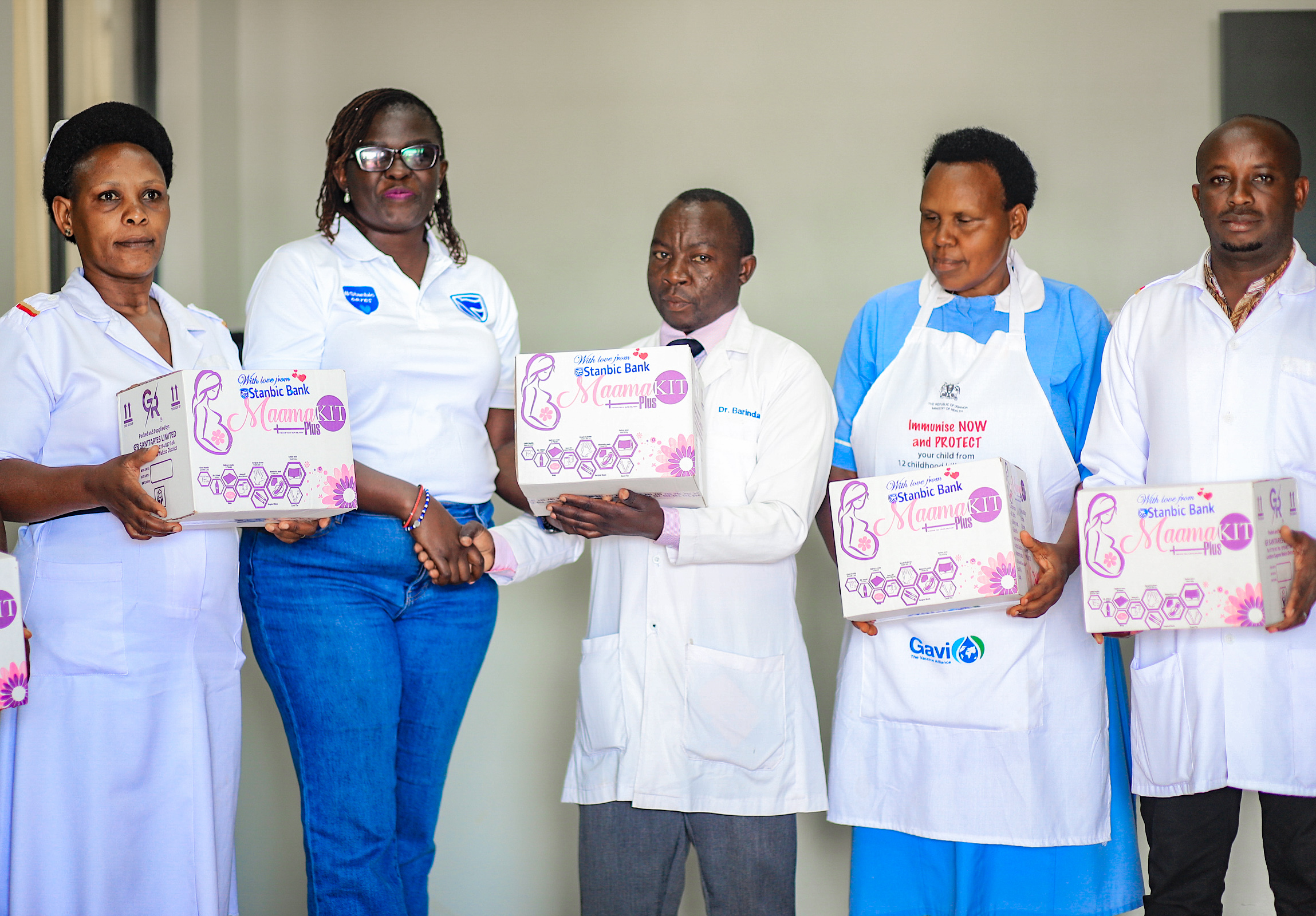
Stanbic Bank Uganda has donated medical equipment worth UGX 20 million to support the newly constructed Mama Kariisa Maternity Ward Project at Rubaare Health Centre IV. The donation includes eight modern patient beds, two delivery beds, and 100 mama kits aimed at improving safe childbirth and postpartum care.
The maternity ward was constructed in memory of the late Hasiinah Kariisa, mother of businessman and Rotarian Kin Kariisa, as part of efforts to expand access to quality healthcare in underserved communities.
Government Commends Private Sector Support
Presiding over the handover as Guest of Honor, the Minister of State for Health (General Duties), Hanifa Kawooya, lauded the initiative. Delivering a message on behalf of the Ministry, she emphasized that such investments in maternal health infrastructure are critical to reducing preventable deaths and improving outcomes for mothers and babies.
“I commend the Kariisa family, Stanbic Bank, and the Rotary Club of Kigo for this noble gesture,” Kawooya said. She said the government is committed to supporting the facility and will prioritize installation of an operating theatre to complement existing services.
Driving National Growth and Community Dignity
Speaking on behalf of the bank, the Manager for Corporate Social Investment, Diana Ondoga, said the initiative aligns with the bank’s mission to support national development.
“Uganda is our home, and we are committed to driving its growth. Supporting maternal health is one of the most impactful ways we can invest in the future of our communities,” Ondoga said.
Diana Ondoga, Manager Corporate Social Investment at Stanbic Bank Uganda handing over a Mama Kit to the Rubare Health Center incharge.
She said the intervention falls under the bank’s Positive Impact Agenda, which focuses on job creation, infrastructure development, financial inclusion, climate resilience, and corporate philanthropy.
Since 2021, Stanbic Bank has donated over 23,000 mama kits and crucial medical supplies to 85 health facilities across Uganda. These include Mbarara Regional Referral Hospital, Rukoki Hospital in Kasese, Nyantambooma Health Centre IV in Kabarole, Adjumani Hospital, Mpuugwe Health Center in Masaka, Gombe Hospital in Mpigi, Apoi Health Centre III in Apac District among others.
“Our work in here in Ntungamo and beyond also aligns with global development priorities, including the Sustainable Development Goals on Good Health and Well-being, Gender Equality, and Partnerships for the Goals,” Adrine Bright Twesigye the Stanbic Bank Ntungamo branch manager said.
Kin Kariisa expressed gratitude to Stanbic Bank and Rotary for supporting a project close to his heart.
“This maternity ward is deeply personal to me. It represents not just a tribute to my mother, but a commitment to ensuring that mothers in rural Uganda have access to dignified and safe healthcare services,” he said.
Emmanuel Katongole, a prominent Rotarian and business leader, spoke of the importance of partnerships in addressing community challenges. He said improving maternal health remains a top priority for the Rotary Club movement.
A Brighter Future for Rubaare
District health officials said the upgraded facility is expected to ease congestion, improve service delivery, and reduce maternal and neonatal mortality rates in the area. For mothers like Brenda, the changes bring renewed hope. “Now we can come here and feel safe. Everything inside the building is very new, and it gives us confidence that both mothers and babies will be cared for properly,” she said – https://www.youtube.com/watch?v=eT1X9bTTH6A&t=14s
About UGNEWS24
UGNEWS24 is a Uganda local news service, a product of
SOLAVIA GROUP LIMITED,
Reg. No. 80048169153974.