Blog

  • THE WATCHDOG REPORT: Uganda’s Shs8 Trillion Gamble

    THE WATCHDOG REPORT: Uganda’s Shs8 Trillion Gamble

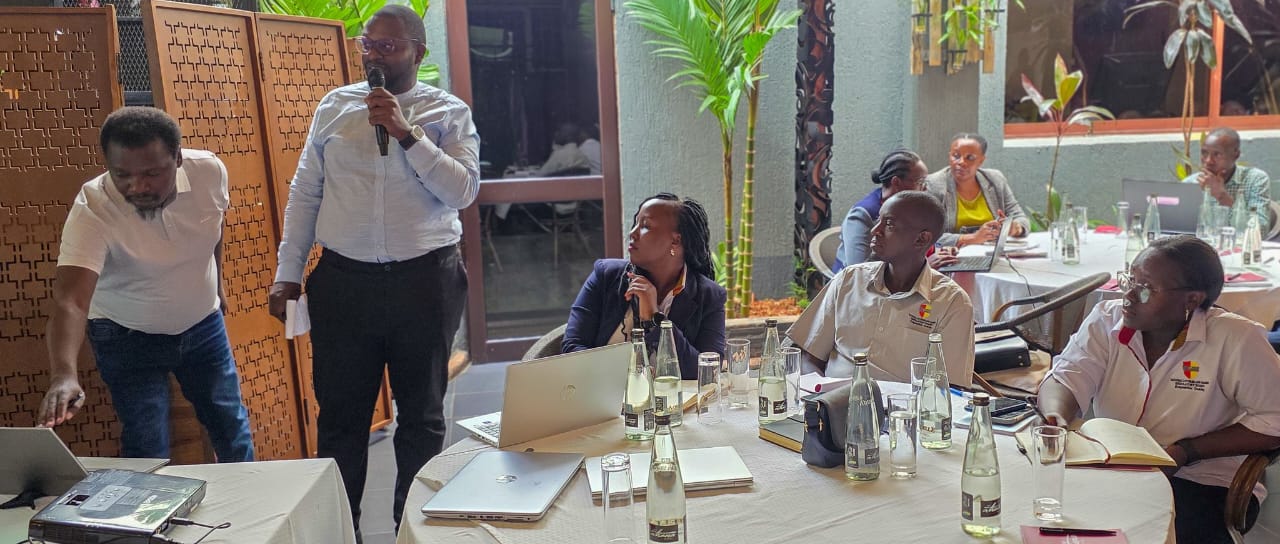
    KAMPALA — The numbers are out, and they are nothing short of a national emergency. What was once a Shs500 billion sideline just three years ago has mutated into a Shs8 trillion ($2.23 billion) behemoth. As the National Lotteries and Gaming Regulatory Board (NLGRB) announces a strategic alliance with the Online Media Publishers Association (OMPA), the question must be asked: Is this a genuine safety net for a vulnerable public, or a desperate attempt to put a leash on a digital monster that has already bolted?

    The Digital Predator
    The landscape of Ugandan gambling has shifted under our feet. Gone are the days of the dusty, back-alley betting shack being the primary concern. Today, the casino is in the pocket of every youth with a smartphone. With 93% of gaming activity now occurring online, the battle for “responsible gaming” is no longer fought on the streets, but in the palm of the hand.

    The statistics from a 2025 GeoPoll survey are a wake-up call to every household: 87% of Ugandans have placed a bet, and more than half of our youth—57%—are actively engaged in gambling. We aren’t just “gaming” anymore; we are a nation increasingly addicted to a digital lottery.

    The Entertainment Illusion
    The NLGRB’s partnership with OMPA aims to leverage the association’s massive reach—12 million Ugandans across 31 digital platforms. OMPA President Giles Muhame hit the nail on the head: “Gaming must be understood as entertainment, not employment.”

    For too many, the betting slip has replaced the CV. In an economy where jobs are scarce, the industry has successfully sold a lethal myth: that you can gamble your way out of poverty. By the time most realize the house always wins, they are already buried in debt and mental health crises.

    The Social Toll
    While the industry touts 10,000 jobs and significant tax revenue, the “social tax” is skyrocketing. NLGRB spokesperson Jackie Kamakune admitted that the rapid digital growth has increased vulnerability.

    Enforcement against illegal operators is one thing, but how do you enforce a “mindset change” against an industry that turns over Shs8 trillion?

    Watchdog Verdict
    The NLGRB is pivoting toward prevention, recognizing that they cannot arrest their way out of a behavioral epidemic. But as they partner with media publishers to “shape policies,” we must remain vigilant. A Shs8 trillion industry has deep pockets and even deeper influence.
    Responsible gaming is a noble goal, but in a climate of desperate economic hope, the “Watchdog” stays awake. We don’t just need awareness; we need a regulatory iron fist to ensure that “entertainment” doesn’t continue to come at the cost of our nation’s future. The game is rigged; it’s time we changed the rules.

    Do you have a story in your community or an opinion to share with us: Email us at Submit an Article

  • Plinko Uganda: What You Need to Know About This Growing Trend

    Plinko Uganda: What You Need to Know About This Growing Trend

    Online gaming has taken hold across East Africa, and Uganda is no exception. Among the casual games picking up players, plinko uganda draws attention for its simple mechanics and the kind of unpredictable excitement that keeps people coming back. Whether you are a student looking for a casual pastime or just curious about the digital entertainment scene, understanding what Plinko is and how it operates in Uganda is a reasonable starting point.

    What Is Plinko?

    Plinko is a game of chance that traces its origins to a popular television game show segment. Players drop a ball (or chip) from the top of a vertical board filled with pegs, watching it bounce unpredictably until it lands in one of several slots at the bottom, each carrying a different value.

    ADVERTISEMENT

    The digital version follows the same concept. Online Plinko games use a random number generator to simulate the ball’s path, making outcomes fair and impossible to predict. The appeal is its simplicity: no complex strategy required, just a decision on where to drop and how much to stake.

    Why Plinko Is Growing in Uganda

    Uganda has seen a steady rise in mobile internet usage over the past few years, and the demand for online entertainment has followed. Plinko fits well here because it is lightweight, quick to play, and accessible on a basic smartphone.

    For many young Ugandans, particularly students and young professionals, casual online games offer a low-barrier form of entertainment during breaks or downtime. Plinko’s fast-paced nature means a session can last as little as a few minutes, making it easy to fit into a busy schedule.

    Platforms Offering Plinko in Uganda

    Several international and regional online gaming platforms now offer Plinko to Ugandan users. Most are accessible via browser or mobile app and support local payment methods, including mobile money options like MTN MoMo and Airtel Money.

    Before signing up on any platform, check a few things:

    – Licensing and regulation status within Uganda

    – Availability of local customer support

    – Transparent terms around deposits and withdrawals

    – Responsible gaming tools such as deposit limits

    Choosing a well-regulated platform reduces the risk of fraud and generally means a safer experience.

    Playing Responsibly

    Like any game involving real money, Plinko carries financial risk. The randomness that makes it entertaining also makes outcomes uncertain. Setting a clear budget before playing is one of the most practical steps a player can take.

    Uganda’s National Lotteries and Gaming Regulatory Board (NLGRB) oversees gaming activities in the country. Players should only use platforms that comply with local regulations. If gaming starts to feel compulsive or financially stressful, financial counseling services can help.

    The Bigger Picture

    The growth of Plinko and similar online games points to a wider shift in how Ugandans consume digital entertainment. As connectivity improves and platforms become more localized, this market will likely keep expanding. Playing within your means is the most straightforward way to enjoy these games without taking on unnecessary financial risk.

  • Nobat Events Turns New Page After Meeting President Museveni

    Nobat Events Turns New Page After Meeting President Museveni

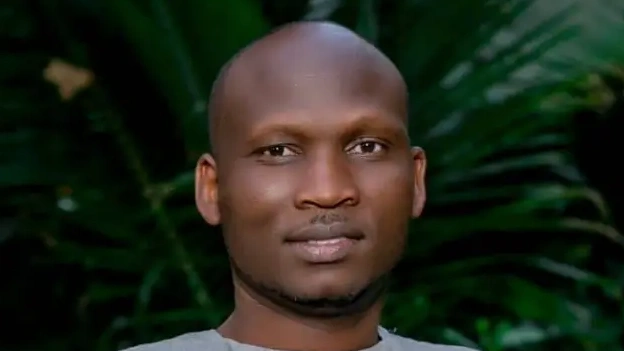
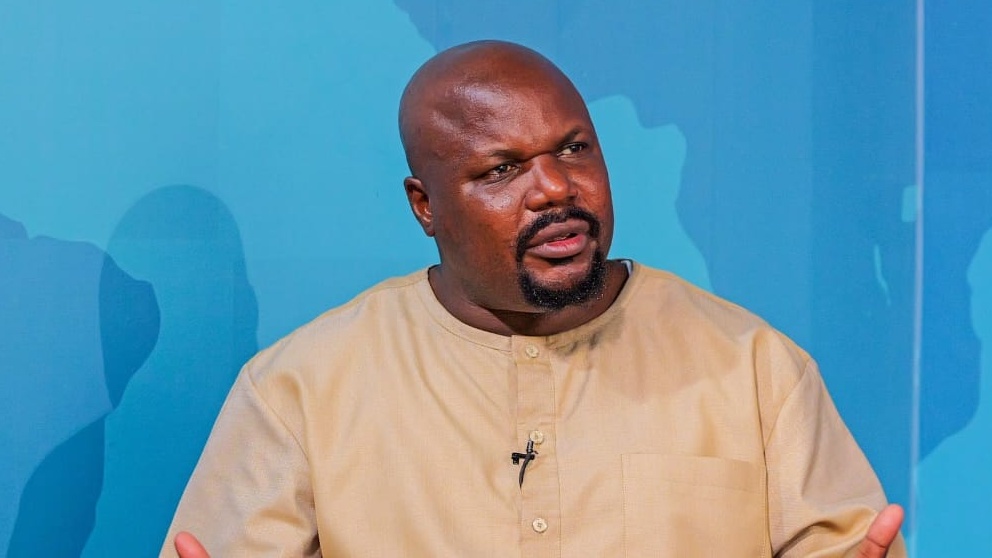
    Events organiser Nobat Twezire, widely known as Nobat Events, has opened up about a major moment in his journey after finally meeting President Yoweri Kaguta Museveni.

    Over the years, he has built a name for himself in a tough industry, often calling out divisions among promoters.

    Along the way, he has also raised concerns about how officials handle government support meant to uplift creatives.

    As tensions grew within the industry, he took a more direct stance and accused fellow promoter Abtex of tarnishing his image at the highest level.

    He claimed Abtex presented him negatively to the President, which he believes led officials to exclude him when they shared out funds to support promoters.

    After that experience, Nobat has now chosen a different approach this year, focusing on “protecting the gains,” a phrase linked to the ruling National Resistance Movement.

    Now, the meeting with the President signals a fresh start, with Nobat looking ready to move past old disputes while keeping a close eye on fairness and accountability.

    With this new direction, his next steps could influence how promoters work together, as many in the industry watch closely to see what comes next.

  • ONGADIA ROBERT PHILLIP: United for Victory: Children of Armed Forces Salute President Museveni

    ONGADIA ROBERT PHILLIP: United for Victory: Children of Armed Forces Salute President Museveni

    As a child of a soldier, I write this with a deep sense of pride and reflection following the recent general elections, in which H.E. Gen. (Rtd) Yoweri Kaguta Museveni secured a decisive victory. To many, it is a political outcome; but to us the children of men and women in uniform, it is a continuation of a story written in sacrifice, discipline, and resilience.

    I belong to a generation raised in barracks and detachments across this country. We have seen both the lean and the plenty seasons. As the proverb goes, “a child who does not know where the rain started beating him cannot know where he dried his body.” Our story is tied to the history of this nation and the journey of our parents who wore the uniform and continue to wear with honor.

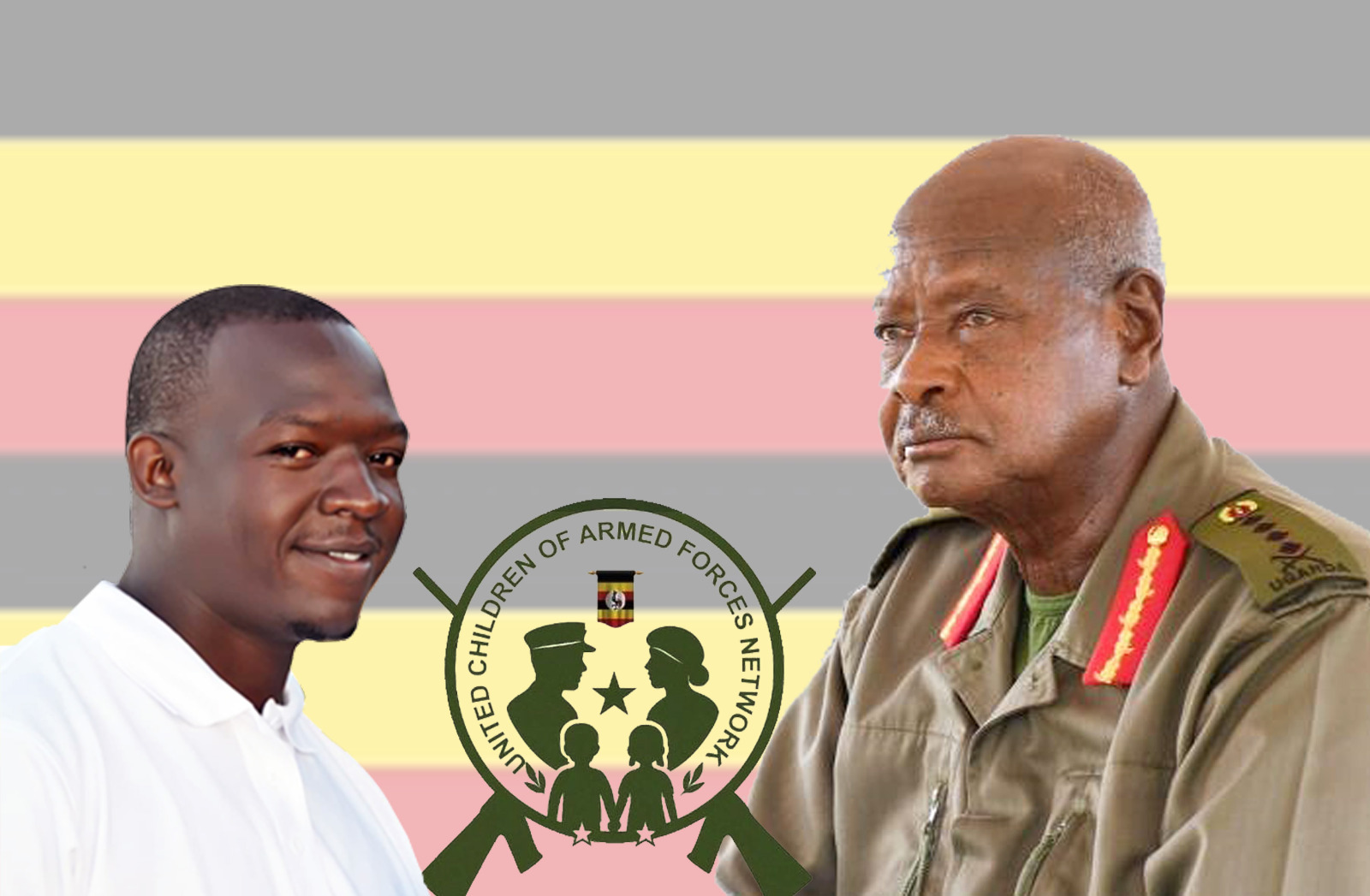
    Today, we stand united under the United Children of Armed Forces Network (UCAFNET), ably led by Miss Winnie Anyango Loketch. Through this platform, we have organized ourselves not just as beneficiaries of our parents’ legacy, but as active participants in shaping the future.

    During the recently concluded elections, many of us took part in mobilizing support across the country. We did so with a clear understanding that the Commander-in-Chief is not just a national leader, but the very leader under whom our parents served, sacrificed, and in some cases, paid the ultimate price.

    It is for this reason that we have organized a grand victory celebration scheduled for 18th April 2026 at Kololo Independence Grounds. For me, Kololo is not just a venue, it is a place of national memory, a ground where Uganda has celebrated milestones and charted its course. The President’s acceptance to attend this event speaks volumes. It affirms that he recognizes us, the children of the armed forces, as part of his extended family.

    Growing up, life was not always easy. Many of us remember days when resources were scarce, when our parents were deployed far from home, and when uncertainty was part of daily life. Yet those hardships shaped us. As the saying goes, “smooth seas do not make skillful sailors.” They taught us resilience, discipline, and the value of service above self.

    When I look back at Uganda’s history, especially the period before 1986, I see a stark contrast. The military was once associated with instability, fear, and political turmoil. But with the coming of the National Resistance Army (NRA) under President Museveni, a new chapter began one focused on discipline, ideological clarity, and national unity. The transformation into the Uganda People’s Defence Forces (UPDF) marked a shift toward professionalism and accountability.

    I vividly recall the stories and, later, the accounts shared during the “Africa Kwetu” trek of 2019, where the President retraced the liberation war routes of 1981–1986. That journey was more than symbolic; it was a living classroom. It reminded us that “freedom is not handed over on a silver platter; it is fought for and protected.” Listening to those narratives as a child of a soldier gave me a deeper appreciation of what our parents endured.

    Over the years, I have also witnessed gradual but meaningful improvements in the welfare of the armed forces. From better remuneration to improved housing in barracks, from enhanced training to greater professionalism, the progress is visible. Of course, challenges still exist—as they do in any growing institution, but as the proverb reminds us, “a journey of a thousand miles begins with one step.” And indeed, many steps have been taken.

    Perhaps the greatest achievement, in my view, is the relative peace Uganda enjoys today. For someone like me, who grew up hearing stories of unrest and uncertainty, this peace is not something to take for granted. It has created space for education, opportunity, and hope. It has allowed children of soldiers like myself to dream beyond the limitations of our upbringing.
    President Museveni, to us, remains more than just a political figure. He is a commander who walked a difficult path with our parents, a pan-Africanist with a clear vision, and, in many ways, a father figure to those of us raised within the military family. As he prepares to take oath for another term, we find it fitting to celebrate not just the victory, but the journey.

    In my reflection, I am reminded of another proverb: “when the roots are deep, there is no reason to fear the wind.” Our roots, grounded in sacrifice and service, give us confidence in the future.

    As children of the armed forces, we celebrate with pride, with gratitude, and with a renewed commitment to the values our parents stood for.
    Long live the Commander-in-Chief.
    Long live Chief of defense forces (CDF)
    Long live the men and women in uniform.
    Long live Uganda.

    For God and My Country
    Ongadia Robert Phillip
    UCAFNET – Coordinator/NRM Mobilizer Jinja City

    Do you have a story in your community or an opinion to share with us: Email us at Submit an Article

  • UN Women, Equity Bank Uganda sign deal to boost women’s economic empowerment

    UN Women, Equity Bank Uganda sign deal to boost women’s economic empowerment

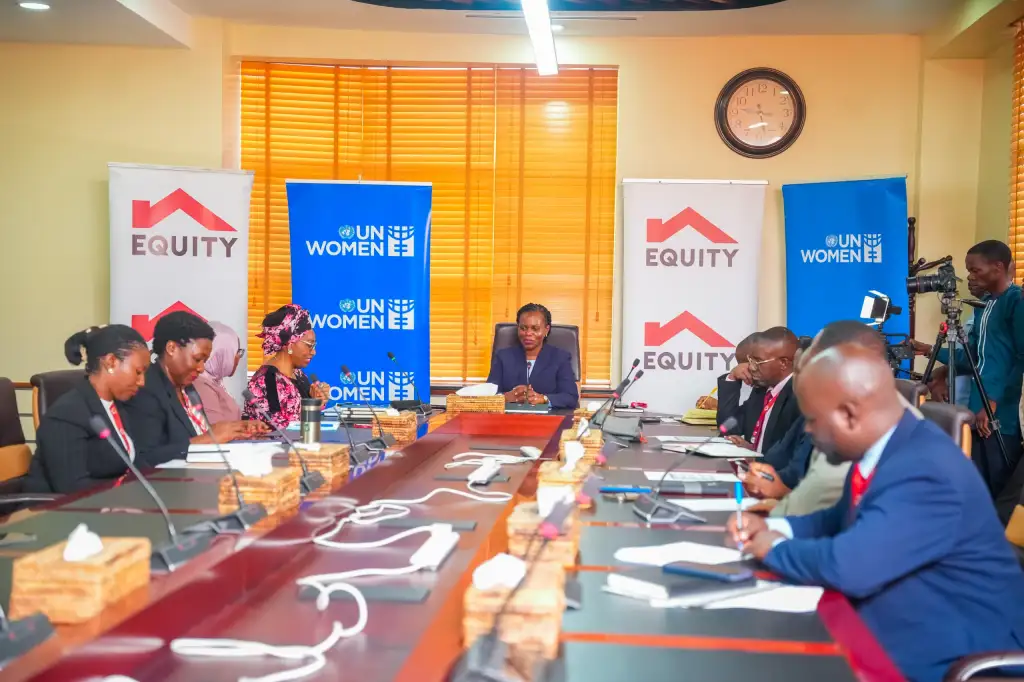
    UN Women and Equity Bank Uganda Limited have today signed a significant collaboration agreement aimed at advancing women’s economic empowerment, expanding access to inclusive financial systems, and promoting sustainable livelihoods across Uganda.

    The agreement, signed at Equity Bank’s Boardroom at Church House on Kampala Road in Kampala, establishes a two-year strategic partnership (April 2026 – March 2028) that focuses on supporting women, including those in refugee-hosting communities, to access financial services, build business skills, and benefit from clean energy financing solutions.

    Through this partnership, UN Women and Equity Bank Uganda will jointly deliver programmes that enhance financial literacy, entrepreneurship, and digital inclusion, while also strengthening women’s access to affordable financial products and services.

    Speaking at the signing ceremony, Ms. Adekemi Ndieli, UN Women Deputy Country Representative, emphasised the importance of private sector collaboration in achieving gender equality:

    “This partnership reflects our shared commitment to ensuring that women—especially those in underserved and vulnerable communities—have the tools, resources, and opportunities to thrive economically. By working together, we can accelerate progress toward inclusive growth and sustainable development.”

    On behalf of Equity Bank Uganda, Gift Shoko, Managing Director, highlighted the bank’s role in driving inclusive finance:

    “Equity Bank Uganda is proud to partner with UN Women to dismantle barriers that prevent women from achieving economic autonomy. Our commitment goes beyond financial products; we are offering training, digital literacy, and clean energy solutions to ensure women can compete and succeed in today’s economy.

    We believe inclusive finance is the foundation of inclusive growth. Together, we will empower women to transform their enterprises and their communities.”

    The partnership will focus on expanding access to financial services, including savings, credit, and digital banking solutions for women and underserved populations, delivering financial literacy, entrepreneurship, and digital skills training, supporting women-led agribusinesses and cooperatives, promoting clean energy financing solutions accessible to low-income and rural communities, and strengthening social protection and resilience, particularly in refugee-hosting areas.

    UN Women will provide technical expertise, community mobilisation, and policy support, while Equity Bank Uganda will offer tailored financial products, training, and advisory services. The partnership will be implemented through a jointly developed work plan with clear targets and measurable impact.

    The initiatives under this partnership are expected to benefit thousands of women across Uganda by enabling them to access inclusive financial services, expand their economic opportunities, and strengthen their capacity to contribute to inclusive and sustainable development. This includes supporting women’s participation in national and regional markets under the African Continental Free Trade Area, which has the potential to unlock greater market access, scale women-led enterprises, and strengthen their role in driving regional economic growth.

  • Rihanna and A$AP Rocky Linked to $500M Deal to Stay Together

    Rumors have flooded social media, claiming that Rihanna and A$AP Rocky signed a $500M deal to stay together.

    Posts online claim the couple agreed to a five year arrangement, with some suggesting the deal protects Rihanna’s wealth or secures their relationship. But no proof supports these claims.

    No official source has confirmed the story, and neither Rihanna nor A$AP Rocky has addressed it.

    The pair have stayed together since 2020 and share two children.

    They remain one of the most talked about couples in entertainment, which often puts them at the center of online speculation.

    For now, the alleged deal remains just a rumor.

  • Munyagwa Calls for Gloria Bugie’s Arrest Over School Performance

    Munyagwa Calls for Gloria Bugie’s Arrest Over School Performance

    Former MP Munyagwa Mubarak has called for the arrest of singer Gloria Bugie following her recent school performance.

    While on Sanyuka TV, Munyagwa criticized her stage conduct and dressing, saying her presentation did not suit a school setting.

    He argued that artistes must stay mindful when performing before young audiences and said that she “should have acted better because she is capable of giving birth to most of them.”

    “Gloria Bugie needs to be arrested,” he added, stressing that performers have a responsibility to set a good example, especially in school environments.

    The incident has reignited debate around school performances, with some pointing out that Gloria Bugie is not the first artiste to face such criticism.

    Stars like Sheebah Karungi and Cindy Sanyu have previously faced backlash over their dress code during school shows.

    The situation also brings back the 2022 directive by the Ministry of Education and Sports, which temporarily stopped musicians from performing in primary and secondary schools over similar concerns.

    Gloria Bugie has not yet responded.

  • Is Ykee Benda’s triplets announcement a Fool’s Day prank?

    Is Ykee Benda’s triplets announcement a Fool’s Day prank?

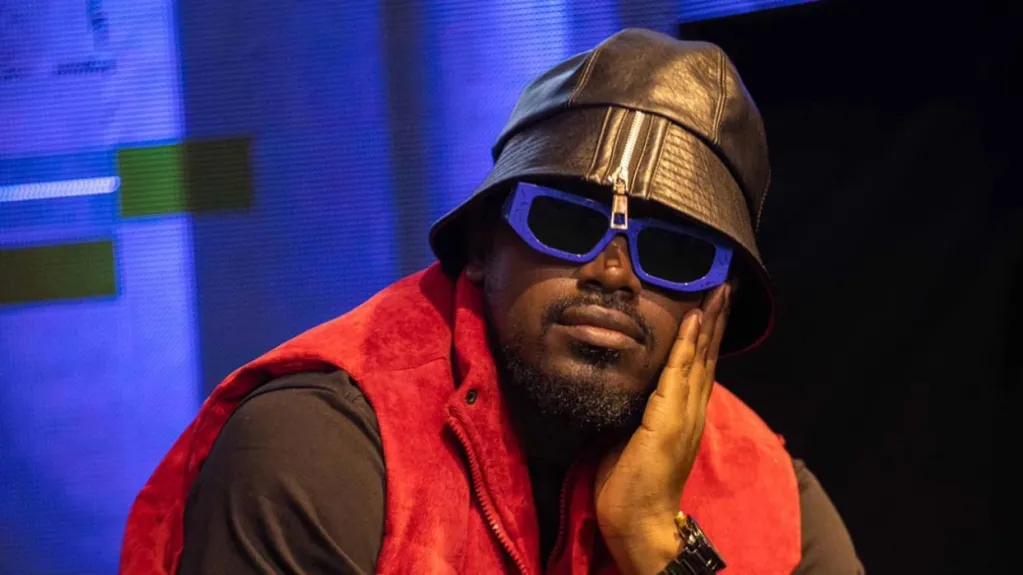
    Announcing via his X account, Ykee Benda, early on Wednesday, revealed that he is soon to assume the title given to the father of triplets.

    “What do they call a father to Triplets? Yap that’s what man dem is gonna be calling me. What a way to begin a day,” his tweet read.

    His tweet immediately fetched messages of excitement from his followers who congratulated him and his wife, Emily Nyawira, upon the feat.

    That, however, wasn’t all that was said.

    Other netizens called the singer out for using his wife and family in what they believe is a Fool’s Day social media prank.

    Being April 1st, it is quite hard to believe what is being shared online, and netizens have been left confused by the singer’s update. What do you think of this?

    The post Is Ykee Benda’s triplets announcement a Fool’s Day prank? appeared first on MBU.

  • Africa’s Moment: Time to Activate Seamless Continental Payments

    By Chioma Mang, CEO, UBA Africa

    In 2024, total African trade was estimated at approximately US$1.5 trillion, yet the continent accounts for just about 3.3% of global trade according to data from the World Trade Organization (WTO).

    Intra-African trade has grown to roughly US$220 billion, but at just 15–18% of total trade, it remains far below intra-regional trade levels seen in Europe or Asia.

    Recent data shows that intra-African trade still accounts for a relatively low share (around 15–18 %) of Africa’s total trade, pointing to under-utilised regional integration potential compared to other parts of the world.

    Indicators from the WTO show the share of intra-African trade rising modestly from about 11% to 12% of Africa’s total trade in early-to-mid 2024, suggesting incremental progress on regional integration

    These numbers tell us two things: Africa is trading more, but it is not yet trading enough with itself or with the world.

    Africa’s Global Bank, United Bank for Africa (UBA) Plc, sees this moment not as a constraint, but as an opportunity – one that demands bold financial infrastructure, cross-border integration, and trust to support the expansion of the trade frontiers on the continent.

    The Africa–USA and Africa–UK Opportunity

    Trade between Africa and the United States (US) stands at approximately US$104.9billion annually. Africa’s exports to the United Kingdom (UK) exceed US$23.5billion, with growing services trade.

    Data from the WTO show that in 2024, U.S. goods and services trade with Africa totalled an estimated US$104.9billion, up about 8.3 % year-on-year. This includes:

    • US goods exports to Africa: US$32.4billion
    • US goods imports from Africa: US $39.6billion
    • Resulting in a U.S. goods trade deficit with Africa of around US$7.2billion in 2024.

    UK’s overall trade statistics indicate Africa accounts for a small share of total UK trade, with trade in goods valued at about £2.3 billion and services around £6.1 billion in recent reporting periods (Q1 2025), though the overall share of UK trade tied to Africa remains modest at approximately 2–3 % of UK total trade.

    UBA is uniquely positioned at the intersection of these flows.

    With operations in 20 African countries, and the only sub-Saharan African bank with a federal license in the United States, also operating in global financial centres: the United Kingdom, France, and Dubai, UBA’s footprint can bridge Africa with major global financial centres in a compliant, trusted, and efficient manner.

    Trade cannot grow where payments are slow, expensive, or uncertain and since finance is the bloodstream of commerce, Africa’s trade ambitions require arteries that work at continental scale.

    Fixing the Payments Friction in Africa

    One of the most transformative developments in recent years is the Pan-African Payment and Settlement System (PAPSS), currently live in 13 countries. UBA remains the first bank licensed by PAPSS for continentwide settlement of transactions.

    PAPSS enables instant cross-border payments in local currencies, reducing reliance on hard currencies and correspondent banking chains. For UBA, this integration effectively extends our trade facilitation reach to approximately 24 African markets, deepening our ability to support cross-border SMEs and corporates.

    But infrastructure alone is not enough. It must be embedded in real products serving real people.

    Real Solutions for Real Trade

    At UBA, we have built the following solutions around this new trade reality:

    Africash

    A real-time remittance solution that allows customers and non-customers across Africa to send and receive funds seamlessly, without worrying about currency conversions. For traders, families, and SMEs, this removes one of the most persistent frictions in intra-African payments.

    Afritrade

    Designed for SMEs and businesses engaged in continental commerce, Afritrade enables businesses to receive proceeds from imports within Africa efficiently, improving liquidity cycles and reducing settlement risk.

    UBA Connect

    Through UBA Connect, customers can access and operate their accounts across all 20 African countries where UBA is present. This is not just convenience; it is economic mobility.

    Together, these platforms align directly with Africa’s ambition under the African Continental Free Trade Area (AfCFTA): a single market supported by seamless financial rails.

    Why UBA Matters for Africa–USA and Africa–UK Trade

    As Africa deepens trade with the United States and the United Kingdom, three factors become critical:

    1. Regulatory credibility
    2. Cross-border settlement efficiency
    3. On-the-ground continental presence

    UBA’s unique positioning with operations across Africa and regulated presence in the U.S. and UK, allows us to facilitate:

    • Export payments for African corporates
    • Structured trade finance
    • Diaspora remittances
    • SME expansion into global markets

    When a Ghanaian SME exports to London or a Nigerian supplier ships to Houston, settlement speed and currency certainty determine competitiveness. The bank’s role is to ensure African businesses can transact with confidence, knowing their banking partner understands both ends of the corridor.

    The Next Chapter

    Africa’s trade future will not be unlocked by policy alone. It will be unlocked by payment systems that work, banks that connect markets, and institutions that understand the continent’s diversity.

    The growth of intra-African trade from US$220billion upward depends on removing payment friction. The expansion of Africa–USA and Africa–UK trade depends on trusted intermediaries that operate seamlessly across jurisdictions.

    UBA was built as Africa’s Global Bank. Today, that vision is not aspirational, it is operational.

    The next phase of Africa’s trade transformation requires scale, integration, and innovation. We are ready to deliver all three.

    Because when Africa trades better, Africa grows faster.

  • Viana Indi’s big upgrade: New car after securing a new job (PHOTOS)

    Viana Indi’s big upgrade: New car after securing a new job (PHOTOS)

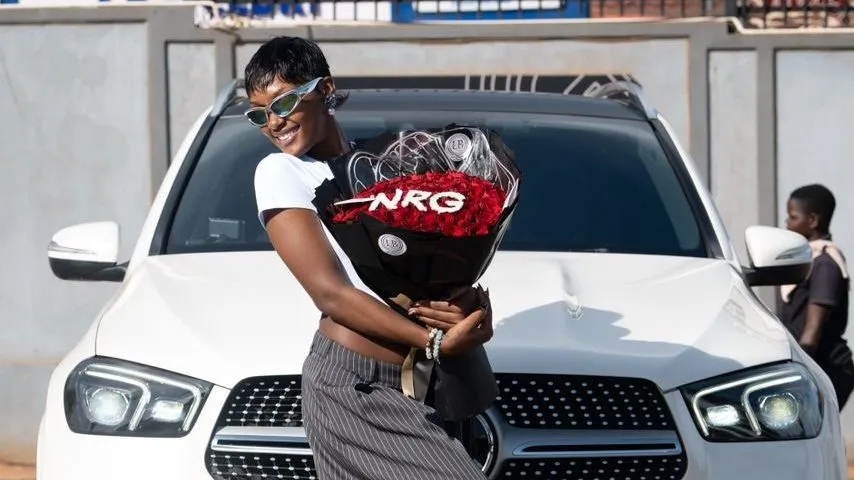
    Having commenced her new job at NRG Radio Uganda on Monday, Viana Indi had also unveiled a brand new car.

    Via her social media accounts on Wednesday morning, the Vybe Queen shared photos of herself standing in front of a brand new Mercedes-Benz GLE, holding a bouquet.

    She added the caption, “Big girl whip because NRG Radio Ug thought I needed an upgrade. I love it here.”

    The Ugandan media personality acquired her first car in June 2024 while still at Next Media in celebration of the milestone as a reward for her hard work and dedication.

    Congratulations on your upgrade, Viana!

    The post Viana Indi’s big upgrade: New car after securing a new job (PHOTOS) appeared first on MBU.

About UGNEWS24

UGNEWS24 is a Uganda local news service, a product of SOLAVIA GROUP LIMITED, Reg. No. 80048169153974.

Registered office

Plot 2335, Buwambo-Katadde-Najjo Road,
Nansana Municipality, Wakiso District, Uganda
P.O. Box 214231, Kampala

© 2026 SOLAVIA GROUP LIMITED. All rights reserved.