Blog

  • Finance Minister Commends Huawei’s Contribution to Uganda’s Digital Transformation Agenda in line with the Tenfold Growth Strategy

    Finance Minister Commends Huawei’s Contribution to Uganda’s Digital Transformation Agenda in line with the Tenfold Growth Strategy

    By Watchdog Uganda Reporter

    Kampala | July 29, 2026 — Uganda’s Minister for Finance, Planning and Economic Development, Hon. Henry Musasizi, has commended Huawei Technologies Uganda for its continued contribution to the country’s digital transformation and welcomed policy proposals aimed at making smart devices more affordable for Ugandans.

    During the high-level engagement at the Ministry of Finance headquarters between the Minister and a Huawei delegation led by Managing Director Zhang Hao (Edward), various presentations regarding smart phone tax reduction were made by the Huawei senior executives.

    As Huawei marks 25 years of operations in Uganda, Minister Musasizi praised the company for supporting the Government’s Tenfold Growth Strategy through expanding digital connectivity, promoting ICT skills development among young people, and improving access to digital technologies across the country.

    During the meeting, Huawei presented some policy proposals designed to accelerate digital inclusion, including measures to reduce the cost of smart devices through tax incentives and the wider availability of more affordable smartphones. The proposals aim to increase Uganda’s smartphone penetration beyond the current 46 percent, enabling more citizens to participate in the digital economy.

    The Minister welcomed these proposals, noting that wider access to affordable smart devices would help accelerate digital transformation, improve service delivery, and contribute to Uganda’s economic growth. The Minister added in his remarks that this engagement has been an eye opener for the finance ministry in the technology sector and they will ensure to do more in-depth studies and research to make a more informed decision that will benefit the people of Uganda regarding smartphone tax policies.

    He also encouraged Huawei to continue strengthening ICT talent development so that the skills being transferred to young Ugandans can support the long-term development of the country’s Science, Technology and Innovation (STI) sector.

    The meeting further reaffirmed the strong partnership between the Government of Uganda and Huawei in advancing digital inclusion, innovation, and sustainable economic development.

    Also present at the meeting was Director of Economic Development Moses Kaggwa, Assistant Commissioner Collins Inkesha together with senior officials from Huawei Technologies Uganda.

    Do you have a story in your community or an opinion to share with us: Email us at Submit an Article

  • Finance Minister Urges Airtel Uganda to Prioritize Secure Digital Infrastructure

    Finance Minister Urges Airtel Uganda to Prioritize Secure Digital Infrastructure

    KAMPALA — State Minister for Finance (General Duties) Hon. Henry Musasizi has called on Airtel Uganda to continue investing in secure, modern digital systems to accelerate national digital transformation and bolster Uganda’s competitiveness in the digital economy.

    Minister Musasizi made the remarks during a courtesy call from Airtel Uganda’s newly appointed Chief Executive Officer and Managing Director, Mr. Soumendra Sahu, who was accompanied by the State Minister for General Duties, Hon. Cissy Mulondo, at the Ministry headquarters.

    Musasizi congratulated Mr. Sahu on his appointment and commended Airtel Uganda for its vital role in the country’s socioeconomic development. He highlighted the company’s expansion of reliable telecommunications, ongoing investments in fiber-optic infrastructure, job creation, and key contributions to the national tax base.

    Reaffirming the government’s commitment to supporting the private sector, Musasizi emphasized that strong private-public synergy is critical for job creation, expanding digital services, and driving domestic revenue growth.

    In response, Mr. Sahu expressed gratitude for the government’s continued backing and reiterated Airtel’s commitment to advancing digital inclusion. He outlined key corporate social responsibility (CSR) initiatives, including providing free internet access to roughly 200 schools nationwide, fully sponsoring 20 university students annually with equal gender representation, and delivering graduate training programs to bridge the path into employment.

    The meeting also addressed smartphone taxation and support for Uganda’s emerging local smartphone assembly sector, with Director of Economic Affairs Moses Kaggwa emphasizing the strategic need to safeguard local manufacturers.

    Do you have a story in your community or an opinion to share with us: Email us at Submit an Article

  • Minister Katumba Wamala launches building Industry management system (BIMS).

    Minister Katumba Wamala launches building Industry management system (BIMS).

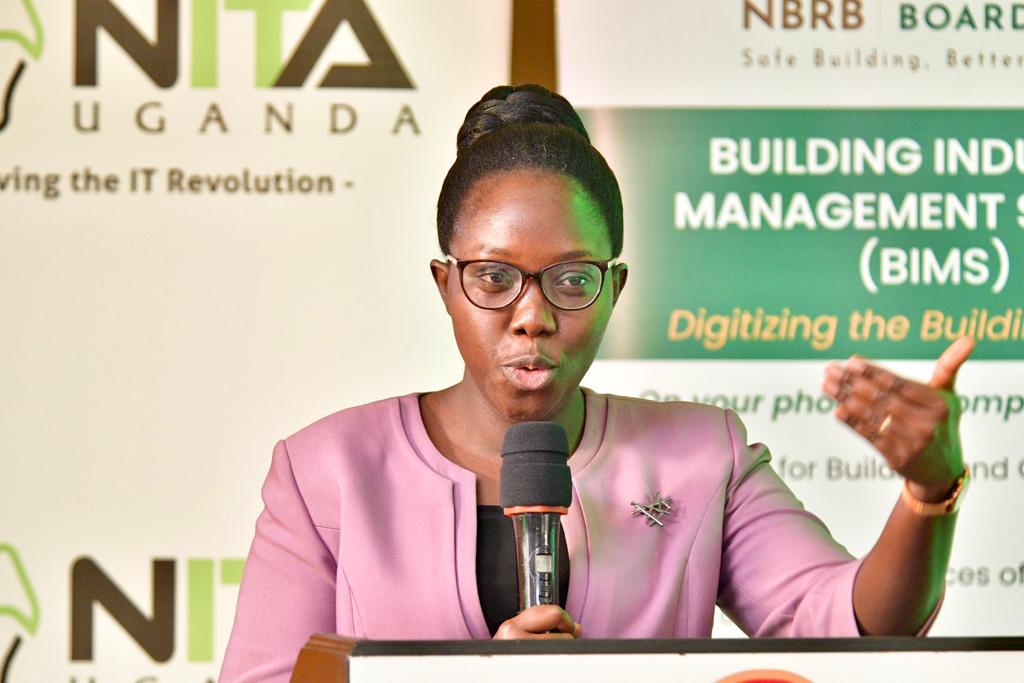
    The Minister for Works and Transport Gen. Edward Katumba Wamala has launched the Building Industry Management System (BIMS) an online platform automating all the Building Control Services.

    With BIMS a developer can now apply for Building and Occupation Permits, Commit the Services of Registered Professionals Schedule for Routine Building Inspections, Pay Building Control Fees and get Instant Feedback for the Services Requested for Online. The system is in full operation in Kira Municipality and Kampala City and it has also been piloted in Entebbe, Jinja Soroti and Mbarara.

    It has been developed by a pool of local talent from the National Building Review Board (NBRB) and National Information Technology Authority (NITA-U).
    While launching the system at Speke Resort Hotel Munyonyo, Minister Katumba Wamala, revealed that the system is improving supervision, monitoring and enforcement of existing Building laws as a solution to numerous building accidents, leading to loss of lives and property.

    “After here I expect no more delays in the application and approvals of Building and Occupation Permits since the public now expects quick, efficient and transparent processes. The ultimate goal should be to put a stop to the endless building accidents, that give our country a negative image”. The Minister added.

    The Executive Secretary of the National Building Review Board (NBRB) Eng. Flavia Gutto Bwire urged the stakeholders in the building sector to embrace the system since it is an outcome a consultative process undertaken in 2020.
    “It was evident after consultations that digitizing the building control processes was the only way of improving efficiency, effectiveness, transparency and predictability in the sector”. Bwire emphasized.

    BIMS is integrated with National Land Information system (NLIS) under the Ministry of Lands for land ownership verification, URA for building control fees payments and verification of TIN numbers, URSB for company registration verification, NIRA for NIN verification, Architects Registration Board, Surveyors Registration Board, and Engineers Registration Board for identification of registered professional.

    At the launch the Minister hand over BIMS equipment including the 2 all-in-one desk top computers, a printer and internet connectivity to 25 local authorities which have been activated on the system. The event was also attended by the State minister of Works and Transport Musa Ecweru,

    About NBRB

    The National Building Review Board (NBRB) is a corporate body under the Ministry of Works and Transport established by the Building Control Act, 2013. The Board was inaugurated on October 2, 2018.
    Its mandate is stipulated under section 9 of the Act as to; monitor building developments, ensure design and construction of buildings are accessible by persons with disabilities, oversee and inspect the operations of the Building Committees, prepare and submit reports to the minister on matter relating to the sector.
    The Board also hears and determines appeals from persons dissatisfied with the decisions of a Building Committee and determines fees to be charged by urban and district building committees for approval of plans, issue of building permits and occupation permits.

    About Post Author

  • KCB Bank Uganda Launches ‘Building Great Men’ Mentorship Programme to Foster Leadership, Wellbeing and Personal Growth

    KCB Bank Uganda Launches ‘Building Great Men’ Mentorship Programme to Foster Leadership, Wellbeing and Personal Growth

    Kampala, Uganda – 29th July 2026– KCB Bank Uganda launched the Building Great Men Mentorship Programme, a new initiative aimed at empowering male employees with the knowledge, support and mentorship needed to become stronger leaders at work, home and within their communities.

    The programme, launched at the Bank’s headquarters in Kampala, marks another achievement in the Bank’s commitment to creating a workplace where employees are supported in their careers as well as in their personal growth and well-being.

    The launch brought together senior management, employees, mentors and partners for conversations centered on purposeful leadership, accountability, emotional intelligence and the importance of mentorship in shaping confident and responsible men.

    The 32 pioneer participants were introduced to the mentorship journey that will run for a period of 6 months, providing structured coaching, peer learning opportunities and practical life lessons designed to strengthen leadership skills, character development and healthy relationships. The programme will also offer a safe space for participants to learn from experienced mentors while building a network of accountability and support.

    Speaking at the launch, KCB Bank Uganda Managing Director, Mr. Edgar Byamah, who officially unveiled the programme, said investing in people remains one of the bank’s greatest priorities.

    “Our success as an organization is built on the strength of our people. The ‘Building Great Men’ Mentorship Programme reflects our belief that leadership begins with character, purpose and personal growth. By investing in our employees and their professional roles, we are nurturing leaders who will create positive impact within the bank, in their families and across society,” he said.

    The 6-month mentorship programme will be facilitated by Alpha Lead, whose mentorship model focuses on helping men become intentional leaders through continuous learning, self-awareness and accountability.

    Coach Andrew Kimuli of Alpha Lead said the initiative goes further than career development.

    “This programme is about helping men become the best version of themselves. When men are equipped with the right values, mindset and support system, they become better leaders, better fathers, better husbands, better colleagues and ultimately better contributors to society.”

    The ‘Building Great Men’ Mentorship Programme is part of KCB Bank Uganda’s broader employee wellbeing and leadership agenda, reinforcing the Bank’s commitment to developing a resilient, purpose-driven workforce capable of delivering sustainable value to customers and communities alike.


    Do you have a story in your community or an opinion to share with us: Email us at Submit an Article

  • Facing UN Exit and U.S. Budget Cuts, Troop-Contributing Nations Convene in Kampala over Somalia Mission

    Facing UN Exit and U.S. Budget Cuts, Troop-Contributing Nations Convene in Kampala over Somalia Mission

    Uganda Hosts Critical AUSSOM Summit Amid Funding Crisis and Security Threats in Somalia

    SPEKE RESORT MUNYONYO – Uganda is hosting the second Extraordinary Summit of Troop-Contributing Countries (TCCs) to the African Union Support and Stabilisation Mission in Somalia (AUSSOM) at Speke Resort Munyonyo from 29 to 31 July 2026.

    The gathering opened Wednesday with a Chiefs of Defence Forces meeting, chaired by Uganda’s Chief of Defence Forces, Gen. Muhoozi Kainerugaba. It brings together military and political leaders from Uganda, Kenya, Burundi, Djibouti, Ethiopia, Egypt, and Somalia, alongside senior officials from the AU, UN, and IGAD.

    Convened under the theme “Sustaining Somalia’s Stabilisation Process,” the summit focuses on reviewing security conditions, evaluating AUSSOM’s progress since succeeding ATMIS in 2025, and addressing operational hurdles. Central to discussions are joint operations with Somali National Forces, capacity building, and counter-Al-Shabaab strategies.

    Topping the agenda is a severe financial bottleneck: the impending termination of the United Nations Support Office in Somalia (UNSOS) by December 2026, compounded by the withdrawal of U.S. financial backing. The resulting 25% budget cut has already disrupted logistics and frontline operations. Delegates are now scrambling for alternative funding models and greater AU self-reliance to prevent a dangerous security vacuum.

    As a primary troop contributor since 2007, Uganda’s hosting of the summit highlights its continued stake in Horn of Africa stability. Gen. Kainerugaba urged delegates toward renewed collaboration to fix logistical gaps and guarantee mission sustainability.

    Why It Matters

    Instability in Somalia leaks directly into East Africa via terrorism, displacement, and economic volatility. A successful AUSSOM transition is essential for building local capacity and preserving hard-won security gains against Al-Shabaab.

    The Regional Stakes

    Without a solution to the funding shortfall, security gains risk slipping, directly threatening Ugandan peacekeepers and broader regional security. The summit presents a test of African-led diplomacy, TCC coordination, and strategic pressure on global partners.

    When Heads of State convene on 31 July, the decisions made will shape the mission’s trajectory, measure Uganda’s diplomatic clout, and reveal whether collective regional action can deliver long-term stability—or expose fatal flaws in AU peacekeeping.

    Do you have a story in your community or an opinion to share with us: Email us at Submit an Article
  • Reign Visits Late Hon. Nakimuli’s Daughter, Honours His Promise

    Reign Visits Late Hon. Nakimuli’s Daughter, Honours His Promise

    Promises made during burial ceremonies often fade with time, but Reign Omusoyisoyi says one promise he made to the late Hon. Hellen Nakimuli continues to shape his actions.

    The comedian recently visited Nakimuli’s daughter at her school, accompanied by singer Nina Roz, as part of a commitment he says he intends to honour for years to come.

    He described the late legislator as one of the people who stood by him when few others did, saying much of the support she gave him happened away from the public eye.

    The late Hon. Nakimuli stood by me in so many ways that the public never got to know about. I promised to stand with her daughter until the very end, and I intend to keep that promise.

    The visit, Reign explained, was another step towards fulfilling that promise and ensuring Nakimuli’s daughter continues to receive the support he pledged after her mother’s passing.

    He encouraged Ugandans to treat promises made during burial ceremonies with the seriousness they deserve, saying such commitments should not end once the funeral is over.

    A promise is a promise. If you commit yourself to helping a family during a burial, do your best to fulfill it.

  • DR. OPUL JOSEPH: The World’s Greatest Own Goal: Global Leaders Must Stop Missing the Forest for the Trees, Recognize Migrants and Refugees as Catalysts of Prosperity

    DR. OPUL JOSEPH: The World’s Greatest Own Goal: Global Leaders Must Stop Missing the Forest for the Trees, Recognize Migrants and Refugees as Catalysts of Prosperity

    Position Letter to Global Leaders, Humanitarian Organizations & global community

    Dear global leaders, Humanitarian organizations focused on refugees and migration ( UNHCR, IOM, UNRWA, International Rescue Committee (IRC), Norwegian Refugee Council (NRC), Danish Refugee Council (DRC), Save the Children, HIAS,  Refugees International and  Action Against Hunger) and community, heartfelt greetings from Gulu University (25 year old Public Universality in Uganda), Rotary Clubs of Uganda, Uganda Red Cross Society (URCS), Quality Education Consultancy Ltd (QECL), OPUL Skilling Foundation Africa (OSFA) whose motto is “Innovative Skilling as Medicine to Extreme Poverty. QECL&OSFA long-term commitment is to facilitate 20 million business start-ups, accelerations, and innovations, and to contribute to the creation of 40 million decent and sustainable jobs for young people, youth and women in Africa by 2035. 

    The world stands today at a defining crossroads. While nations race to build walls higher than mountains and borders tighter than clenched fists, humanity continues to bleed through the cracks of fear, prejudice, and political expediency. We are, quite literally, scoring the world’s greatest own goal. As the African proverb reminds us, “When spider webs unite, they can tie up a lion.” Yet instead of weaving a tapestry of shared humanity, we continue to unravel it thread by thread. We are so busy missing the forest for the trees that we fail to recognize migrants and refugees as seeds of innovation, talent, labour, market, resilience, and global prosperity rather than burdens to be borne.

    Some of the major international laws and policies that have restricted migrants and refugees from Africa seeking to move within Africa or to Europe include the Schengen Agreement (1985, implemented 1995), which strengthened external border controls for entry into much of Europe; the Dublin Regulation (first adopted in 1990 as the Dublin Convention, replaced by regulations in 2003 and updated in 2013), which requires asylum seekers to apply in the first EU country they enter, limiting onward movement; the EU–Turkey Statement (2016), which reduced irregular migration routes into Europe by returning many migrants arriving in Greece to Turkey; the European Union Emergency Trust Fund for Africa (2015), which funds border management and migration control efforts across African countries to discourage irregular migration toward Europe; and the Kampala Convention (adopted in 2009, entered into force in 2012), which focuses on the protection and management of internally displaced persons within Africa, encouraging solutions within member states rather than cross-border refugee movements.

    The Bible declares, “Do not neglect to show hospitality to strangers, for by doing so some people have shown hospitality to angels without knowing it” (Hebrews 13:2). Likewise, the Holy Qur’an teaches, “Whoever saves one life, it is as if he has saved all mankind” (Qur’an 5:32). These sacred teachings do not distinguish between citizens and strangers. Compassion knows no passport, and dignity requires no visa. Yet many governments have replaced the language of mercy with the vocabulary of suspicion, turning borders into barricades against hope.

    Every year, thousands of Africans gamble with death across the Mediterranean Sea. Young women, men, and children board fragile rubber boats that resemble floating coffins more than vessels of transport. Many flee war, persecution, climate shocks, poverty, and collapsing livelihoods. The Mediterranean has become an open-air cemetery where dreams sink beneath unforgiving waves. Families bury empty coffins because no bodies are recovered. Mothers mourn children whose graves are known only to the sea. It is a tragedy that mocks our collective conscience. The IOM Missing Migrants Project noting over 40,000 deaths in the Mediterranean alone since 2014) and disappearances have been documented on maritime and desert routes from Africa toward Europe and the Americas. This trend isnt about to end but continues.

    The irony is as sharp as a double-edged sword. Africa contains roughly 30% of the earth’s entire mineral reserves, leading the world in global shares of gold, platinum, diamonds, and cobalt. Besides Africa is richly endowed with natural resources, fertile land, youthful populations, and cultural wealth, yet millions of its brightest minds risk everything to seek opportunity elsewhere. “A bird does not abandon a green forest without reason.” Their journeys are rarely born from adventure but from desperation. When governance falters, conflict festers, corruption flourishes, and opportunities evaporate, migration becomes less a choice than a survival strategy.

    Political rhetoric often paints migrants as invaders rather than investors in society. Some leaders have mastered the art of counting the cost of refugees while ignoring the value they create. It is satire worthy of history that nations celebrate innovation while rejecting innovators at their borders. We cheer diversity in boardrooms but fear diversity at border crossings. We applaud entrepreneurship but handcuff entrepreneurs before they can contribute. Such contradictions expose policies that are penny wise but pound foolish.

    History repeatedly proves that migrants and refugees are not liabilities but assets. They have founded global companies, transformed science, enriched culture, strengthened healthcare systems, won Olympic medals, and revitalized declining communities. Among well-known examples are Albert Einstein, who fled Nazi persecution and revolutionized modern physics; Freddie Mercury, born in Zanzibar to a family that later sought refuge in the United Kingdom before becoming one of rock music’s greatest performers; Madeleine Albright, who fled Czechoslovakia and became the first woman to serve as United States Secretary of State; Ilhan Omar, who arrived in the United States as a Somali refugee and became a member of Congress; M.I.A., who fled conflict in Sri Lanka and became an internationally acclaimed musician; Waris Dirie, who escaped hardship in Somalia to become a global model and anti–female genital mutilation campaigner; Luol Deng, a refugee from South Sudan who became an NBA All-Star; Deng Adut, who fled South Sudan and became an Australian lawyer and human rights advocate; Doaa Al Zamel, the Syrian refugee whose survival story inspired global audiences; and Yusra Mardini, the Syrian refugee and Olympic swimmer whose courage captured the world’s imagination. Their stories among others demonstrate that displacement can coexist with extraordinary contribution, though not all were initially denied entry by destination countries.

    World class Football stars with Refugee and Migrant Background 

     Lamine Yamal: who greatly contributed spain winning 2026 world cup was Born in Spain to a Moroccan father and an Equatorial Guinean mother whose families moved to Europe.

    Nico Williams: who greatly contributed to spain winning 2026 world cup by setting up the goal was Born in Spain after his parents undertook a dangerous trek across the Sahara Desert from Ghana


    Alphonso Davies: Born in a refugee camp in Ghana after his parents fled the civil war in Liberia; later immigrated to Canada as a refugee and became a star for Bayern Munich and Canada.

    Antonio Rüdiger: Born in Germany to parents who escaped the brutal civil war in Sierra Leone; now a star defender for Real Madrid and the German national team.

    Eduardo Camavinga: Born in an Angolan refugee camp after his family fled conflict in the Democratic Republic of the Congo, before moving to France where he grew up and plays for Real Madrid.

    Victor Moses: Fled Nigeria as an unaccompanied child refugee to the UK after his parents were tragically killed during religious riots in Kaduna; later starred for Chelsea


    Luka Modrić: Displaced as a child during the Croatian War of Independence, living for years as a refugee in local hotels before becoming a Ballon d’Or winner with Real Madrid. 

    Zlatan Ibrahimović: Born in Sweden to a Bosnian Muslim father and a Croatian Catholic mother who immigrated as economic migrants from the former Yugoslavia. Kylian Mbappé: Born in France to a Cameroonian father and an Algerian mother who migrated to Europe seeking a better life.

    Romelu Lukaku: Born in Belgium to parents who migrated from the Democratic Republic of the Congo. 

    Folarin Balogun: Born in Brooklyn, New York, to Nigerian parents who were visiting the United States; raised in England and now a prominent striker for the USMNT

    Dejan Lovren: Fled with his family as a toddler from the war in the former Yugoslavia to find refuge in Germany before playing for clubs like Liverpool

    Migrants are more than statistics in annual reports. They are doctors who fill shortages in overstretched health systems, engineers who build tomorrow’s infrastructure,footabllers ,athletes who entertain the world, entrepreneurs who generate employment, academics who expand knowledge, artists who enrich culture, and caregivers who support ageing populations. Many economies facing demographic decline increasingly depend on migrant labour to sustain productivity, innovation, and public services. Human mobility, when managed fairly, is not a crisis but a catalyst for development.

    Yet restrictive international legal and policy frameworks continue to undermine this potential. Visa regimes often favour wealth over vulnerability. Lengthy asylum procedures leave people in prolonged uncertainty. Externalization policies shift responsibility to transit countries with fewer resources. Pushback practices at borders raise serious human rights concerns. Detention of asylum seekers, limited pathways for regular migration, uneven responsibility-sharing among states, and selective recognition of refugee protection all contribute to a system that too often prioritizes deterrence over protection. While the 1951 Refugee Convention, its 1967 Protocol, and regional instruments such as the 1969 OAU Refugee Convention remain foundational, implementation is inconsistent, and many people fleeing contemporary drivers such as climate change fall outside existing legal definitions.

    Global politics has become a theatre where migration is too often used as an election slogan rather than addressed as a human reality. Some politicians build popularity by building fear. They chase headlines instead of solutions, forgetting that today’s refugee may become tomorrow’s Nobel laureate, business leader, physician, or parliamentarian. History has little patience for leaders who mistake exclusion for strength.

    Africa itself must also confront uncomfortable truths. The continent cannot continue exporting its youth while importing dependency. Good governance, quality education, peacebuilding, industrialization, and youth employment are not optional aspirations but urgent necessities. As the proverb says, “The child who is not embraced by the village will burn it down to feel its warmth.” Investing in young people is the surest strategy to reduce forced migration while unlocking Africa’s immense demographic dividend.

    Communities receiving migrants also have a moral and practical responsibility. Fear often grows where knowledge is absent. Integration succeeds when neighbours become friends, schools become bridges, workplaces embrace diversity, and communities reject xenophobia. Migrants do not diminish national identity; they often enrich it. Diversity is not a crack in the foundation but another pillar supporting the house of humanity.The future belongs to societies that understand that borders may define states, but compassion defines civilization. Every migrant carries not only a suitcase but also skills, dreams, resilience, and untapped potential. Closing the door on human talent because of birthplace is like throwing away fertile seed because it arrived in unfamiliar soil. Nations that welcome and integrate migrants wisely often harvest innovation, entrepreneurship, and cultural vitality.

    Therefore, I respectfully call upon governments, international organizations, civil society, faith leaders, academia, and local communities to replace fear with foresight, exclusion with inclusion, and rhetoric with responsibility. Humanity has always advanced through movement, exchange, and cooperation. Migration is not an anomaly in history; it is one of history’s defining forces. The question is not whether people will move, but whether we will manage mobility with wisdom, justice, and shared responsibility.

    A Global Call to Action: From Human Mobility to Shared Prosperity

    The defining challenge of our time is not migration itself, but whether humanity has the vision to transform displacement into opportunity and Africa’s immense potential into lasting prosperity. The future demands bold, coordinated leadership that recognizes migrants and refugees as contributors to global development, empowers Africa to create opportunities at home, and invests in the skills and innovation that will turn the continent’s greatest resource its people into its greatest competitive advantage. From the above exposition, I present the following recommendations 

    From Borders of Exclusion to Bridges of Prosperity: A Global Call to Recognize Migrants and Refugees as Catalysts for Shared Growth

    Global leaders encompassing Donald Trump, Keir Starmer, Emmanuel Macron, Friedrich Merz, Giorgia Meloni, Mark Carney, Anthony Albanese, Yoweri Museveni Kaguta and António Guterres among others, together with governments, regional organizations, and the international community, should strengthen legal, policy, political, and trade frameworks that recognize migrants and refugees not merely as recipients of humanitarian assistance but as contributors to innovation, entrepreneurship, labor markets, cultural exchange, and long-term economic resilience. While every sovereign state has the right to manage its borders and protect national security, migration and refugee policies should remain consistent with international law, human rights obligations, and evidence-based economic planning. Rather than relying primarily on restrictive border closures, nations should expand safe and orderly migration pathways, improve fair and efficient asylum systems, promote recognition of professional qualifications, facilitate access to education and employment, and encourage public-private partnerships that enable displaced people to contribute productively to host societies. History demonstrates that many migrants and refugees have gone on to become scientists, business founders, healthcare professionals, educators, and community leaders whose contributions have strengthened the countries that welcomed them. Viewing migrants and refugees as potential agents of global prosperity while balancing legitimate security, legal, and economic considerations can foster inclusive growth, enhance international trade and investment, address demographic and labor shortages, and reinforce global solidarity. A coordinated international approach that combines responsibility-sharing with respect for national sovereignty can transform human mobility from a perceived burden into a strategic opportunity for sustainable development and shared prosperity.

     Urgent need for a Strategic African Continental Mindset Transformation Framework to Build Hope, Opportunity, durable, lasting solution to forced migration, refugees and Prosperity in Africa 

    There is an urgent need to design and implement an African Continental Mindset Transformation Framework that inspires citizens, especially young people, to recognize and invest in Africa’s vast human and natural potential rather than risking dangerous migration routes across the Mediterranean Sea and other perilous pathways in search of better lives, jobs, and opportunities. Such a framework should promote pan Africanism, patriotism, ethical leadership, entrepreneurship, innovation, skills development, good governance, regional economic integration, and responsible citizenship while addressing the root causes of irregular migration, including unemployment, poverty, conflict, corruption, and limited opportunities. By fostering a renewed continental mindset that values self-reliance, productivity, peace, and collective prosperity, African governments, the private sector, educational institutions, civil society, and development partners can work together to transform Africa into a continent where people choose to build their futures rather than flee from them. With its abundant natural resources, youthful population, cultural richness, and growing markets, Africa has the potential to become one of the world’s most prosperous and desirable places to live, work, invest, and innovate offering opportunities that rival those found in Europe, America, and other regions. The ultimate goal should be to make Africa a destination of choice through inclusive development, sustainable economic growth, and accountable leadership, ensuring that migration becomes a matter of opportunity and free choice rather than desperation and necessity.

    From Mineral Wealth to Human Wealth: Embark on large scale Africa’s innovative Skills Revolution the Most Powerful Antidote to Desperate Migration

    Establish a Pan-African Skills-to-Wealth Transformation Initiative (PASTI) a continent-wide, large-scale innovation that equips millions of young Africans with future-ready technical, digital, entrepreneurial, green economy, agribusiness, manufacturing, and value-addition skills while simultaneously driving a profound mindset shift from job seekers to job creators and wealth builders. The initiative should unite African governments, the private sector, educational institutions, and international development partners to establish innovation hubs, vocational excellence centers, startup incubators, industrial apprenticeship programs, and investment funds in every region. Rather than exporting raw minerals and importing finished products, Africa should prioritize local value addition, industrialization, and youth-led enterprises that transform its vast natural resources into globally competitive products. Alongside technical training, civic leadership, integrity, financial literacy, and innovation education should cultivate a generation that believes opportunity can be created at home rather than sought through perilous migration. As the African proverb wisely reminds us, “A bird does not abandon a green forest without reason.” Africa possesses nearly 30% of the world’s mineral reserves, immense agricultural potential, abundant renewable energy, and one of the world’s youngest populations. The irony is as sharp as a double-edged sword that a continent so richly endowed continues to lose thousands of its sons and daughters to dangerous journeys across the Mediterranean Sea toward Europe and America. By transforming natural wealth into human capital, productive industries, decent jobs, and entrepreneurial ecosystems, Africa can permanently replace desperation with hope, making migration a genuine choice rather than a desperate necessity for survival.

    In conclusion, As Martin Luther King Jr. reminded the world, “We must learn to live together as brothers and sisters or perish together as fools.” The path forward is clear: embrace migrants and refugees as partners in progress, ignite Africa’s transformation through a new continental mindset, and invest boldly in the skills and industries that create hope where it is needed most. Together, these three actions can replace desperation with opportunity, transform borders into bridges, and build a future where migration is a choice not a necessity and prosperity is shared by all. The time for incremental change has passed; the time for courageous, united action is now.

    Dr. Opul Joseph, PhD
    Lecturer, Gulu University & Post-Doctoral fellow @ University of Dar Es Salaam
    Founder, Quality Education Consultancy Ltd (QECL)
    CEO, OPUL Skilling Foundation Africa (OSFA)
    President, Rotary Club of Soroti Central
    Life Member, Uganda Red Cross Society

    [email protected]


    Do you have a story in your community or an opinion to share with us: Email us at Submit an Article

  • Roe & Co To Host Whisky Enthusiasts to a New Irish whiskey Experience At Shisha Nyama Village Tomorrow

    Roe & Co To Host Whisky Enthusiasts to a New Irish whiskey Experience At Shisha Nyama Village Tomorrow

    Uganda’s whiskey enthusiasts will tomorrow have an opportunity to discover a new expression of Irish whiskey as Roe & Co hosts an exclusive brand immersion at Shisha Nyama Village in Bugolobi.

    More than a conventional tasting event, the experience will bring together whiskey lovers, cocktail enthusiasts and the curious ones, for an evening of guided discovery, signature cocktails, good food and conversation.

    At the heart of the experience will be an exploration of the story, craftsmanship and character behind Roe & Co, a contemporary blended Irish whiskey that is making its entry onto Uganda’s growing premium whiskey scene. Guests will be taken beyond the bottle to discover what makes the whiskey distinctive, how its character is shaped and why it offers a versatile experience for different occasions and preferences.

    Through a guided tasting, participants will explore Roe & Co’s flavour profile and learn how to appreciate the whiskey beyond the first sip.

    The immersion will also introduce guests to the art of making cocktails at home, with practical demonstrations showing how Roe & Co can be used to create familiar whiskey classics, as well as easy contemporary serves.

    For whiskey drinkers accustomed to enjoying their favourite pour in one way, the evening will offer an opportunity to experience Roe & Co from different perspectives; neat, in cocktails, or alongside food, while discovering the serve that best suits everyone’s palate.

    The choice of Shisha Nyama Village reflects the social spirit at the centre of the brand immersion. Known for bringing people together over flame-grilled food, music and conversation, the venue will provide the setting for an evening where whiskey discovery meets shared experiences.

    Guests will enjoy a curated programme that will combine education- by UBL Reserve Brand Ambassadors, as well as entertainment, allowing the experience to unfold naturally through tasting moments, cocktail exploration, food pairings and conversations among people with a shared appreciation for whiskey and contemporary culture.

    The gathering will feature music and a lively social atmosphere, ensuring that the brand immersion remains approachable and engaging, rather than overly formal. The aim is not simply to introduce guests to a new whiskey, but to create an environment where they can exchange ideas, discover new serves and connect over a common interest.

    As Roe & Co begins its journey in Uganda, the Brand Immersion offers an invitation to existing whiskey drinkers to explore a new chapter in Irish whiskey, one defined by story, craft and versatility.

    By the end of the evening, guests will have gained more than an introduction to Roe & Co. They will have explored what makes the whiskey different, learned how to recreate cocktails at home, and discovered new ways to enjoy Irish whiskey in the company of people who share the same curiosity.

    The Roe & Co Brand Immersion takes place tomorrow from 5:00pm at Shisa Nyama Village in Bugolobi.

  • Kanye West Settles Lawsuit With Former Assistant

    Kanye West Settles Lawsuit With Former Assistant

    Kanye West and his former personal assistant, Lauren Pisciotta, have reached a settlement in the lawsuit she filed against him.

    Court documents show the two sides agreed to an unconditional settlement on July 23. Lauren’s legal team is expected to file a request to dismiss the case within 45 days.

    Pisciotta sued the American rapper over allegations of sexual harassment and other misconduct during the time she worked for him. She accused West of making unwanted advances and engaging in inappropriate behaviour.

    West denied the allegations throughout the legal battle.

    The settlement means the case will end without going to trial. Neither side has publicly disclosed the terms of the agreement.

    The settlement also does not amount to an admission of liability by either West or Pisciotta, bringing one of the rapper’s most closely watched legal disputes to a close.

  • Faridah Nakazibwe Revives 2019 Feud with Minister Nameere Amid Fresh Defamation Suit Against Coffee Supplier

    Faridah Nakazibwe Revives 2019 Feud with Minister Nameere Amid Fresh Defamation Suit Against Coffee Supplier

    Media personality Faridah Nakazibwe has waded into the ongoing defamation row involving State Minister for Local Government Justine Nameere, drawing sharp parallels with her own unresolved legal battle from 2019.

    Nakazibwe, known for anchoring flagship news on NTV Uganda and running the Nanaville 24-hr Baby Care Centre, took to X to comment on reports that Nameere is taking legal action against Masaka-based coffee supplier Cissy Nanyange. Nanyange recently made headlines after alleging in a viral video that the minister owes her Shs150 million for coffee seedlings supplied during campaigns.

    In a post that quickly gained traction across social media, Nakazibwe advised Nanyange not to lose sleep over the legal threat, recounting how Nameere similarly sued her for defamation in 2019 following a high-profile spat.

    “The supplier doesn’t have to worry much,” Nakazibwe wrote. “She also sued me for defamation in 2019 [and] never showed up at all for any mediation sitting. Not even her lawyer did.”

    She added: “I only saw her many months later on a media tour, convincing the world how the case was concluded in her favour and that I should apologise. I waited for her to share a copy of the judge’s ruling. Up to date, I am still waiting. Surprisingly, as she concluded the media tour with no apology from me, she said, ‘I have withdrawn the case for peace’s sake’.”

    Nakazibwe concluded her post with a sarcastic jab: “Good to note though that… not everyone is defamable.”

    The 2018–2019 feud between the two former TV colleagues dominated headlines after Nameere demanded Shs500 million in damages alongside a public apology. Court records from the time show the suit eventually stalled after mandatory mediation efforts collapsed.
    Nameere—recently appointed Minister of State for Local Government and elected Masaka City Woman MP under the NRM banner—has denied wrongdoing in the coffee dispute, insisting the debt in question belongs to local NRM party officials rather than her office directly.
    Neither Minister Nameere nor her representatives have issued an official response to Nakazibwe’s latest remarks as of press time.
    Watchdog Uganda will keep monitoring both legal developments for updates.

    Do you have a story in your community or an opinion to share with us: Email us at Submit an Article

About UGNEWS24

UGNEWS24 is a Uganda local news service, a product of SOLAVIA GROUP LIMITED, Reg. No. 80048169153974.

Registered office

Plot 2335, Buwambo-Katadde-Najjo Road,
Nansana Municipality, Wakiso District, Uganda
P.O. Box 214231, Kampala

© 2026 SOLAVIA GROUP LIMITED. All rights reserved.